Time:2026-10-20 10:48:53 Number of Clicks:
Chile produces approximately 25% of the world's copper, and most of that production comes from mines located in the Atacama Desert, at altitudes ranging from 3,000 to 4,500 meters above sea level. These mines are characterized by three conditions that fundamentally shape the design of bulk material conveying systems: high altitude, transport distances that often exceed 20 kilometers, and an extremely arid environment with increasingly strict environmental requirements.
This article examines, from an engineering perspective, how to select conveying equipment for copper mining in Chile, considering four key constraints: altitude, long distance, drought and environment. For each constraint, the technical effects, selection criteria and deployment points within the material handling system are explained.
At 3,000 meters, air density is approximately 30% lower than at sea level; at 4,500 meters, the reduction exceeds 40%. This lower density directly affects three aspects of the conveying system: cooling of motors and electrical cabinets, the dielectric insulation capacity of air, and the efficiency of forced ventilation systems.
In practice, this means a motor selected for 1,000 kW at sea level cannot operate at 1,000 kW at 4,000 meters without a derating factor. Manufacturers typically specify a factor of approximately 5–10% per 1,000 meters above 1,000 meters, depending on the degree of protection and the cooling method. In addition, electrical cabinets must be oversized or equipped with additional cooling, and insulation must meet more demanding levels.
Chilean mines are often far from processing plants and export ports. Transport distances can exceed 20 kilometers, and in some cases approach 30 kilometers. At these distances, a conventional single-drive belt conveyor is no longer viable: belt tension, starting torque and voltage drop along the line impose limits that require intermediate drives, automatic tensioning systems and, in many cases, pipe conveyors to handle horizontal and vertical curves.
The design of a long-distance conveyor requires a detailed analysis of the tension curve along the route, the selection of the number and location of intermediate drives, and the definition of the starting and stopping strategy to avoid over-tension and misalignment.
The Atacama Desert is one of the driest places on the planet, with annual rainfall in some areas not exceeding 2 mm. This condition severely limits the use of water for dust control, which is one of the main environmental challenges in bulk material handling. Traditional water-spray dust suppression systems are not viable and must be replaced by dry suppression solutions: dry fog, enclosures at transfer points, local capture with bag filters and, in the most demanding cases, fully enclosed transport via pipe conveyor.
Mining operations in Chile are subject to strict environmental regulations, with limits on dust emissions, noise levels and zero material spillage requirements. In addition, many mines are located near communities or protected areas, which increases environmental sensitivity. The conveying system design must integrate enclosure, dust control, noise reduction and spill prevention solutions from the outset.
Altitude mainly affects electrical equipment and cooling systems. The selection criteria are summarized in the following points:
Long distance imposes requirements on belt selection, the number and location of drives, and the control strategy. The main criteria are:
Drought limits the use of water for dust control, so the design must prioritize dry suppression solutions. The criteria are:
Environmental requirements affect the entire conveying system, from mine to port. The criteria are:
The following table summarizes, for each stage of the material handling system, the recommended equipment and the key constraint that drives its selection:
| Stage | Equipment | Key constraint |
|---|---|---|
| Mine to stockyard | Long-distance / pipe conveyor | Altitude, long distance |
| Stockyard | Stacker reclaimer | Drought, dust |
| Stockyard to port | Belt / pipe conveyor | Long distance, environment |
| Port loading | Shiploader | Environment, dust |
Before defining the conveying system, the following checklist is recommended:
Lower air density reduces cooling and dielectric strength. Motors must be selected with an altitude derating factor, typically 5–10% per 1,000 m above 1,000 m, and electrical cabinets must be oversized or additionally cooled.
The pipe conveyor allows relatively small horizontal and vertical curves, reduces transfer points and prevents spillage, making it suitable for complex routes and strict environmental requirements.
Dry dust suppression (dry fog), enclosures at transfer points and local capture with bag filters are recommended, avoiding excessive water use.
Typically a long-distance or pipe conveyor, a stacker reclaimer at the stockyard and a shiploader at the port, with dust control and enclosure systems at each stage.
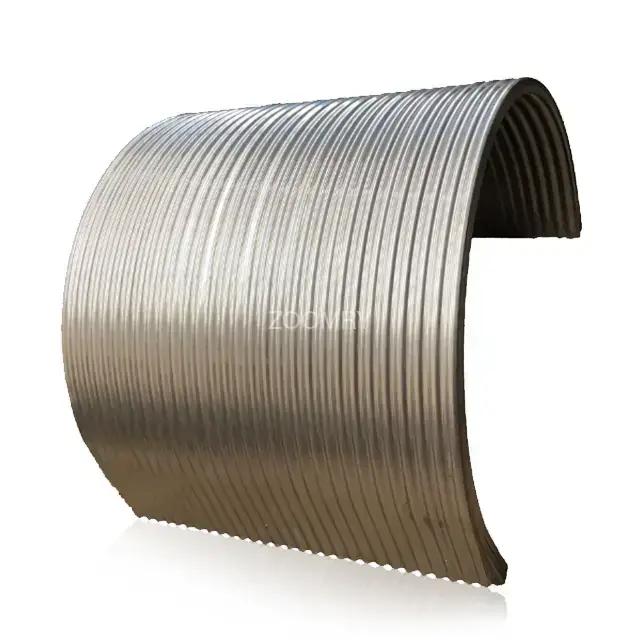
Conveyor cover for weather protection in power plants, cement, steel, ...
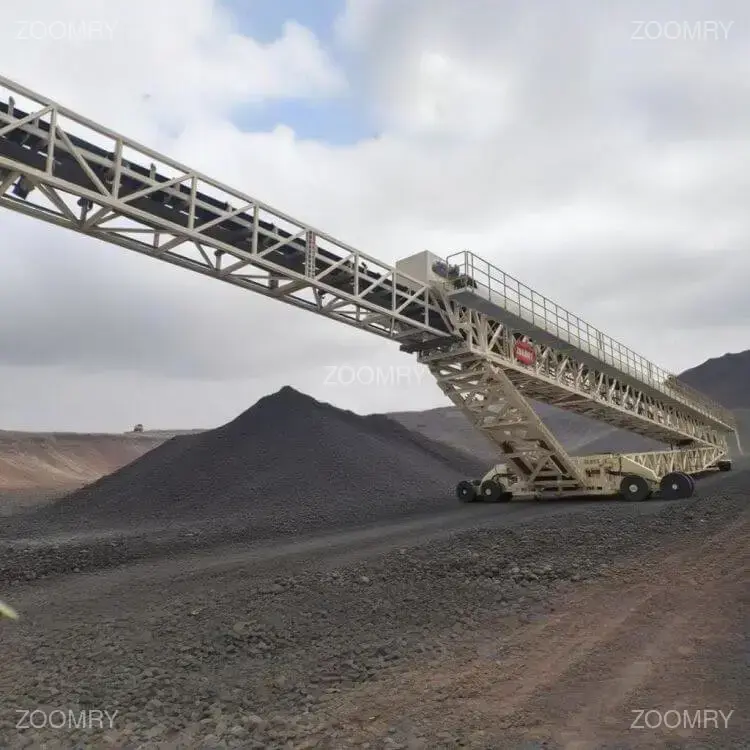
ZR160SF stacker conveyor with 1600mm belt, 3,500 m³/h, 4.0m/s. PLC aut...
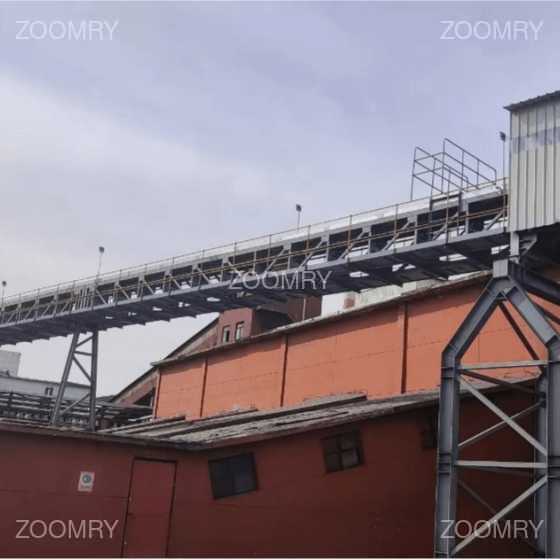
Pipe conveyor with circular closed-pipe structure for zero material le...
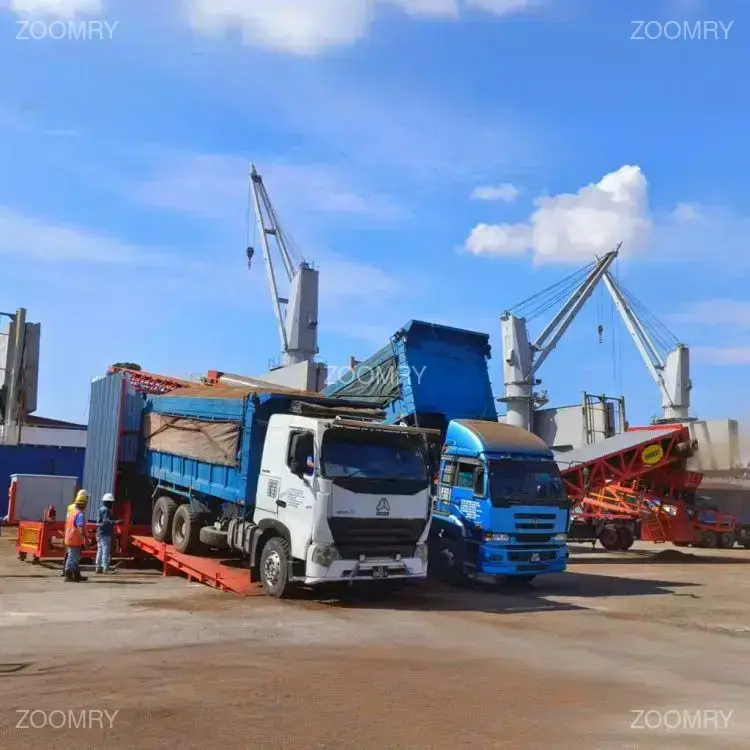
ZRLD-TU1800 tracked 4-lane truck unloader for up to 4 large trucks. 18...

Enter your email to contact us quickly!
Copyright © 2002-2026 Zoomry Group Company Limited 非商用版本 AI Index