Time:2026-10-15 15:36:53 Number of Clicks:
The Simandou iron ore project in Guinea has moved from development to active ramp-up, with Rio Tinto reporting an annualised production run-rate of approximately 10 million tonnes in the third quarter of 2026. The project remains on track to reach a 60 million tonnes per annum run-rate during the second half of 2028.
For the bulk material handling industry, Simandou is more than a new source of high-grade iron ore. It is a test case for how equipment performs in some of the most demanding conditions in the world—remote locations, high humidity, limited infrastructure, and enormous throughput requirements. Understanding what makes Simandou different provides a useful lens for anyone planning large-scale bulk handling projects in similar environments.
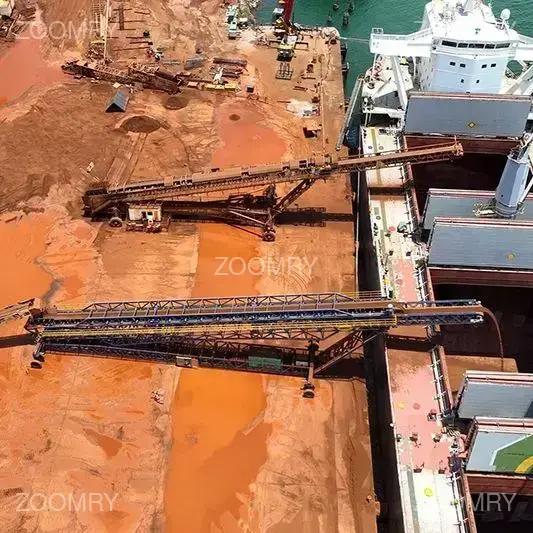
Simandou is not a typical mining project. It is one of the largest greenfield integrated mine and infrastructure projects in sub-Saharan Africa, combining a mine, a 600-kilometre railway, and port facilities into a single system.
The ore itself is exceptional. Average iron content exceeds 65%, placing Simandou among the highest-grade iron ore deposits in the world. At full production, the project is expected to export up to 120 million tonnes per year, making it one of the largest new sources of seaborne iron ore in decades.
The project has a long and complicated history. Discovered in the 1990s, it was delayed for nearly two decades by political instability in Guinea, disputes over mining rights, and the challenge of building infrastructure in a remote region with no existing rail or port access. The current development involves a consortium that includes Rio Tinto, Chinalco, and Baowu, with the first ore shipped to China in late 2025.
The logistics chain is equally demanding. Ore is railed from the SimFer mine to the port of Morebaya, where it is transferred to vessels for shipment to China. Because the coastal waters at Morebaya are shallow, ocean-going bulk carriers cannot dock directly. Instead, a fleet of transhipment vessels ferries ore to Capesize vessels waiting offshore—an unusual configuration that adds an additional handling stage to the chain.
Simandou illustrates the types of equipment required for a large-scale iron ore export operation. The chain runs from the mine, through stockyards and rail, to the port and finally to the vessel. Each stage has distinct equipment requirements.
At the mine site, ore is moved from the pit to primary crushing and then to stockpiles. Stockyard operations require equipment capable of building and reclaiming large, uniform piles. Stacker-reclaimers are the standard solution, using a bucket wheel or boom to stack material and reclaim it for downstream transport.
For sites where pile geometry changes frequently, telescopic stackers offer additional flexibility. These mobile units can build long, uniform piles from a single feed position, and can be repositioned as mining progresses. The choice between fixed stacker-reclaimers and mobile telescopic stackers depends on site layout, throughput, and how often the operation needs to relocate.
At the mine, truck unloading is often the first stage in the chain. Truck unloaders reduce turnaround time and labour requirements—particularly important in remote locations where workforce availability is limited. Standard truck unloaders handle 300 to 800 tonnes per hour, with higher-capacity models available for large-scale operations.
Relevant equipment:
The 600-kilometre railway is the backbone of Simandou's logistics, but conveyors play a critical role at both ends of the chain—at the mine for stockpiling and reclaiming, and at the port for transferring ore from stockyard to shiploader.
Long-distance belt conveyors offer high capacity and efficiency over several kilometres in a single flight. Pipe conveyors provide enclosed transport, reducing dust and spillage—particularly important in regions with strict environmental requirements or in areas close to communities. The choice depends on route length, terrain, environmental sensitivity, and the material characteristics of the ore.
For Simandou's high-grade iron ore, both types are technically viable. The deciding factors are usually environmental compliance and route complexity. Where the conveyor must follow curved paths or pass through sensitive areas, pipe conveyors offer advantages. Where the route is straightforward and capacity is the priority, long-distance belt conveyors are typically more cost-effective.
Relevant equipment:
Ship loading is the final and most time-sensitive stage in the chain. Equipment must handle high volumes with minimal downtime, and must adapt to the specific vessel types used in the trade. The Simandou trade involves a two-stage vessel system: transhipment vessels receive ore at the shallow-water port of Morebaya, then ferry it to Capesize vessels waiting offshore.
This configuration places specific demands on port equipment. Shiploaders must be able to load transhipment vessels quickly and reliably, with minimal dust generation. In terminals where multiple vessel classes are handled, mobile ship loaders offer flexibility—they can be repositioned along the quay without fixed rail infrastructure, and can serve multiple berths from a single unit. For dedicated single-berth terminals with consistent throughput, fixed shiploaders are often more efficient.
Modern ship loaders typically include telescopic chutes, dust suppression systems, and automated controls. These features are increasingly standard, driven by both operational efficiency and environmental requirements.
Relevant equipment:
Component reliability is critical in remote locations. Conveyor rollers, pulleys, and belt cleaners determine how often a system needs maintenance—and in a location like Simandou, where spare parts must travel thousands of kilometres, every maintenance intervention has a real cost.
HDPE rollers offer advantages over steel in high-humidity environments, where corrosion is a persistent problem. Ceramic pulley lagging provides better grip and longer life than rubber in abrasive conditions. Heavy-duty belt cleaners reduce carryback and keep the system running efficiently, particularly when handling dry, abrasive iron ore.
Relevant equipment:
Simandou presents a combination of challenges that are not typical for bulk handling projects. Understanding these challenges is useful for anyone planning similar projects in remote or tropical environments.
The mine is located in southeastern Guinea, far from the coast. The 600-kilometre railway is a purpose-built solution to this problem, but it also means that equipment at both the mine and port must be highly reliable. Downtime is costly when spare parts and service teams are thousands of kilometres away.
This has implications for equipment selection. Components that might be acceptable in a well-connected industrial site—where a replacement part can arrive overnight—may be unacceptable in a remote mining operation. Equipment must be designed for longer service intervals, easier on-site maintenance, and reduced dependence on specialised service teams.
Guinea's climate is tropical, with high humidity and significant rainfall during the wet season. For steel equipment, this means corrosion protection is not optional. Components such as conveyor pulleys, rollers, and structural steel must be designed for long-term exposure to moisture and heat.
The wet season also affects material handling itself. Iron ore with higher moisture content can become sticky, leading to build-up in chutes, blockages, and reduced conveyor efficiency. Equipment design must account for this variability—adjustable chute angles, effective belt cleaning, and appropriate material flow paths all become more important.
Rio Tinto describes the Simandou-to-China value chain as targeting a 75-to-90-day cycle, with customer collection adding up to 30 days. This long cycle means that equipment reliability at every stage—mine, rail, port—has a direct impact on cash flow and customer satisfaction.
For equipment suppliers, this means that reliability is not just a technical specification—it is a commercial requirement. Equipment that performs reliably reduces the need for buffer stock, shortens cycle times, and improves overall project economics.
Simandou is located in a region with significant biodiversity, and the project has attracted attention from environmental groups. Dust control, spillage prevention, and enclosed conveying are not just regulatory requirements—they are part of the project's social license to operate.
This has direct implications for equipment selection. Pipe conveyors, dust suppression systems, and enclosed transfer points become more than optional features. They become part of the core system design.
Understanding how Simandou compares to established iron ore projects helps clarify what makes it distinctive.
| Factor | Simandou | Pilbara (Australia) | Carajás (Brazil) |
|---|---|---|---|
| Iron content | 65%+ | 62% | 65% |
| Infrastructure | All new (rail + port) | Mature | Mature |
| Climate | Tropical, high humidity | Arid | Tropical |
| Logistics | Rail + transhipment | Rail + direct port | Rail + direct port |
| Equipment demands | Higher (remote + humid) | Standard | Standard |
The comparison highlights why Simandou places greater demands on equipment than established projects. The combination of new infrastructure, remote location, and tropical climate creates conditions that are more challenging than those found in Australia's Pilbara region, where most equipment is designed for arid conditions.
Simandou is not just a single project. It is a signal of how bulk material handling requirements are evolving.
For equipment suppliers, this means that success is not just about manufacturing capability. It requires understanding the full logistics chain, designing for specific material characteristics, and providing service support in challenging environments.
Simandou's ramp-up will continue through 2027 and 2028, with port commissioning expected in the first quarter of 2027 and full production targets set for the second half of 2028.
For the bulk material handling industry, the project provides a clear picture of where the market is heading: larger equipment, higher reliability requirements, climate-adapted design, and a greater emphasis on environmental performance.
Projects like Simandou demonstrate that the demand for advanced bulk handling equipment is not just about volume. It is about capability—the ability to perform in conditions that are far from ideal, for years at a time.
Tell us your material, capacity target and site conditions. ZOOMRY provides a turnkey selection solution for mining and port projects.
Contact Us →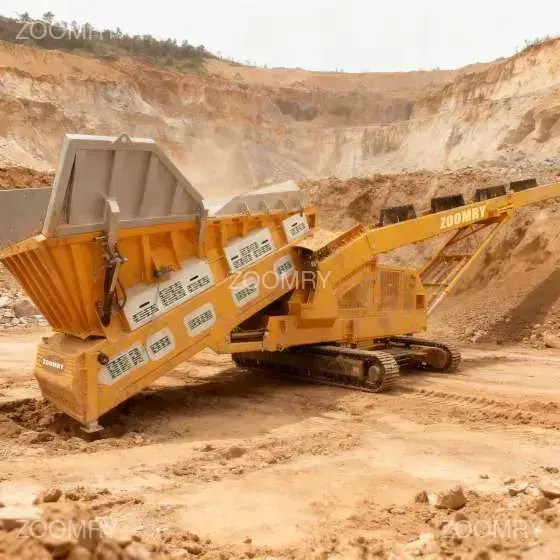
Low feed hopper feeder with 7-12 m³ capacity, up to 800 t/h. Low feed-...
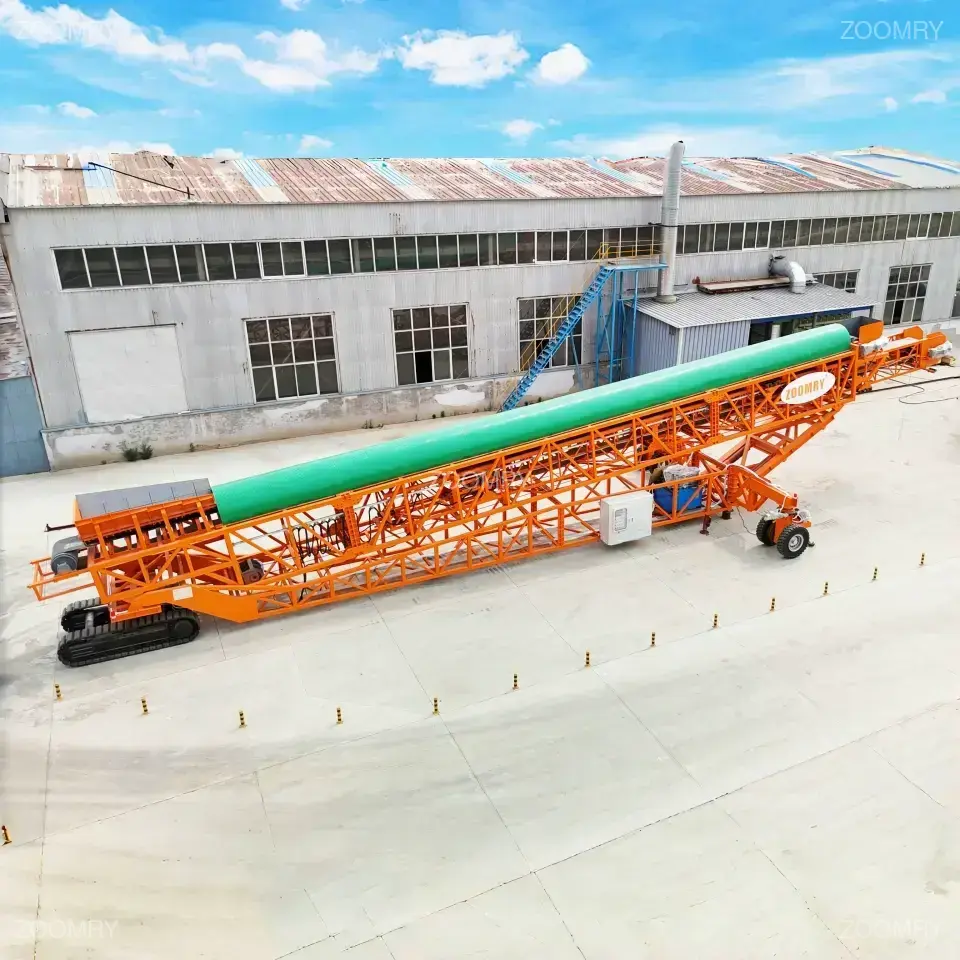
Tracked radial stacker with all-terrain crawler mobility and precision...
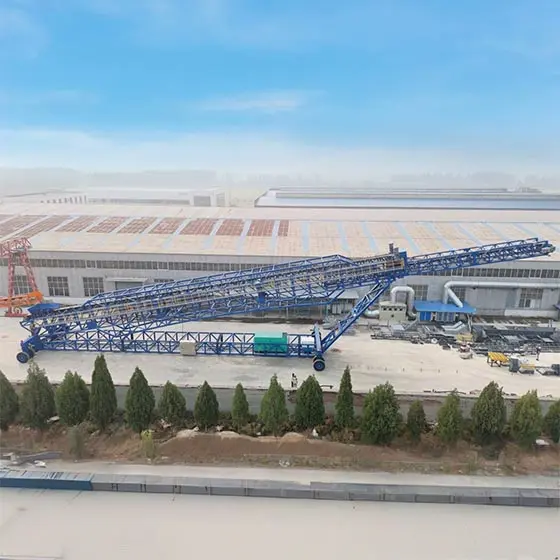
Ship loading conveyors for fixed dock-to-vessel bulk transfer. Continu...
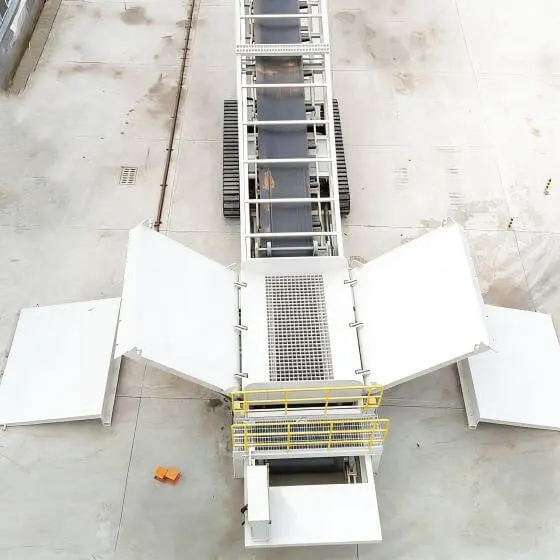
Truck unloader conveyor with 800-2200mm belt widths. 15-minute rapid r...

Enter your email to contact us quickly!
Copyright © 2002-2026 Zoomry Group Company Limited 非商用版本 AI Index