Time:2026-11-20 15:50:26 Number of Clicks:
A hopper feeder is the interface between trucks or loaders and a fixed conveyor. It receives a irregular flow of material and releases it at a controlled rate, so the downstream belt is neither starved nor overloaded. Choosing the wrong configuration shows up quickly: trucks queue, the hopper bridges, or the site spends money moving a machine that did not need to move.
ZOOMRY HF series hopper feeders cover hopper volumes of 5–24 m³ and capacities up to 3,500 t/h. This article compares the four main configurations — static, low-feed, tracked and heavy duty — on capacity, feed height, mobility and ground conditions, and sets out the criteria for each. For the equipment range, see the hopper feeder product center and the HF series and HF-HD heavy duty product pages. For how a feeder fits into a complete unloading line, see Conveyor Unloading Systems: Hopper Feeding and Belt Conveying.
The static configuration has no travel system of its own. It is installed at one reception point and fed by truck or loader. With a 5–15 m³ hopper, 1,200 mm belt and 1,000 t/h capacity, it is the simplest and lowest-cost way to put a steady feed into a conveyor.
It suits a fixed unloading point with good ground and no need to relocate. Some versions are wheeled for occasional moves, with travel speed up to 10 m/min.
The low-feed configuration is built for sites where the truck must tip from a low height. Feed height is 2.0 m or less, the hopper holds 7–12 m³, and the discharge conveyor lifts material to 9.1–13.4 m. Capacity is 800 t/h on a 1,200 mm belt.
A wheeled chassis with a turning radius of at least 6 m and travel speed up to 15 m/min lets the machine serve more than one unloading point.
The tracked configuration carries a 7–15 m³ hopper and a 1,200 mm belt rated at 1,000 t/h, with discharge height from 6.4 to 13.4 m. Ground pressure is 80 kPa or less and travel speed up to 12 m/min.
It is the choice for mines, quarries and stockyards where the receiving point moves as the face advances and the ground is not prepared.
The heavy duty configuration handles larger volumes and harder materials: a 12–24 m³ hopper, 1,400 mm belt and 3,000 t/h capacity, with discharge height 5.5–8.2 m. Maximum particle size is 250 mm and bulk density up to 3.0 t/m³. It can be supplied wheeled or tracked, with ground pressure 80 kPa or less.
At the top of the range, the ZRHF-C3500 flagship delivers 3,500 t/h on a 1,340/1,400 mm belt from an 8.8 m³ hopper, with a 20 m discharge conveyor and 45×2 + 90×2 kW installed power.
| Parameter | HF-ST static | HF-LF low feed | HF-TR tracked | HF-HD heavy duty |
|---|---|---|---|---|
| Hopper volume | 5–15 m³ | 7–12 m³ | 7–15 m³ | 12–24 m³ |
| Capacity | 1,000 t/h | 800 t/h | 1,000 t/h | 3,000 t/h |
| Belt width | 1,200 mm | 1,200 mm | 1,200 mm | 1,400 mm |
| Feed height | Project-specific | ≤2.0 m | ≤2.0 m | ≤2.0 m |
| Discharge height | — | 9.1–13.4 m | 6.4–13.4 m | 5.5–8.2 m |
| Mobility | Static / wheeled | Wheeled | Tracked | Wheeled / tracked |
| Travel speed | ≤10 m/min | ≤15 m/min | ≤12 m/min | ≤12 m/min |
| Ground pressure | — | — | ≤80 kPa | ≤80 kPa |
| Max particle size | ≤250 mm | ≤200 mm | ≤250 mm | ≤250 mm |
| Best for | Fixed reception point | Low truck tip height | Moving face, unprepared ground | High capacity, hard materials |
Three issues account for most disappointing installations:
For sites where trucks tip directly onto a belt without a hopper, compare the truck unloader range instead. Where a hopper is used, the feeder should be sized together with the receiving conveyor, as described in the unloading system guide.
It receives material tipped by trucks or loaders into a hopper and meters it onto a conveyor at a controlled rate. This smooths out the irregular truck cycle and protects the downstream belt from surge loads.
The HF-HD heavy duty model offers 12–24 m³. For comparison, HF-ST is 5–15 m³, HF-LF 7–12 m³, HF-TR 7–15 m³, and the flagship ZRHF-C3500 uses an 8.8 m³ hopper designed for very high throughput.
The ZRHF-C3500 reaches 3,500 t/h. HF-HD is rated at 3,000 t/h, while HF-ST and HF-TR are 1,000 t/h and HF-LF is 800 t/h.
Yes, if it is tracked. HF-TR, HF-HD (tracked version) and ZRHF-C3500 keep ground pressure at or below 80 kPa. A static HF-ST needs a prepared, level pad.
HF-LF, HF-TR, HF-HD and ZRHF-C3500 accept feed heights of 2.0 m or less, suitable for low truck tipping. HF-ST feed height is project-specific.
All models are available at 380V/50Hz or 440V/60Hz, with other voltages, frequencies and control configurations supplied according to the destination market and project requirements.
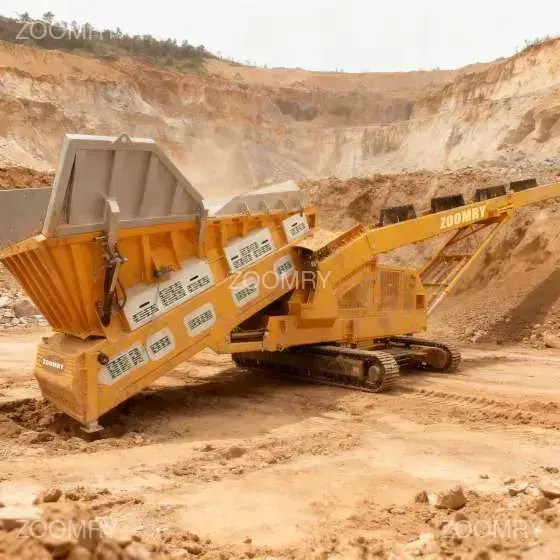
Low feed hopper feeder with 7-12 m³ capacity, up to 800 t/h. Low feed-...
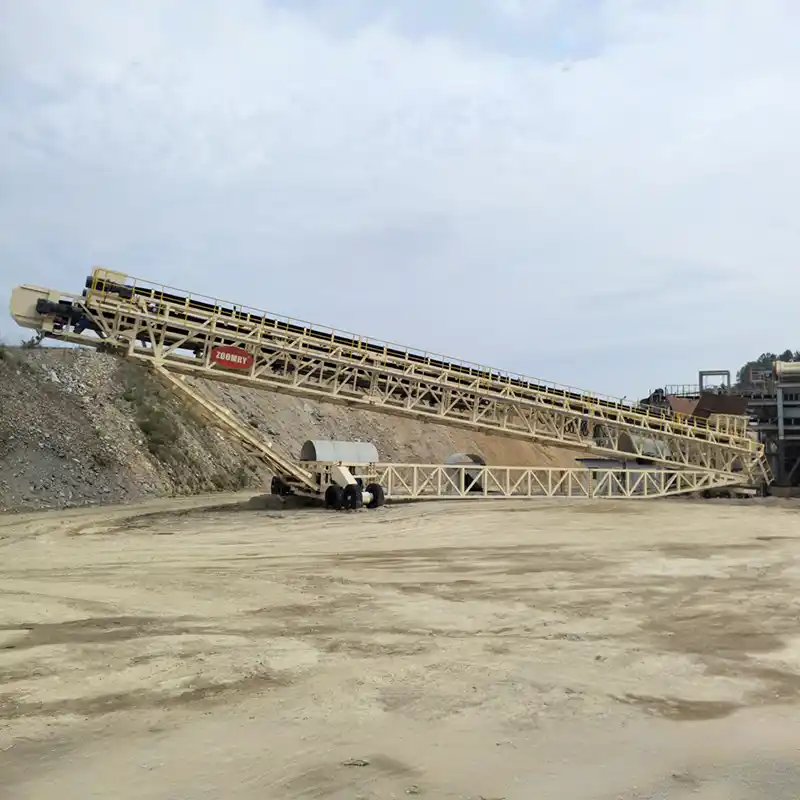
Telescopic stacker for stockyard stacking, reclaiming and truck/ship l...
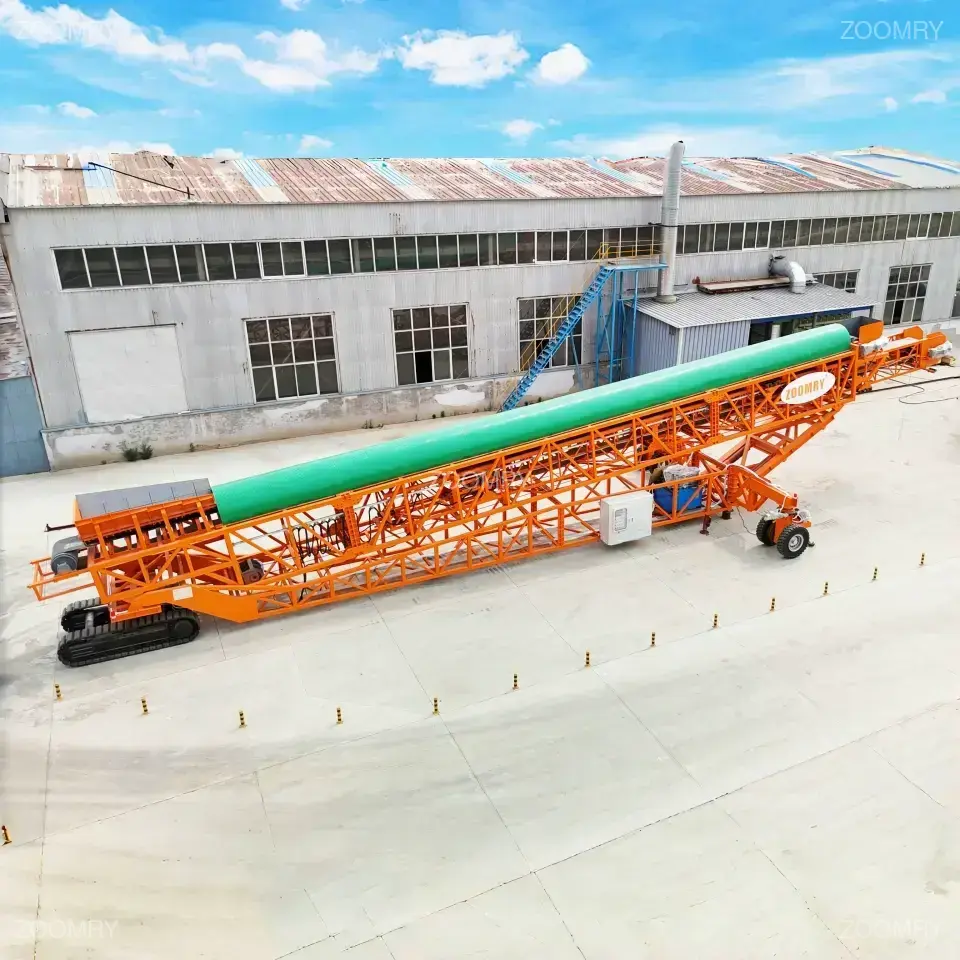
Tracked radial stacker with all-terrain crawler mobility and precision...
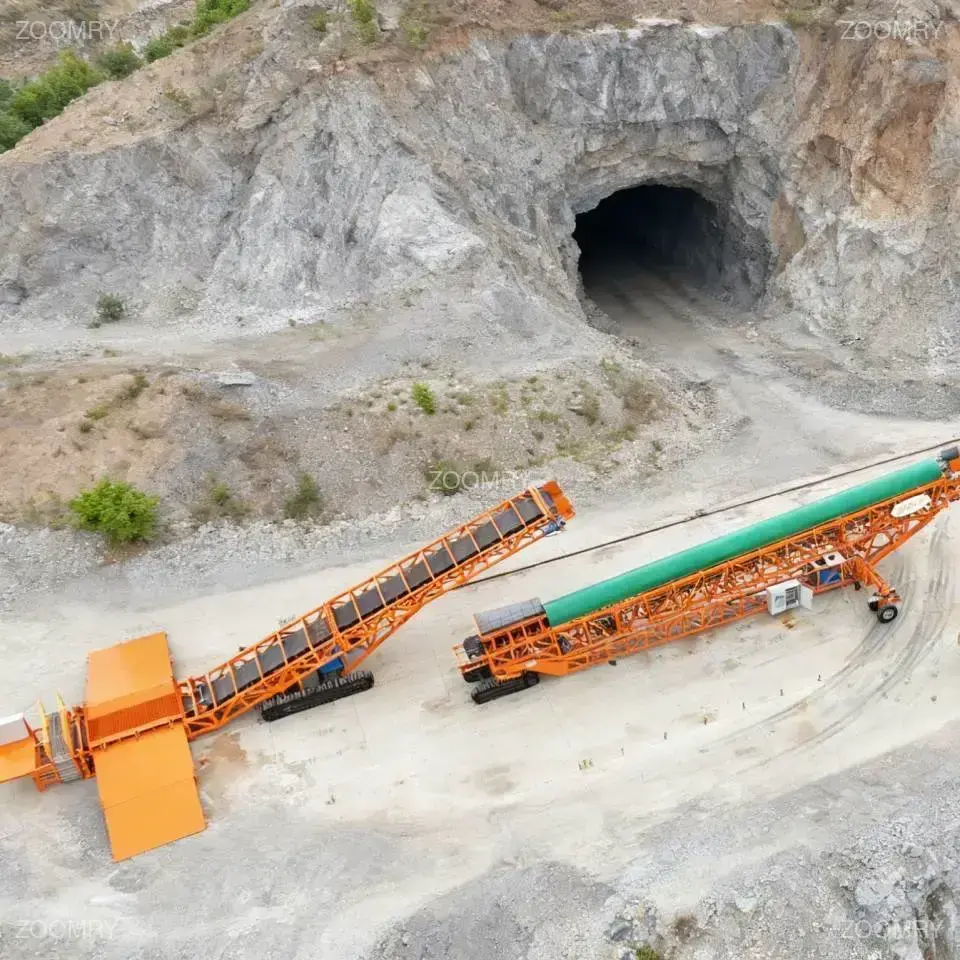
ZRLD-TU1800 tracked 2-lane truck unloader. 1800mm conveyor, 600-1800 t...

Enter your email to contact us quickly!
Copyright © 2002-2026 Zoomry Group Company Limited 非商用版本 AI Index