Time:2026-11-03 09:17:03 Number of Clicks:
A mobile truck unloader is a self-propelled receiving station that accepts bulk material from trucks, feeds it onto a conveyor and discharges it to a stockpile or downstream process. In mining operations, the choice between a tracked and a wheeled configuration — and between a mobile unit and a fixed receiving station — depends on ground conditions, relocation frequency, throughput and site layout.
This article sets out the selection criteria for mobile truck unloaders in mining, compares tracked and wheeled configurations against four common site scenarios, and provides the ZRLD-TU and ZRLS-TU parameters that determine the final specification.
In a mining operation, the truck unloader sits between the haul truck and the downstream process. It receives ore, coal, aggregate or overburden from the truck, controls the feed rate onto a discharge conveyor, and transfers the material to a stockpile, a crusher, a processing plant or a secondary conveyor.
Compared with a fixed receiving hopper, a mobile truck unloader can be repositioned as the mining sequence changes. Compared with a wheel loader or excavator, it unloads the truck directly, without double handling.
The chassis is the first selection decision, because it determines where the unit can operate and how often it can be moved.
| Configuration | ZOOMRY series | Travel speed | Turning radius | Ground pressure | Best for |
|---|---|---|---|---|---|
| Tracked | ZRLD-TU1400 / ZRLD-TU1800 | ≤20 m/min | ≥6 m | ≤80 kPa | Soft, uneven or sloping ground; frequent relocation on unprepared surfaces |
| Wheeled | ZRLS-TU1400 / ZRLS-TU1800 | ≤25 m/min | ≥10 m | Not specified | Hardened roads; rapid transfer between receiving bays |
Both configurations share the same receiving hopper width (3.5–5.7 m), discharge height (5.8 m) and capacity range (200–1,800 t/h). The difference is mobility and ground interaction, not throughput.
In rainy-season mines, tailings areas or sites with uncompacted surfaces, a wheeled unit can sink or lose traction. The tracked ZRLD-TU series distributes weight over a crawler chassis with ground pressure below 80 kPa, allowing operation on soft ground without matting or road preparation.
Typical applications: open-pit mines in tropical regions, tailings reprocessing, temporary stockyards during mine development.
Recommended: Tracked Truck Unloader (ZRLD-TU1400 / ZRLD-TU1800).
Where the mine has prepared haul roads and the unloader must move between several receiving bays in a shift, a wheeled unit is faster to reposition. The ZRLS-TU series travels at up to 25 m/min with a turning radius of at least 10 m, and can be driven between bays without a low-loader.
Typical applications: quarries with paved internal roads, port-adjacent mines, operations with multiple truck discharge points.
Recommended: Wheeled Truck Unloader (ZRLS-TU1400 / ZRLS-TU1800).
Where the receiving point does not move and the mine needs a permanent station, a fixed hopper feeder is more economical than a mobile unit. The HF-ST static hopper feeder provides the same receiving and feeding function without the chassis, and can be integrated with a belt conveyor and a stacker.
Typical applications: primary crushing stations, coal handling plants, cement raw material receiving.
Recommended: fixed hopper feeder integrated with a Hopper Feeder and a belt conveyor.
In high-altitude mines (for example the Chilean Andes) or cold regions (for example Russian Far East operations), the unloader must be specified with low-temperature hydraulics, heated control cabinets and dust-sealed conveyors. Tracked units are generally preferred where ground conditions are also poor.
Typical applications: high-altitude copper mines, cold-region coal mines, dusty aggregate operations.
Recommended: tracked ZRLD-TU with cold-weather and dust-control options.
The capacity of a mobile truck unloader is determined by the truck fleet, the material and the downstream process. ZOOMRY standard configurations cover 200–1,800 t/h, with custom configurations up to 3,000 t/h evaluated on request.
| Model | Type | Belt width | Capacity | Hopper width | Discharge height |
|---|---|---|---|---|---|
| ZRLS-TU1400 | Wheeled | 1,400 mm | 200–1,000 t/h | 3.5–5.7 m | 5.8 m |
| ZRLS-TU1800 | Wheeled | 1,800 mm | 200–1,800 t/h | 3.5–5.7 m | 5.8 m |
| ZRLD-TU1400 | Tracked | 1,400 mm | 200–1,000 t/h | 3.5–5.7 m | 5.8 m |
| ZRLD-TU1800 | Tracked | 1,800 mm | 200–1,800 t/h | 3.5–5.7 m | 5.8 m |
For a definition of the equipment and its working principle, see What is a Truck Unloader? For a full comparison of types and applications, see the Truck Unloader Complete Guide.
Tracked units are better on soft, uneven or sloping ground and where relocation is frequent on unprepared surfaces. Wheeled units are better on hardened roads and where the unloader moves between receiving bays quickly. The choice depends on ground conditions and relocation frequency.
ZOOMRY standard configurations cover 200–1,800 t/h. Custom configurations up to 3,000 t/h can be evaluated on request.
Yes, with cold-weather hydraulics, heated control cabinets and dust-sealed conveyors. Tracked units are generally preferred where ground conditions are also poor.
A fixed hopper feeder is more economical where the receiving point does not move and the mine needs a permanent station. It provides the same receiving and feeding function without the chassis.
Dust control measures include dust suppression at the hopper, enclosed transfer chutes, belt cleaners at the discharge pulley and dust-sealed conveyors. The choice depends on the material and the environmental requirements.
Standard configurations typically require 45 to 90 days for manufacturing, plus shipping time. Custom configurations may require longer.
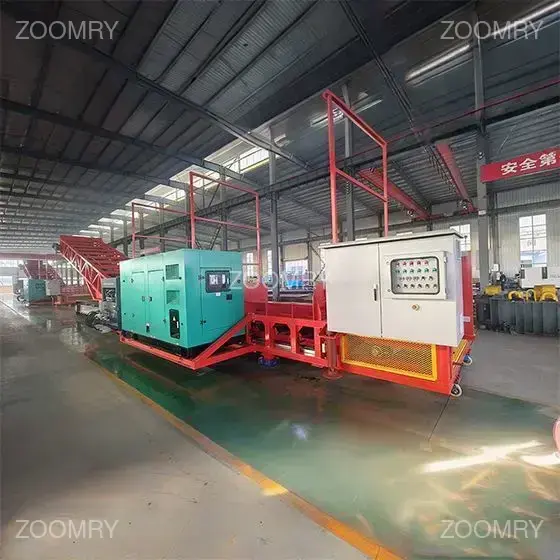
ZRLS-TU1800 wheeled 4-lane truck unloader for up to 4 large trucks. 18...
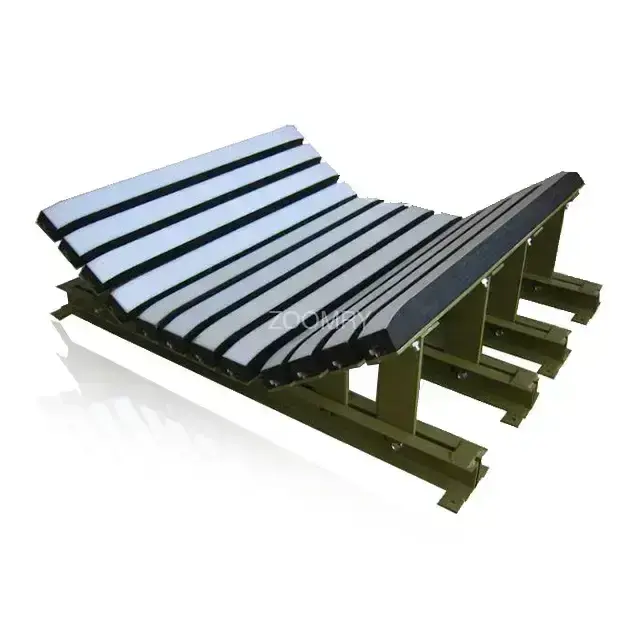
Impact beds for conveyor loading point protection. UHMW wear surface w...
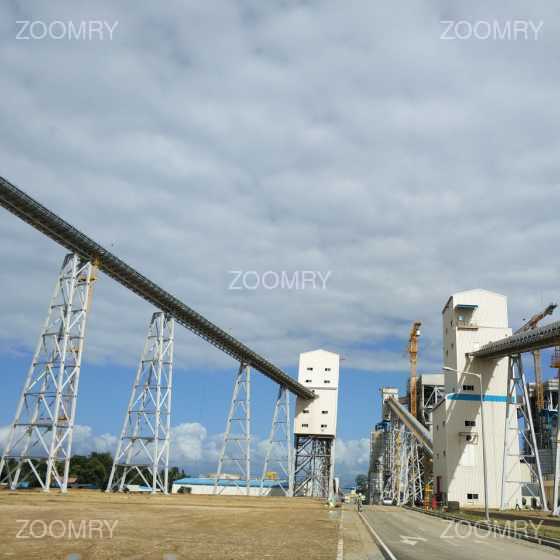
Long distance belt conveyor for overland bulk transport up to 20km in ...
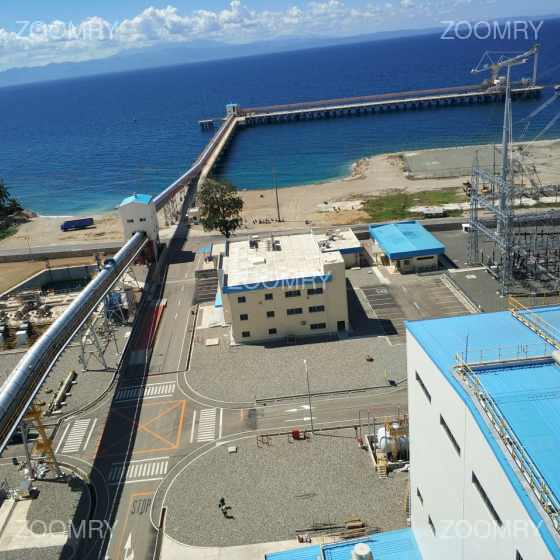
Curved belt conveyor with 3D spatial turning technology for damage-fre...

Enter your email to contact us quickly!
Copyright © 2002-2026 Zoomry Group Company Limited 非商用版本 AI Index