Time:2026-10-15 15:36:53 Number of Clicks:
Mining conveyor systems are the backbone of modern mining operations. Whether the material is coal, iron ore, copper, gold or construction aggregate, the ability to move large volumes of material efficiently and reliably determines the economics of the entire operation.
This guide covers the main components of mining conveyor systems, the equipment types used at each stage, the key factors that influence system design, and the trends shaping the industry in 2026 and beyond.
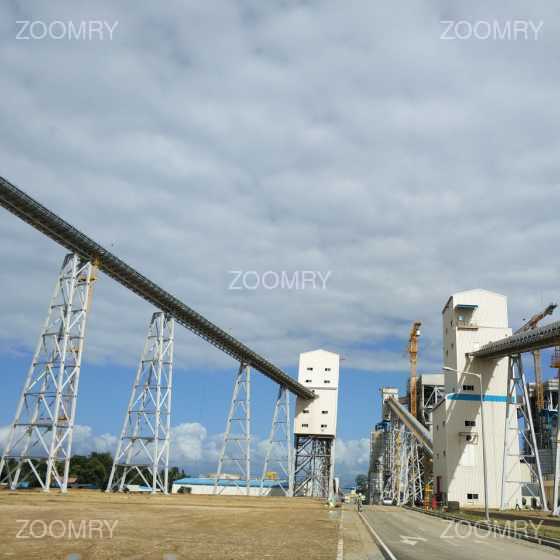
A mining conveyor system is a continuous material handling system that moves bulk material from the mining face to processing, storage, or transport points. Unlike truck haulage, which moves material in discrete loads, a conveyor system operates continuously, delivering steady throughput with lower labour requirements and lower emissions per tonne moved.
A typical mining conveyor system includes several distinct stages:
Extraction and feeding — moving material from the pit or stockpile into the conveyor system
Crushing and screening — reducing material size for downstream handling
Main conveying — transporting material over long distances to processing or stockpile areas
Stockpiling and reclaiming — building and recovering stockpiles
Loadout — loading material onto trucks, rail cars, barges or vessels
Each stage has its own equipment requirements, and the system as a whole must be designed for the specific material characteristics, throughput requirements, and site conditions of the operation.
Mining conveyor systems are built from several core components that work together to move material continuously.
Belt conveyors are the workhorses of mining conveyor systems. They use a continuous belt running over rollers and pulleys to move material from one point to another. Modern belt conveyors can handle capacities from a few hundred tonnes per hour up to several thousand, and can be configured for horizontal, inclined, or curved routes.
For mining operations, belt conveyors are typically designed for:
High capacity — moving thousands of tonnes per hour
Long distance — single flights of several kilometres
Abrasive materials — with wear-resistant belt and component selection
Steep inclines — where terrain requires it
Relevant equipment:
Pipe conveyors are a variant of belt conveyors where the belt rolls into a closed pipe shape along the carrying run. This provides enclosed transport, which is particularly valuable when:
The material is dusty or prone to spillage
The conveyor route passes through environmentally sensitive areas
The material needs protection from rain or contamination
The route requires tight curves that a conventional belt cannot follow
For mining operations in regions with strict environmental requirements, pipe conveyors are often the preferred solution.
Relevant equipment:
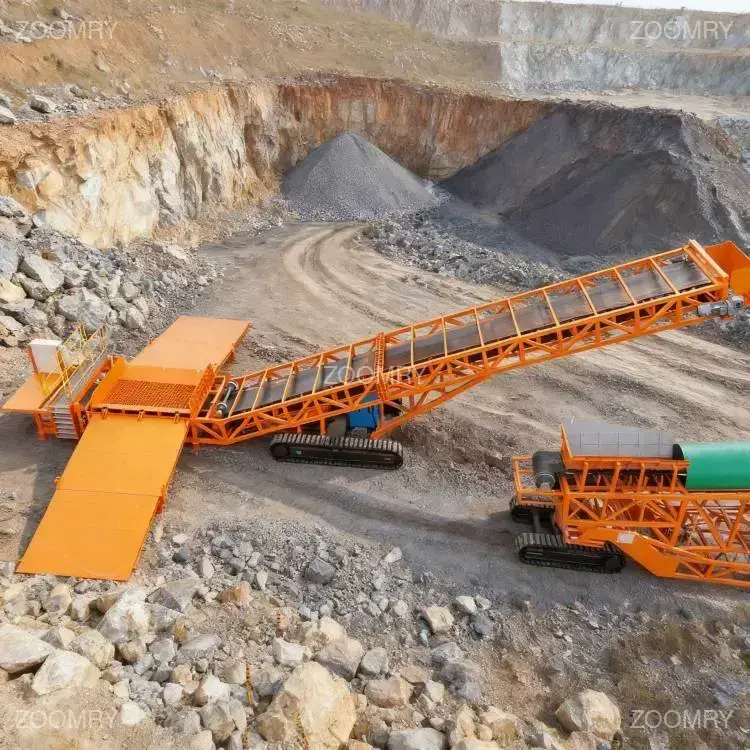
Stockpiling and reclaiming are critical stages in mining operations. Stackers build stockpiles, while reclaimers recover material for downstream processing or loadout. The two functions are often combined in a single machine—the stacker-reclaimer.
Common configurations include:
Telescopic stackers — mobile units with extendable booms, suitable for sites where pile geometry changes frequently
Radial stackers — units that slew around a pivot to build fan-shaped piles
Bucket wheel stacker-reclaimers — large fixed units combining stacking and reclaiming in one machine
The choice depends on site layout, throughput, and how often the operation needs to relocate.
Relevant equipment:
In mining operations that rely on truck haulage, truck unloaders provide a fast and efficient way to discharge material from trucks and transfer it to downstream conveyors. Standard capacities range from 300 to 800 tonnes per hour, with higher-capacity models available for large-scale operations.
Truck unloaders reduce turnaround time, lower labour requirements, and improve safety by minimising manual intervention—particularly important in remote locations where labour is scarce.
Relevant equipment:
Hopper feeders provide controlled, even feeding of bulk material to downstream conveyors. They are essential for maintaining consistent flow rates and preventing blockages—particularly when material characteristics vary between different parts of the mine.
Relevant equipment:
Conveyor rollers, pulleys and belt cleaners are the components that determine how often a system needs maintenance and how reliably it operates. In mining environments, where abrasive materials and long operating hours are the norm, component selection has a direct impact on total cost of ownership.
Relevant equipment:
Different mining materials place different demands on conveyor systems. The following sections outline the key considerations for three common material groups.
Coal handling presents specific challenges for conveyor systems:
Dust explosion risk — coal dust is combustible, requiring explosion-proof electrical equipment and dust control measures
Abrasive material — coal can be abrasive, particularly when it contains hard rock fragments
Moisture content — wet coal can become sticky, causing build-up and blockages
Spontaneous combustion — coal stockpiles can self-heat, requiring careful stockpile management
For coal operations, conveyor systems typically include enclosed transfer points, dust suppression systems, and fire detection equipment. Pipe conveyors are often used where dust control is a priority.
Relevant equipment:
Iron ore is one of the most demanding materials for conveyor systems:
High abrasiveness — iron ore is hard and abrasive, requiring wear-resistant belt and component selection
High density — iron ore is heavy, requiring higher belt tension and stronger structural components
High throughput — iron ore operations often require the highest capacities of any mining sector
For iron ore operations, conveyor systems are typically designed for maximum reliability and wear resistance. Components such as ceramic pulley lagging and heavy-duty belt cleaners are common.
Relevant equipment:
Aggregate operations—quarries and sand and gravel pits—have different priorities:
Moderate abrasiveness — aggregates are generally less abrasive than iron ore or coal
Variable material size — aggregates range from fine sand to large crushed stone
Frequent relocation — quarry operations often need to relocate equipment as the working face advances
For aggregate operations, mobile and modular conveyor systems are often preferred because they can be relocated as the pit develops. Radial stackers and telescopic stackers are common in this sector.
Relevant equipment:
Designing a mining conveyor system involves several key decisions.
The first step is understanding the material: its density, particle size distribution, abrasiveness, moisture content, and flowability. These characteristics determine belt width, belt speed, chute angles, wear protection requirements, and dust control measures.
Throughput determines system capacity. Mining operations often require capacities from a few hundred to several thousand tonnes per hour, and the system must be designed to handle peak loads as well as normal operating conditions.
Site conditions—terrain, climate, available space, and infrastructure—have a major impact on conveyor system design. Long-distance conveyors may need to follow curved routes, cross roads or rivers, or handle significant elevation changes.
Environmental requirements increasingly influence conveyor system design. Dust control, spillage prevention, noise reduction, and enclosed conveying are common requirements, particularly in operations near communities or in environmentally sensitive areas.
While capital cost is important, total cost of ownership—including energy, maintenance, and downtime losses—often determines the true economics of a conveyor system. Equipment that is reliable and easy to maintain often has a lower total cost over its lifetime, even if the initial cost is higher.
Mining conveyor systems face several common challenges.
Dust is one of the most common challenges in mining conveyor systems. Solutions include enclosed transfer points, dust suppression systems, pipe conveyors, and belt cleaning systems to reduce carryback.
Wet or sticky material can build up in chutes and cause blockages. Solutions include adjustable chute angles, effective belt cleaning, and appropriate material flow path design.
Abrasive materials cause belt wear and component failure. Solutions include wear-resistant belt selection, ceramic pulley lagging, heavy-duty rollers, and effective belt cleaning.
Mining operations are often in remote locations, far from service centres. Solutions include equipment designed for longer service intervals, easier on-site maintenance, and reduced dependence on specialised service teams.
Several trends are shaping the mining conveyor system market in 2026 and beyond.
Mining operations are increasingly demanding higher capacities. Equipment that was adequate a decade ago is now undersized for major new projects. This trend is driven by the economics of scale—larger equipment reduces cost per tonne moved.
Environmental compliance is becoming a baseline requirement rather than an optional feature. Dust control, enclosed conveying, and low-emission operations are expected in new projects, particularly those with significant environmental scrutiny.
In remote mining locations, equipment reliability is a primary driver of project economics. Longer service intervals, easier maintenance, and robust design are increasingly important in equipment selection.
Equipment designed for temperate or arid conditions may not perform well in tropical environments. Humidity, corrosion, and material stickiness all need to be addressed in the design phase.
Digitalisation and automation are increasingly common in mining conveyor systems. Remote monitoring, predictive maintenance, and automated controls are becoming standard features in new systems.
Mining conveyor systems are complex, integrated systems that must be designed for the specific material, throughput, site conditions, and environmental requirements of each operation. Key components include belt conveyors, pipe conveyors, stackers and reclaimers, truck unloaders, hopper feeders, and conveyor components.
For equipment suppliers, success requires understanding the full material handling chain, designing for specific material characteristics, and providing service support in challenging environments. For mining operators, selecting the right equipment and supplier is critical to project economics and long-term operational success.
Tell us your material, capacity target and site conditions. ZOOMRY provides a turnkey selection solution for mining and port projects.
Contact Us →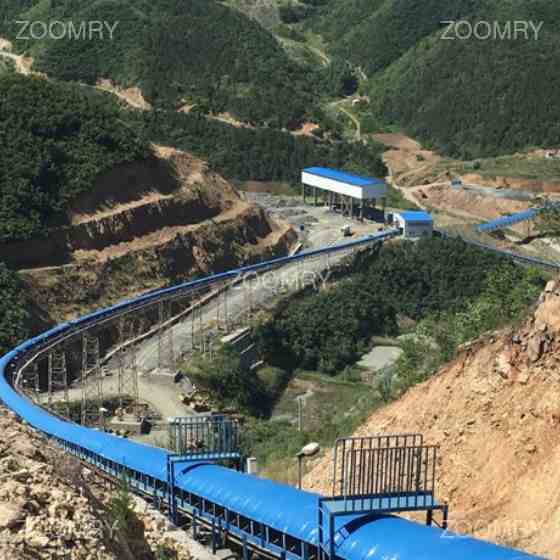
Steep angle belt conveyor for bulk transport at inclines up to 60 usin...
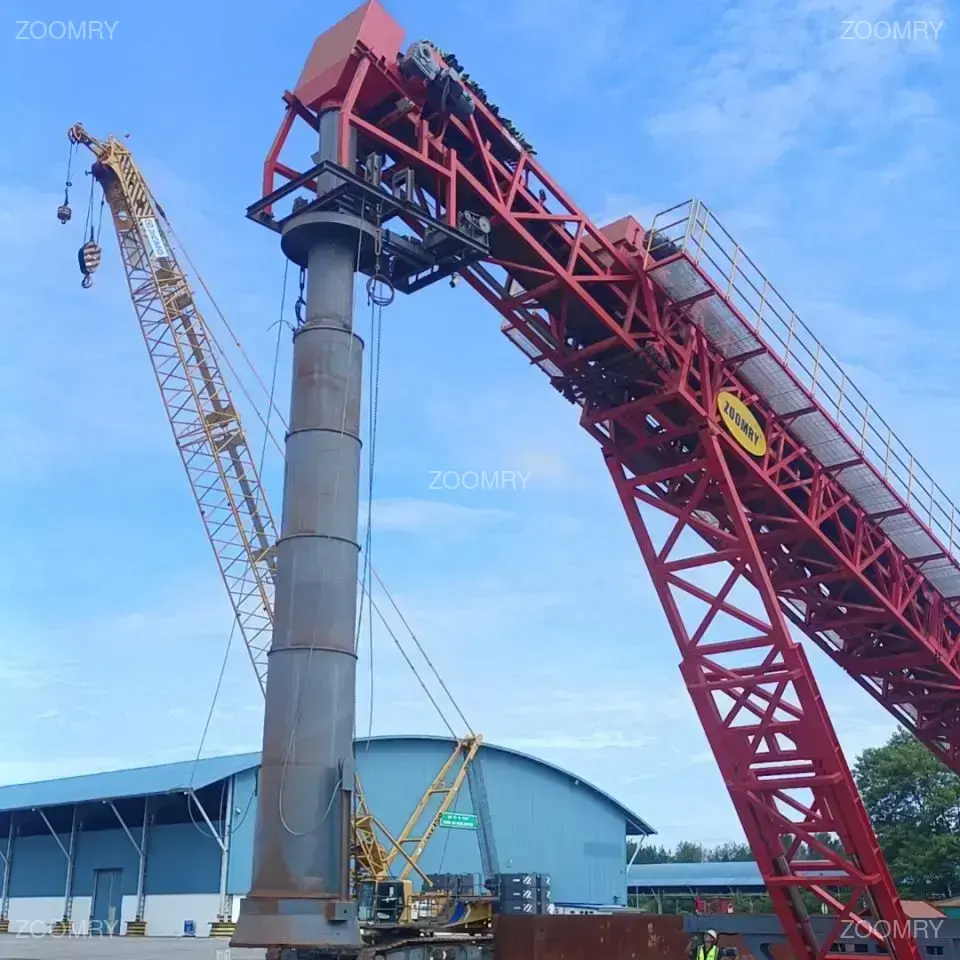
ZRSL-40 mobile shiploader for vessels of 100-35,000 DWT. Pre-assembled...
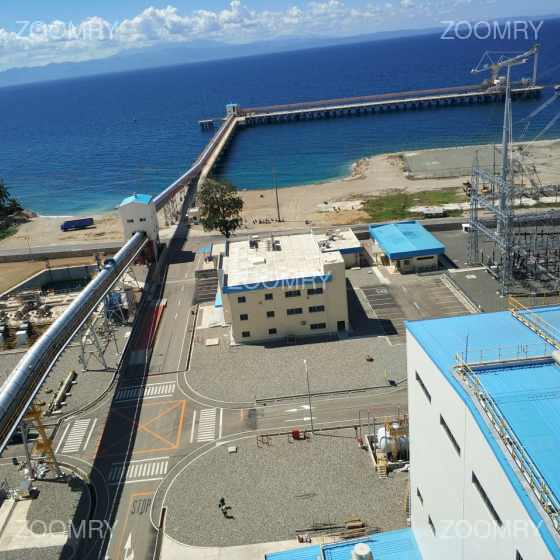
Curved belt conveyor with 3D spatial turning technology for damage-fre...
ZRLS-TU1800 wheeled 2-lane truck unloader. 1800mm conveyor, 600-1800 t...

Enter your email to contact us quickly!
Copyright © 2002-2026 Zoomry Group Company Limited 非商用版本 AI Index