Time:2026-10-26 09:13:01 Number of Clicks:
Coal is one of the most demanding bulk materials to convey. It is abrasive, prone to dust generation, sensitive to moisture and — under the wrong conditions — capable of self-heating and dust explosion. A coal conveyor system is therefore not simply a belt conveyor painted black. It is an engineered system that must address abrasion, dust, moisture, fire and explosion risks simultaneously, while maintaining the throughput and reliability that coal mines and ports require.
This article examines coal conveyor systems from a design, safety and application perspective. It covers the main system types, the design considerations that differentiate coal handling from other bulk materials, the regional contexts that shape coal conveyor design in Africa, Asia and Australia, and the maintenance and safety practices that keep coal conveyors running safely over decades of operation.
Coal presents a combination of challenges that few other bulk materials match.
Abrasion. Coal is abrasive, particularly when it contains hard impurities such as pyrite or quartz. Belt covers, chute liners, pulley lagging and idler shells must all be selected for abrasion resistance. The wear rate on a coal conveyor can be several times higher than on a conveyor handling grain or fertilizer.
Dust. Coal dust is generated at every transfer point, every loading point and every discharge point. Beyond the environmental and health issues, coal dust is explosive under the right concentration and ignition conditions. Dust control is therefore both an environmental requirement and a safety requirement.
Moisture. Coal with high surface moisture can become sticky, leading to material build-up on belts, chutes and pulleys. Wet coal also has different flow characteristics, which affects stockpile behavior and conveyor capacity.
Self-heating and spontaneous combustion. Stockpiled coal can self-heat if the pile is not properly ventilated or if the coal has a high volatile content. Conveyor systems that feed stockpiles must be designed to avoid creating compacted, unventilated piles.
Explosion risk. Coal dust explosions are one of the most serious hazards in coal handling. Electrical equipment, motors, sensors and control systems must be selected for the appropriate explosion protection class, and the conveyor system must be designed to minimize dust accumulation and ignition sources.
Coal handling typically involves several conveyor types working together, rather than a single machine.
Troughed belt conveyors are the workhorse of coal handling. The belt is supported by three idlers arranged in a trough, which allows the belt to carry a deep bed of coal at high capacity. Troughed belt conveyors are used for main haulage from the mine to the stockyard, from the stockyard to the port, and within the port terminal.
Typical belt widths for coal range from 800 mm to 2,400 mm, with capacities from a few hundred tonnes per hour to more than 5,000 tonnes per hour. Belt speeds are usually in the range of 2.5 to 5.0 m/s.
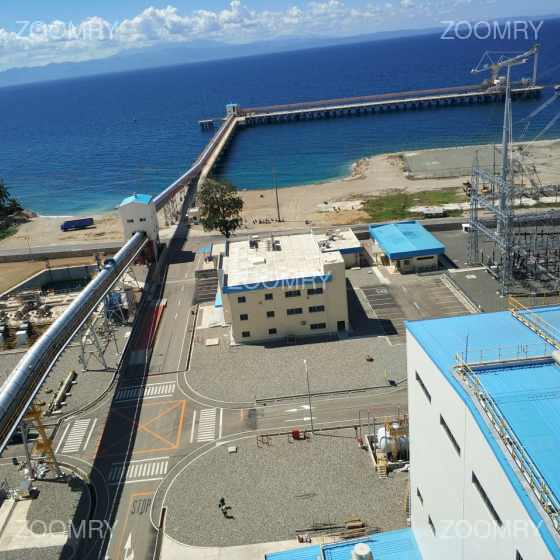
Pipe conveyors roll the belt into a closed tube, enclosing the coal completely. This eliminates dust emission, protects the coal from rain and wind, and allows the conveyor to handle horizontal and vertical curves. Pipe conveyors are increasingly used for coal handling in environmentally sensitive areas, such as ports near urban areas or mines adjacent to protected land.
Typical pipe diameters for coal range from 150 mm to 500 mm, with capacities from 50 to 3,000 tonnes per hour.
Stacker-reclaimers are used at coal stockyards to stack coal into piles and reclaim it for downstream transport. The choice between radial, fixed and telescopic stackers depends on the stockyard layout, the number of coal grades, and the required capacity.
Radial stackers are particularly common in coal stockyards because they can serve multiple stockpiles from a single feed point, which is important when different coal grades must be kept separate.
At coal export terminals, shiploaders transfer coal from the stockyard conveyor to the ship. Mobile shiploaders are used at ports where the berth layout or vessel mix changes frequently, while fixed shiploaders are used at dedicated coal terminals with stable vessel traffic.
Coal shiploaders are typically equipped with dust suppression systems, belt cleaning systems and telescopic or slewing booms to reach different hatch positions.
Coal conveyor design differs from general bulk material conveyor design in several important respects.
Coal dust is explosive when suspended in air at the right concentration and exposed to an ignition source. Electrical equipment in coal handling areas must be selected for the appropriate explosion protection class — typically ATEX Zone 21 or 22 in Europe, or equivalent classifications in other regions.
Motors, sensors, control panels, lighting and communication equipment must all be rated for the hazardous area. Belt conveyors should be designed to minimize dust accumulation on idlers, pulleys and structural members, and to prevent ignition sources such as friction or electrical faults.
Coal abrasion affects every component in contact with the material. Belt covers should be selected for high abrasion resistance, typically with a wear-resistant cover grade. Chute liners should be replaceable and made from wear-resistant materials such as manganese steel or ceramic tiles. Pulley lagging should be selected for abrasion resistance and good grip.
Idler shells should be thick-walled and fitted with abrasion-resistant end caps. In severe applications, ceramic-lined idlers may be justified.
Dust control in coal handling typically combines several methods: enclosure of transfer points, dry fog suppression, bag filters, and water spray where water is available and permitted. The choice depends on the coal characteristics, the environmental requirements, and the availability of water.
Enclosure is the most effective method, as it prevents dust from escaping at the source. Dry fog is effective at suppressing dust without wetting the coal, which is important where moisture content must be controlled. Bag filters are used where dust must be captured and removed from the air stream.
Coal with high surface moisture can stick to belts, chutes and pulleys, causing build-up and reducing capacity. Belt cleaners, chute liners with low-friction surfaces, and belt cover compounds with good release properties can help. In some cases, coal may need to be dried or blended before conveying.
Coal conveyors must be designed to prevent fire from friction, electrical faults or self-heating. Fire detection systems, sprinkler systems and emergency stop systems are standard on coal conveyors. Belt materials should be selected for fire resistance, and the conveyor should be designed to allow rapid isolation and shutdown in the event of a fire.
Coal conveyor design is shaped by the regional context in which the coal is mined and handled.
South Africa's coal mines in Mpumalanga and Limpopo produce more than 250 million tonnes per year. Much of this coal is transported by conveyor from the mine to the stockyard, blended, and then loaded onto rail or trucks for export or domestic use. The coal is typically abrasive and can have high ash content, which increases wear on conveyor components.
South African coal handling also faces water scarcity in some regions, which makes dry dust suppression preferable to water spray.
Indonesia is one of the world's largest coal exporters, with major mines in Kalimantan and Sumatra. Indonesian coal is often lower in rank and higher in moisture than South African coal, which affects conveyor design. The high moisture content can cause material build-up on belts and chutes, and the coal can be prone to spontaneous combustion if stockpiled improperly.
Indonesian coal terminals often use pipe conveyors to protect the coal from rain and to minimize dust emissions in environmentally sensitive coastal areas.
Australia is a major coal exporter, with mines in Queensland and New South Wales. Australian coal handling is characterized by large-scale conveyors, long overland distances, and strict environmental requirements. Many Australian coal terminals use enclosed conveyors and advanced dust suppression systems to meet environmental standards.
Australian coal conveyors are also designed for high availability and low maintenance, with condition monitoring systems and automated belt inspection.
China is the world's largest coal producer and consumer. Chinese coal handling covers a wide range of mine types, from large state-owned mines to smaller operations. Conveyor design in China often emphasizes high capacity, long distance, and integration with rail and port infrastructure.
The requirements for coal conveyors differ significantly from those for other bulk materials.
| Material | Abrasion | Moisture sensitivity | Dust explosion risk | Self-heating risk |
|---|---|---|---|---|
| Coal | High | Medium to high | High | High |
| Iron ore | Very high | Low | Low | Low |
| Bauxite | High | Medium | Medium | Low |
| Grain | Low | Medium | High (organic dust) | Medium |
| Fertilizer | Medium | High | Low | Low |
Coal's combination of high abrasion, high dust explosion risk and self-heating potential means that coal conveyors require a level of safety and wear protection that is not necessary for most other bulk materials.
Coal conveyor maintenance and safety practices are more intensive than for most other bulk materials.
Belt inspection. Coal belts should be inspected regularly for wear, damage and material build-up. Belt thickness should be measured periodically to track wear rate and plan replacement.
Idler and pulley maintenance. Idlers and pulleys should be checked for rotation, alignment and wear. Seized idlers can cause belt damage and fire risk, so they should be replaced promptly.
Dust accumulation. Coal dust accumulates on structural members, walkways and equipment. Regular cleaning is essential to prevent dust explosions and fire risk.
Fire systems. Fire detection and suppression systems should be tested regularly. Emergency stop systems should be checked to ensure they function correctly.
Explosion protection. Electrical equipment in hazardous areas should be inspected for damage to explosion-proof enclosures, cable glands and seals.
When specifying a coal conveyor system, the following checklist is recommended:
A recent example from South Africa illustrates how coal conveyor systems are configured in practice. A 400 t/h coal handling system installed in 2024 uses a 270° radial stacker to build three stockpiles of approximately 7,400 tonnes each, allowing the system to switch between coal grades without repositioning the machine.
The system also includes enclosed transfer points and dry fog dust suppression, reflecting the dual requirements of environmental compliance and dust explosion prevention that characterize modern coal handling.
Select a belt with high abrasion resistance and, where required, fire resistance. The cover grade should match the coal abrasiveness, and the belt should be suitable for the site's explosion protection requirements.
Use explosion-proof electrical equipment in hazardous areas, minimize dust accumulation through enclosure and cleaning, and eliminate ignition sources. Dry fog suppression and bag filters help control airborne dust.
Yes. Pipe conveyors enclose the coal completely, eliminating dust emission and protecting the coal from rain. They are particularly suitable for environmentally sensitive areas and for routes with curves.
Avoid compacted, unventilated piles. Use stackers that build loose, ventilated piles, and monitor pile temperature. In some cases, coal may need to be blended or aged before stockpiling.
Consider water scarcity (favor dry dust suppression), high ambient temperatures (motor cooling), and the need for robust, low-maintenance equipment. Also consider the coal characteristics, which vary significantly between South African, Indonesian and Australian coals.
Delivery time depends on the system scope and project schedule. A complete coal handling system typically requires 4 to 9 months for design, manufacturing and delivery, plus installation and commissioning time.
Curved belt conveyor with 3D spatial turning technology for damage-fre...
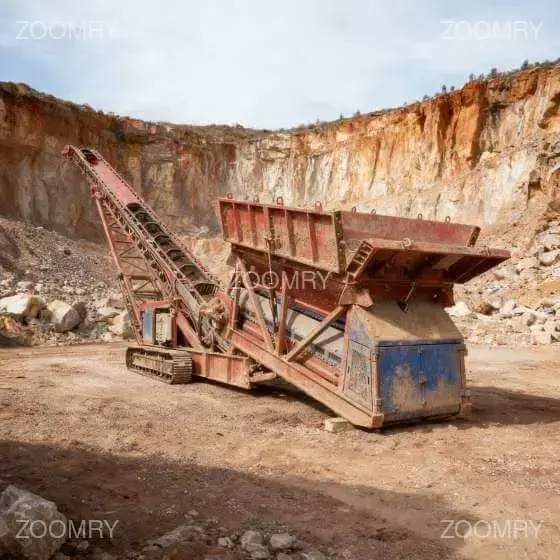
Heavy duty hopper feeder with 12-24 m³ capacity, up to 3,000 t/h. Belt...
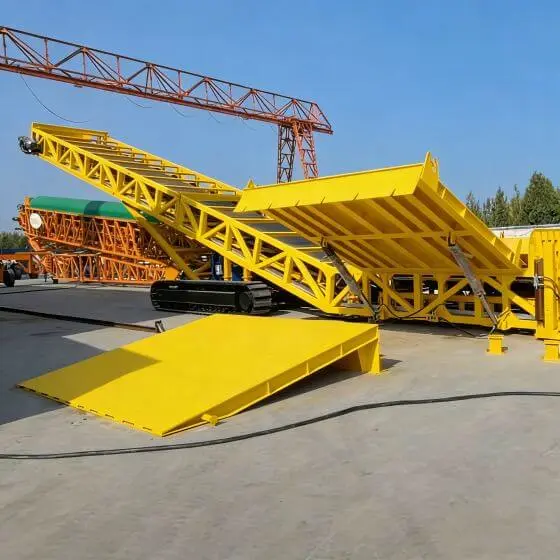
Truck unloading system with dry fog dust suppression and negative pres...
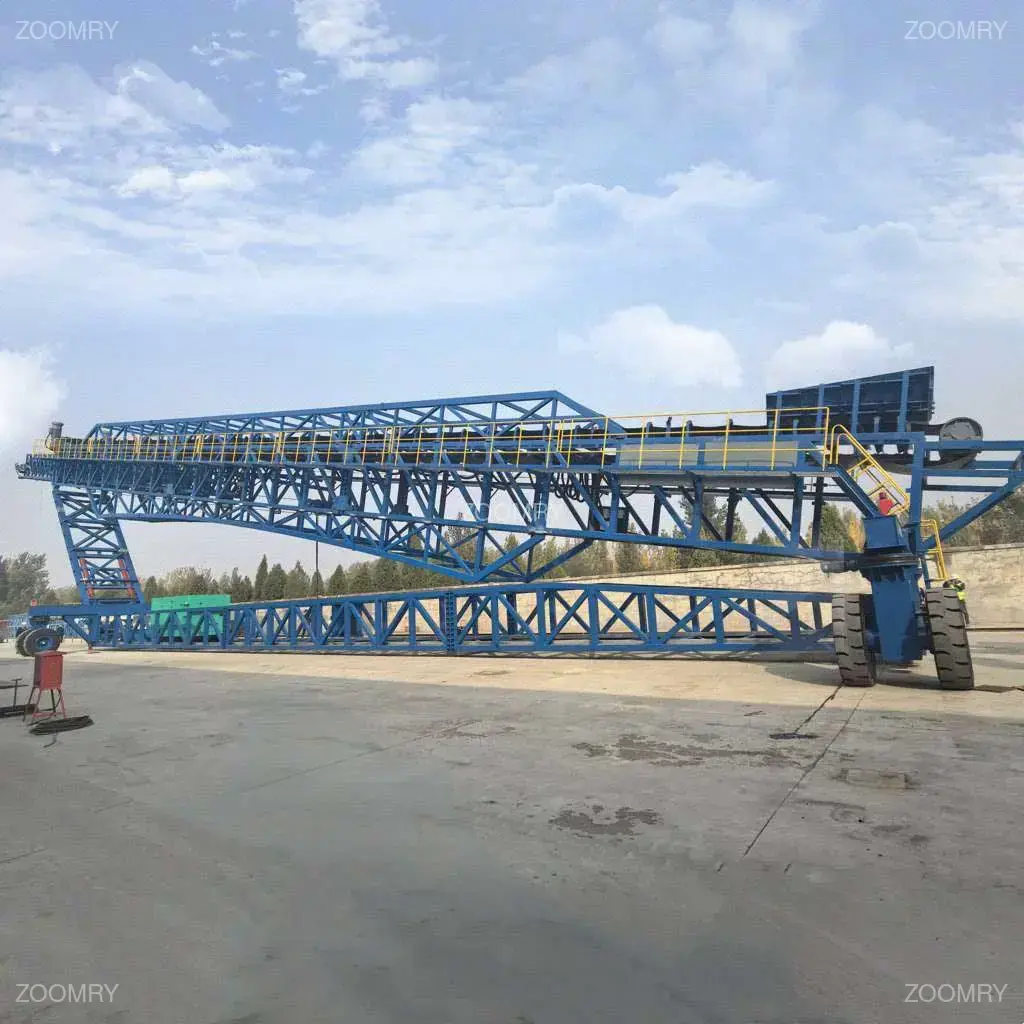
Iron ore shiploader for abrasive ore loading at mining ports. Heavy-du...

Enter your email to contact us quickly!
Copyright © 2002-2026 Zoomry Group Company Limited 非商用版本 AI Index