Time:2026-10-23 13:52:05 Number of Clicks:
Africa's mining corridors are expanding faster than the stockyard infrastructure that supports them. From coal operations in South Africa's Mpumalanga province to bauxite mines in Guinea, phosphate terminals in Morocco and iron ore railways in Mauritania, the continent is moving more bulk material than at any point in its history. The bottleneck is rarely the mine or the port — it is the stockyard in between, where material must be stacked, blended, stored and reclaimed efficiently.
Radial stackers have become one of the most practical solutions for this problem. Unlike fixed stacking conveyors, a radial stacker can pivot around a central point to cover a wide arc of the stockyard, reducing the number of machines required and allowing one unit to serve multiple stockpiles. This article examines how radial stackers are applied in African mining stockyards, using ZOOMRY's ZR-SF, FR and ZR series as reference configurations, and discusses the engineering challenges that are specific to the continent.
Africa's bulk material landscape is unusually diverse. The continent hosts some of the world's largest reserves of coal, bauxite, phosphate, iron ore, manganese, copper and gold, and each material imposes different requirements on the stockyard.
Coal in South Africa. South Africa's coal mines in Mpumalanga and Limpopo produce more than 250 million tonnes per year. Much of this coal moves through stockyards that must handle multiple seams and grades, blending material before it is loaded onto rail or trucks. The stockyard must be able to segregate different grades while maintaining the flexibility to reconfigure as mining plans change.
Bauxite in Guinea. Guinea holds more than 7 billion tonnes of bauxite reserves, roughly a quarter of the global total. Bauxite is abrasive, moisture-sensitive and prone to dust generation. Stockyards at bauxite mines must handle high tonnages while controlling dust and minimizing material degradation. The rapid expansion of Guinean bauxite exports — driven by Chinese, Emirati and multinational mining companies — has created demand for stacking equipment that can be relocated as new mining areas are opened.
Phosphate in Morocco. Morocco's OCP Group controls the world's largest phosphate reserves and operates a network of mines and ports, including Jorf Lasfar, Safi, Casablanca and Laayoune. Phosphate rock and fertilizer products require careful stockyard management to prevent contamination and moisture ingress. The 102-kilometer conveyor system at Laayoune, which transports phosphate from the Boucraa mine to the coast, illustrates the scale at which Moroccan phosphate operations think about bulk handling.
Iron ore in Mauritania. The Zouerate–Nouadhibou railway, operated by SNIM, moves iron ore from inland mines to the Atlantic coast. A 2025 modernization program backed by the African Development Bank and the European Investment Bank is expanding rail capacity, which in turn increases the need for efficient stockyard operations at both ends of the line.
Across all four cases, the same pattern emerges: mining output is growing, but stockyard capacity and flexibility are lagging. Radial stackers address this gap directly.
A radial stacker is a belt conveyor mounted on a pivot, capable of slewing through an arc — typically 270° or 360° — to discharge material at different points around a central feed point. The result is a single machine that can build multiple stockpiles, blend material and adapt to changing site layouts without being repositioned.
In African mining stockyards, three characteristics make radial stackers particularly valuable.
Multi-grade stockpiling. Coal, bauxite and phosphate operations often need to keep different grades separate. A radial stacker can swing between stockpile positions in minutes, whereas a fixed conveyor would require separate discharge points and additional infrastructure. In a South African coal stockyard handling multiple seams, this flexibility directly reduces capital cost.
Site reconfiguration. African mining projects frequently evolve faster than their original plans. New pits open, transport routes shift and export contracts change. A radial stacker — especially a wheeled or tracked unit — can be relocated to a new stockyard position without dismantling the machine. Fixed radial stackers, while less mobile, offer longer booms and higher capacities for operations with stable layouts.
Reduced truck traffic. In many African stockyards, material is moved from the pit or receiving point to the stockpile by truck. Radial stackers allow direct conveyor discharge, eliminating a significant portion of truck movements and reducing dust, fuel consumption and road maintenance costs.
These advantages are not unique to Africa, but they are amplified by the continent's combination of fast-growing output, evolving mine plans and infrastructure constraints.
Radial stackers come in three broad configurations, each suited to different stockyard conditions.
Wheeled telescopic radial stackers combine a wheeled chassis with a telescopic boom, allowing the machine to move between stockyard positions and extend its reach without repositioning. This configuration is the most flexible of the three and is well suited to operations where the stockyard layout is expected to change, or where multiple small stockpiles must be served by a single machine.
The telescopic boom typically extends from 10 to 22 meters, giving the machine the ability to build stockpiles at different distances from the feed point. Belt widths range from 800 mm to 1,600 mm, with capacities from 500 to 3,500 m³/h.
Fixed radial stackers are mounted on a stationary base and use a long boom — typically 40 to 58 meters — to build stockpiles across a wide arc. They are not designed to be relocated, which makes them suitable for operations with stable, long-term stockyard layouts.
The advantage of the fixed configuration is capacity and reach. Because the machine does not need to support a wheeled or tracked chassis, the boom can be longer and the belt wider, allowing higher throughput. Fixed radial stackers are common in port stockyards and large mine stockyards where the layout is fixed for the life of the operation.
Tracked radial stackers use a crawler chassis, providing better mobility on soft, uneven or sloping ground. They are particularly suited to African stockyards where ground conditions are poor, or where the machine must move frequently between stockpile positions.
Tracked units typically have lower travel speeds than wheeled units but offer better traction and stability. Ground pressure is kept below 80 kPa, allowing operation on uncompacted surfaces. The 360° slewing capability allows the machine to build stockpiles in any direction from a single feed point.
The following configurations illustrate how ZOOMRY's radial stacker range maps onto the stockyard requirements described above.
The ZR120SF is a wheeled telescopic radial stacker with a 1,200 mm belt, a capacity of 1,500 m³/h and a belt speed of 3.15 m/s. The telescopic boom extends from 10 to 22 meters, and the machine is mounted on a wheeled chassis with a travel speed of up to 20 m/min and a turning radius of at least 8 meters.
This configuration is well suited to mid-size coal, bauxite or aggregate stockyards where the layout may change over time. The 1,200 mm belt handles material up to 250 mm particle size, and the installed power of 132 kW provides sufficient capacity for most mid-size operations.
The ZR160SF is the largest model in the ZR-SF series, with a 1,600 mm belt, a capacity of 3,500 m³/h and a belt speed of 4.0 m/s. The telescopic boom extends from 10 to 22 meters, and the installed power is 220 kW.
This configuration is suited to large stockyards where high throughput is required. The 1,600 mm belt handles material up to 400 mm particle size, making it suitable for run-of-mine coal and coarse bauxite. The higher belt speed allows the machine to maintain capacity even when handling material with a wide particle size distribution.
The FR120 is a fixed radial stacker with a 1,200 mm belt, a capacity of 1,500 m³/h and a 50-meter boom. The machine is mounted on a stationary base and is designed for stockyards where the layout is fixed for the life of the operation.
The 50-meter boom provides a wide stacking arc, reducing the number of machines required to cover a large stockyard. The 132 kW installed power and 3.15 m/s belt speed are matched to the capacity of the belt. This configuration is common in port stockyards and large mine stockyards where material must be stacked continuously.
The ZR1200 is a tracked radial stacker with a 1,200 mm belt, a capacity of 300 to 1,000 t/h and a 20-meter conveyor length. The machine is mounted on a crawler chassis with ground pressure below 80 kPa, allowing operation on soft or uneven ground.
The ZR1200 features independent diesel-hydraulic power and hydraulic adjustment of both infeed and discharge heights. The 360° slewing capability allows the machine to build stockpiles in any direction from a single feed point. This configuration is suited to African stockyards where ground conditions are poor, or where the machine must move frequently between stockpile positions.
African mining stockyards present a set of engineering challenges that are not always present in other regions. The following sections discuss the most important ones.
Bauxite and iron ore are highly abrasive. Belt conveyors handling these materials must be equipped with wear-resistant covers, and the discharge chutes and transfer points must be lined with wear plates. The belt itself should be selected for high abrasion resistance, and the pulley lagging should be chosen to match the material.
In practice, this means specifying a belt with a abrasion-resistant cover grade, and designing the transfer points to minimize impact and sliding wear. For bauxite, which can be moisture-sensitive, the belt should also be designed to resist material build-up.
Port stockyards in Africa — particularly in Morocco, South Africa and Namibia — are exposed to salt-laden air, which accelerates corrosion of steel structures, pulleys and bearings. Radial stackers installed in these environments should be protected with corrosion-resistant coatings, stainless steel components where practical, and sealed bearings.
The structural steel should be galvanized or coated with a marine-grade paint system. Electrical cabinets should be sealed to IP65 or higher, and the control system should be designed for humid, salty conditions.
Many African mining operations face unreliable grid power. Radial stackers can be configured with diesel, electric or hybrid drives, allowing the machine to operate independently of the grid. Hybrid configurations are increasingly common, combining a diesel generator with a battery system to reduce fuel consumption and emissions.
For tracked units, independent diesel-hydraulic power is standard, which allows the machine to operate without any external power connection. This is particularly valuable in remote stockyards where grid power is not available.
African stockyards often operate in high-temperature, high-dust environments. Radial stackers should be designed with adequate cooling for motors and hydraulic systems, and with dust suppression at transfer points. The belt should be selected for high-temperature resistance where necessary, and the machine should be designed for easy cleaning and maintenance.
Dust suppression can be achieved through dry fog systems, enclosed transfer points or water spray — although water spray is often impractical in arid regions. Dry fog and enclosure are the preferred solutions in most African stockyards.
The choice between radial, fixed and telescopic stackers depends on the stockyard layout, the material, the required capacity and the expected life of the operation.
| Configuration | Flexibility | Capacity | Investment | Best for |
|---|---|---|---|---|
| Wheeled telescopic radial (ZR-SF) | High | Medium to high | Medium | Stockyards with changing layouts, multiple small stockpiles |
| Fixed radial (FR) | Low | High | Medium to high | Stable layouts, port stockyards, large mine stockyards |
| Tracked radial (ZR) | High | Low to medium | Medium | Difficult ground, frequent relocation |
In practice, many African stockyards combine two or more configurations. A fixed radial stacker might handle the main stockpile, while a wheeled or tracked unit handles smaller, temporary stockpiles or serves as a backup during maintenance.
One of the clearest examples of radial stacker deployment in African mining comes from South Africa. A 400 t/h coal handling system installed in 2024 uses a 270° radial stacker to build three stockpiles of approximately 7,400 tonnes each. The radial configuration allows the system to switch between stockpiles without repositioning the machine, and the 270° arc provides sufficient coverage for the entire stockyard.
The lessons from this and similar projects are consistent. First, the radial stacker's value comes from its ability to serve multiple stockpiles from a single feed point — the wider the arc, the greater the benefit. Second, the machine's mobility (or lack of it) should be matched to the expected stability of the stockyard layout. Third, the material handling characteristics — abrasion, moisture, particle size — should drive the belt and chute design, not the other way around.
For African mining operations planning new stockyards or upgrading existing ones, these lessons translate into a simple principle: specify the radial stacker around the material and the layout, not around a standard catalogue model.
Before selecting a radial stacker for an African mining stockyard, the following checklist is recommended:
Radial stackers are suitable for stockyards ranging from a few thousand tonnes to several hundred thousand tonnes. The key variable is the required arc and the number of stockpiles, not the total stockyard capacity. A single radial stacker can serve multiple stockpiles within its arc.
Specify a belt with an abrasion-resistant cover grade, line transfer points with wear plates, and select pulley lagging matched to the material. For bauxite, also consider moisture resistance and material build-up prevention.
Wheeled units are faster and easier to relocate on prepared surfaces. Tracked units offer better traction and stability on soft or uneven ground. The choice depends on ground conditions and how often the machine needs to be moved.
Configure the stacker with diesel, electric or hybrid drives. Tracked units with independent diesel-hydraulic power can operate without any external power connection. Hybrid configurations reduce fuel consumption and emissions.
Choose a radial stacker when the stockyard layout is expected to change or when multiple stockpiles must be served from a single feed point. Choose a fixed stacker when the layout is stable and high capacity is required.
Delivery time depends on the configuration and the project schedule. Standard configurations typically require 45 to 90 days for manufacturing, plus shipping time. Custom configurations may require longer.
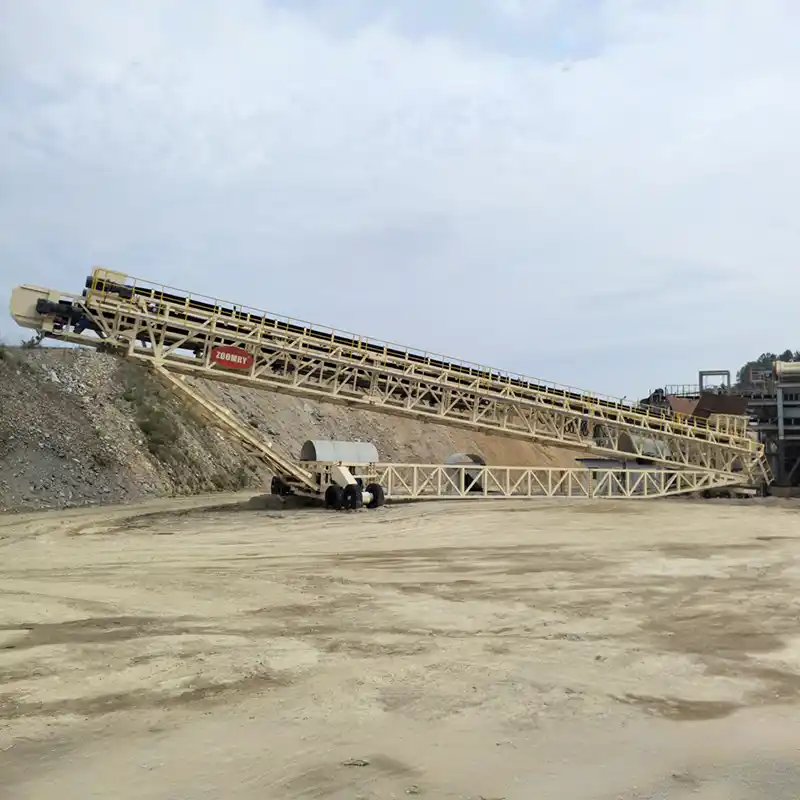
Telescopic stacker for stockyard stacking, reclaiming and truck/ship l...
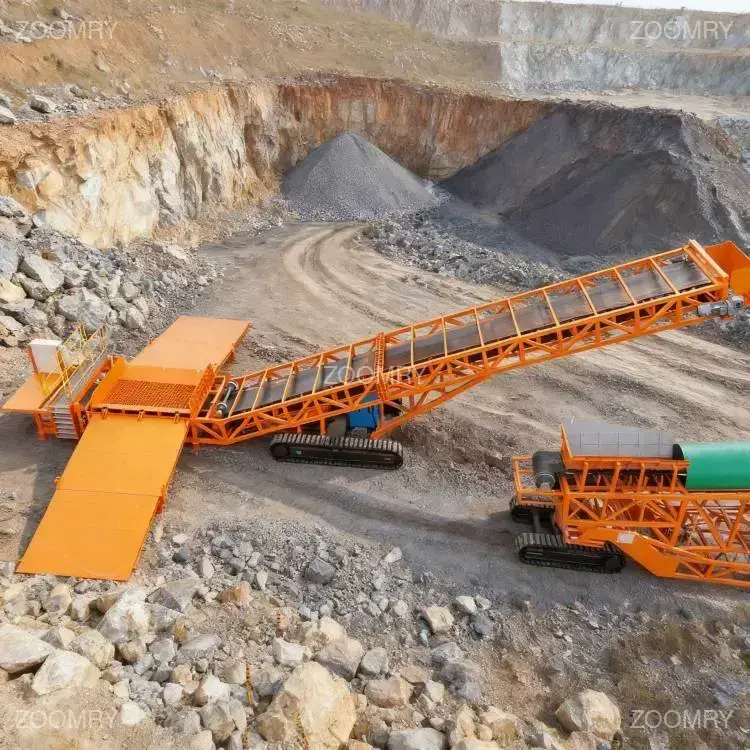
ZRLS-TU1800 wheeled 2-lane truck unloader. 1800mm conveyor, 600-1800 t...
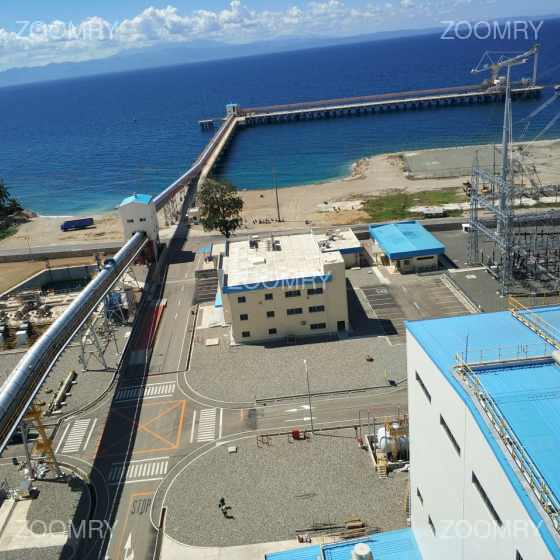
Curved belt conveyor with 3D spatial turning technology for damage-fre...
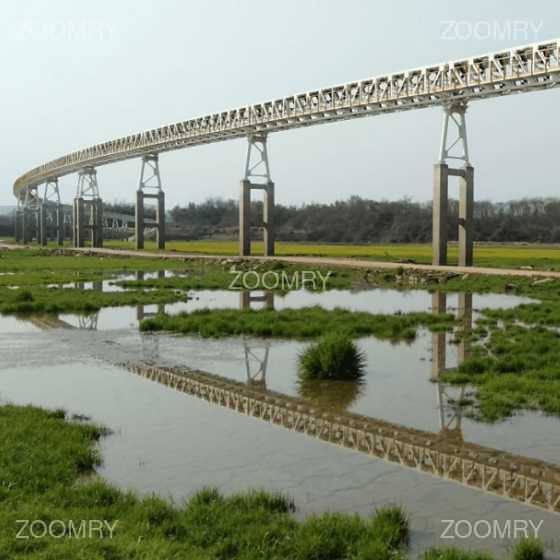
Tubular conveyor with fully enclosed modular design. Hexagonal roller ...

Enter your email to contact us quickly!
Copyright © 2002-2026 Zoomry Group Company Limited 非商用版本 AI Index