Time:2026-10-29 08:53:12 Number of Clicks:
A stacker is a bulk material handling machine that builds stockpiles by discharging material onto a stockyard at a controlled rate and position. Stackers are used in mining, ports, power plants and cement plants to store material between the receiving point and the downstream process, whether that is a ship loader, a rail loading station or a processing plant.
This article examines stackers from a design and application perspective. It covers the main configurations, the engineering considerations that determine stockpile quality and throughput, the differences between radial, telescopic and tracked stackers, and the selection criteria that matter most in real projects.
A stacker consists of a belt conveyor mounted on a structural boom, supported by a chassis that may be fixed, wheeled or tracked. Material is fed onto the conveyor and discharged at the end of the boom, building a stockpile. The boom may be fixed, telescopic, or mounted on a slewing platform that allows the stacker to build stockpiles in a wide arc.
The key characteristic of a stacker is that it controls where material is placed, not just how much is conveyed. This control determines stockpile shape, material segregation, and the efficiency of downstream reclaiming.
Radial stackers are mounted on a pivot and can slew through an arc, typically 270° or 360°. They build stockpiles in a circular pattern around the pivot point, allowing one machine to serve multiple stockpile positions. Radial stackers are common in coal, bauxite and aggregate stockyards where multiple grades or products must be kept separate.
Typical boom lengths range from 30 to 60 meters, with capacities from 500 to 3,500 m³/h. Belt widths range from 800 mm to 1,600 mm.
Telescopic stackers use a boom that can extend and retract, allowing the discharge point to be adjusted without moving the machine. This is particularly useful where the stockpile must be built in layers, or where the discharge point needs to follow a changing stockpile profile.
Telescopic stackers are available in wheeled and tracked configurations. Wheeled units are suitable for prepared surfaces, while tracked units can operate on soft or uneven ground.
Tracked stackers use a crawler chassis, providing better traction and stability on soft, uneven or sloping ground. They are suitable for mining and quarrying operations where ground conditions are poor, or where the stacker must move frequently between stockpile positions.
Ground pressure is typically kept below 80 kPa, allowing operation on uncompacted surfaces. Tracked stackers are often used in combination with mobile truck unloaders or hopper feeders.
The stacker must be designed to build the stockpile shape required by the operation. This includes the stockpile height, the angle of repose of the material, and the number of stockpiles that must be served. A stacker that cannot reach the required stockpile height or radius will limit the storage capacity of the stockyard.
Material segregation is also a key consideration. Coarse and fine particles tend to separate when material is discharged from a conveyor, so the stacker must be designed to minimize segregation through controlled discharge and layering.
The boom carries the conveyor and determines the reach of the stacker. Boom length, belt width, and structural design must be matched to the material and the required capacity. Long booms require careful structural design to avoid vibration and deflection.
Dust is generated at the discharge point and at the transfer point between the feed conveyor and the stacker boom. Dust control measures include enclosures, dry fog suppression, and water spray where permitted. The choice depends on the material and the environmental requirements.
The chassis determines how the stacker is relocated. Fixed stackers are suitable for stable stockyard layouts, while wheeled and tracked stackers can be moved as the operation changes. Hydraulic lifting and self-levelling systems allow rapid setup without crane assistance.
Stackers are available in capacities from 500 to 3,500 m³/h, with custom configurations for higher throughput. The actual throughput depends on the belt width, belt speed, material characteristics, and the discharge arrangement.
For a typical port or mine stockyard, a stacker with a 1,200 mm belt and 1,500 m³/h capacity is sufficient. For larger operations, a 1,600 mm belt and 3,500 m³/h capacity provides higher throughput and better redundancy.
In mining, stackers build stockpiles of ore, coal or aggregate between the mine and the processing plant or transport link. Radial and tracked stackers are common, depending on the stockyard layout and ground conditions.
In ports, stackers build stockpiles of bulk material received from trucks or conveyors before it is loaded onto ships. Radial stackers are common because they can serve multiple stockpile positions from a single pivot point.
In cement plants, stackers build stockpiles of limestone, clay and other raw materials. Dust control is a key consideration, and enclosed or covered stockpiles are common.
In power plants, stackers build coal stockpiles. Fire prevention and dust control are critical considerations, and stackers are often designed with fire detection and suppression systems.
| Configuration | Reach | Mobility | Best for |
|---|---|---|---|
| Radial | Wide arc, fixed boom | Fixed or wheeled | Multiple stockpiles from one pivot |
| Telescopic | Adjustable reach | Wheeled or tracked | Layered stockpiles, changing profiles |
| Tracked | Fixed or telescopic boom | Tracked chassis | Poor ground, frequent relocation |
In practice, many operations combine configurations. A radial stacker might handle the main stockpile, while a tracked unit handles temporary or remote stockpiles.
Stackers require regular maintenance of the belt, idlers, pulleys, and structural components. Boom inspection is particularly important, as the boom carries the full weight of the conveyor and the material. Dust accumulation should be cleaned regularly to prevent fire and explosion risks, particularly when handling coal.
Safety considerations include emergency stop systems, guards on rotating parts, and procedures for working near the stockpile. Operators should be trained in the specific procedures for the stacker and the material being handled.
A conveyor transports material from one point to another. A stacker is a type of conveyor that is specifically designed to build stockpiles by controlling where material is discharged. All stackers are conveyors, but not all conveyors are stackers.
Stackers are available in capacities from 500 to 3,500 m³/h. Custom configurations can be evaluated for higher throughput.
Radial stackers are better for serving multiple stockpiles from a single pivot point. Telescopic stackers are better for building layered stockpiles or following changing stockpile profiles. The choice depends on the stockyard layout and the material.
Dust control measures include enclosures at the discharge point, dry fog suppression, and water spray where permitted. The choice depends on the material and the environmental requirements.
Yes, but the belt, discharge chute and stockpile design must be adapted to the material. In some cases, a different discharge arrangement or belt cleaner may be required.
Standard configurations typically require 45 to 90 days for manufacturing, plus shipping time. Custom configurations may require longer.
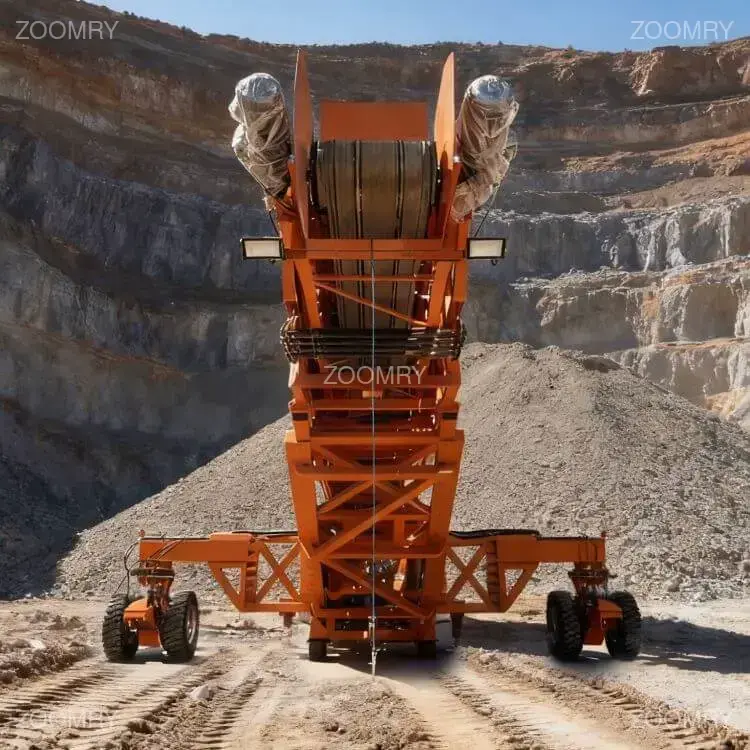
ZR100SF stacker conveyor with 1000mm belt, 850 m³/h. Stacking capacity...
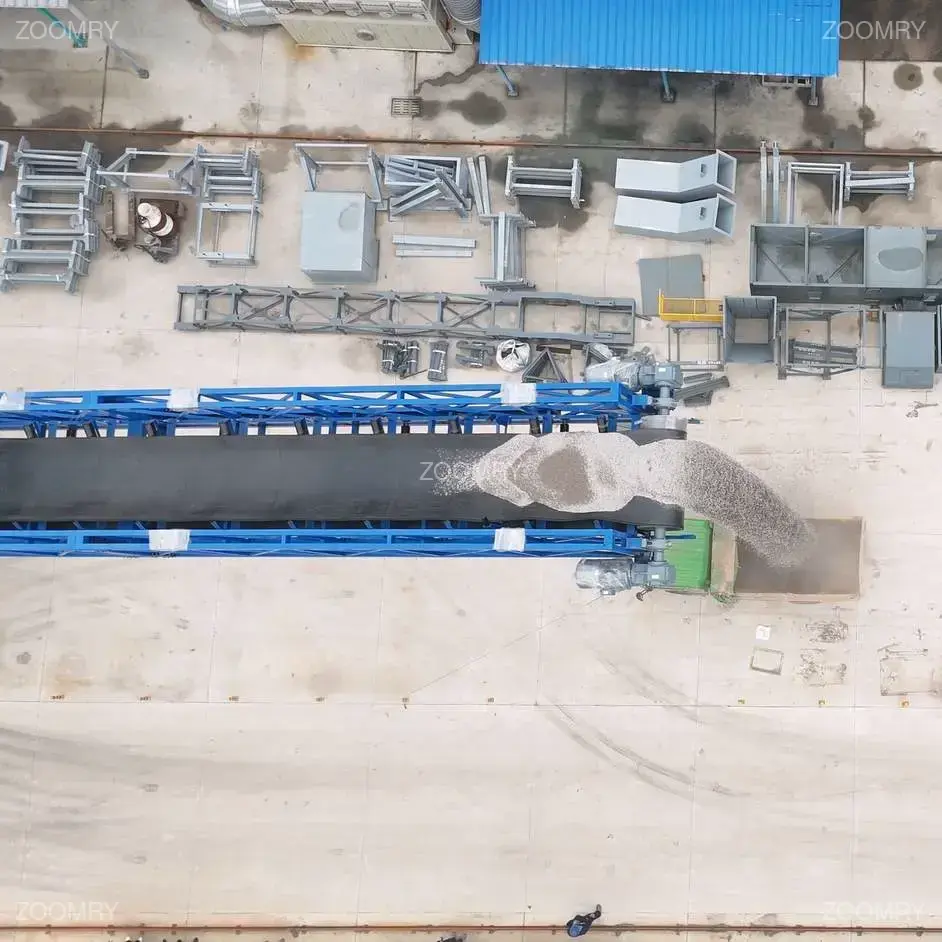
Movable ship loader for multi-berth bulk loading without fixed rail in...
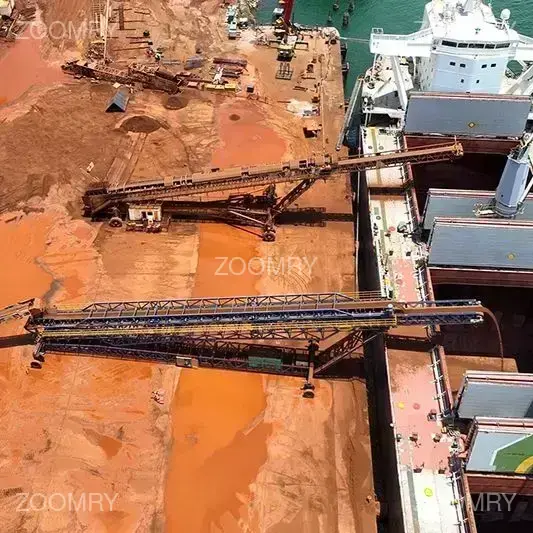
ZRSL-45 mobile shiploader for vessels of 35,000-50,000 DWT. Automated ...
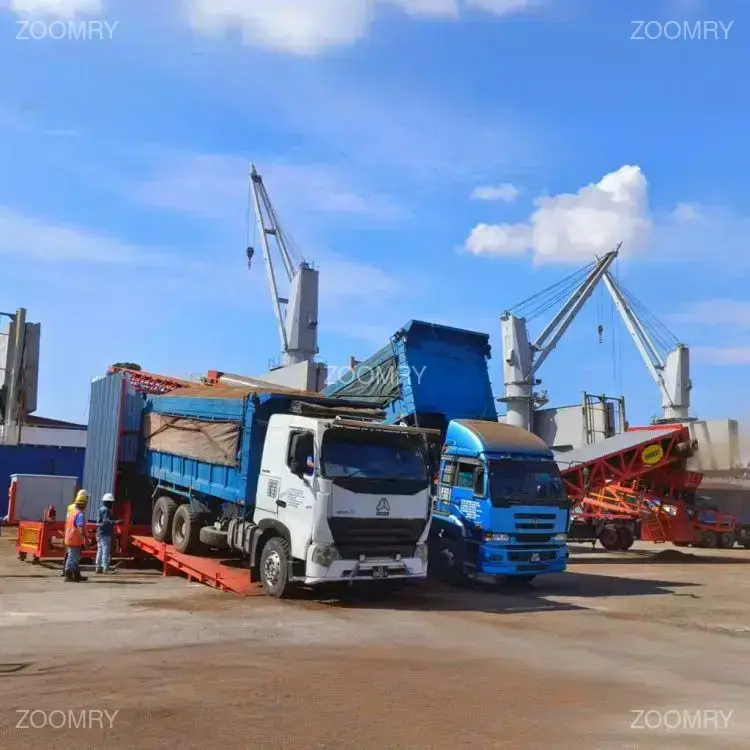
ZRLD-TU1800 tracked 4-lane truck unloader for up to 4 large trucks. 18...

Enter your email to contact us quickly!
Copyright © 2002-2026 Zoomry Group Company Limited 非商用版本 AI Index