Time:2026-11-11 09:30:15 Number of Clicks:
A bucket wheel reclaimer is selected for the application, not for the machine alone. The same BW-R reclaimer configuration that works in a coal stockyard at a power plant may be unsuitable for an iron ore stockyard where abrasion is far higher, or for a port stockyard where multiple grades must be kept separate. This article sets out how bucket wheel reclaimers are applied in three stockyard types — coal, ore and port — and what changes in each application.
For the working principle and the difference from a bucket wheel excavator, see Bucket Wheel Reclaimer: How It Works and Where It Fits. For the combined stacker-reclaimer selection, see Stacker Reclaimer for Coal, Ore and Port Stockyards: Selection Guide.
The reclaiming rate, the wheel diameter, the bucket teeth material, the dust control system and the control philosophy all depend on where the reclaimer operates. Three variables drive the application-specific design:
Coal stockyards at power plants and coal terminals are the most common application for bucket wheel reclaimers. The machine reclaims coal from the stockpile and feeds it to the boiler feed system or to the ship loader.
Application-specific requirements:
For the reclaimer range, see BW-R Bucket Wheel Reclaimer.
Iron ore, copper ore and bauxite stockyards require a reclaimer designed for abrasion and high bulk density. The bucket teeth, the wheel structure and the chute liners wear faster in ore than in coal, and the maintenance interval must be planned accordingly.
Application-specific requirements:
For the combined stacker-reclaimer used in ore stockyards, see BW-SR Bucket Wheel Stacker Reclaimer.
Port stockyards serve ship loaders and receive material from truck unloaders, rail wagons or incoming conveyors. The reclaimer must handle multiple grades of material without cross-contamination, and it must match the ship loader's loading plan.
Application-specific requirements:
For a broader view of port bulk material handling equipment, see Bulk Material Handling Equipment for Ports: A Complete Guide.
| Application | Key material | Main reclaimer requirement | Typical configuration |
|---|---|---|---|
| Coal stockyard | Coal | Fire prevention, stockpile turnover, capacity matching | Rail-mounted or tracked BW-R, with water spray and dust removal |
| Ore stockyard | Iron ore, copper ore, bauxite | Wear protection, bulk density, dust control | Heavy-duty BW-R with wear liners and alloy teeth |
| Port stockyard | Coal, ore, fertilizer, grain | Grade separation, ship loader integration, emission compliance | Rail-mounted BW-R integrated with the ship loader control |
A coal terminal handling Panamax vessels might specify a rail-mounted BW-R with a 1,200 mm boom conveyor, a 3.2 m wheel diameter and a reclaiming rate of 1,500 t/h. The reclaimer would be integrated with the ship loader control so that the reclaiming rate follows the ship loader's loading plan.
An iron ore stockyard feeding a processing plant might specify a heavy-duty BW-R with a 1,400 mm boom conveyor, a 3.6 m wheel diameter and a reclaiming rate of 2,000 t/h, with alloy bucket teeth and replaceable wear plates on the wheel and chute.
These are illustrative configurations. The actual configuration for a project is determined by the material test, the stockyard layout and the downstream process.
A bucket wheel reclaimer is dedicated to reclaiming. A stacker reclaimer can both stack and reclaim. The reclaimer is used where stacking is handled by a separate machine; the stacker reclaimer is used where both functions are needed at the same point.
Ore stockyards are the most demanding, because the material is hard and abrasive. The bucket teeth, the wheel and the chute wear faster, and the maintenance interval must be planned accordingly.
Yes, but the stockyard layout and the control system must be designed to prevent cross-contamination. This is particularly important in port stockyards.
Dust control measures include water spray at the cutting face, dust removal from the structure, and belt covers or enclosures where required. For coal, dust control is also part of the fire prevention plan.
Capacity depends on the wheel diameter, the bucket size, the boom conveyor width and the material. ZOOMRY configurations cover the range required by coal, ore and port stockyards, with custom configurations for higher throughput.
Standard configurations typically require 45 to 90 days for manufacturing, plus shipping time. Custom configurations may require longer.
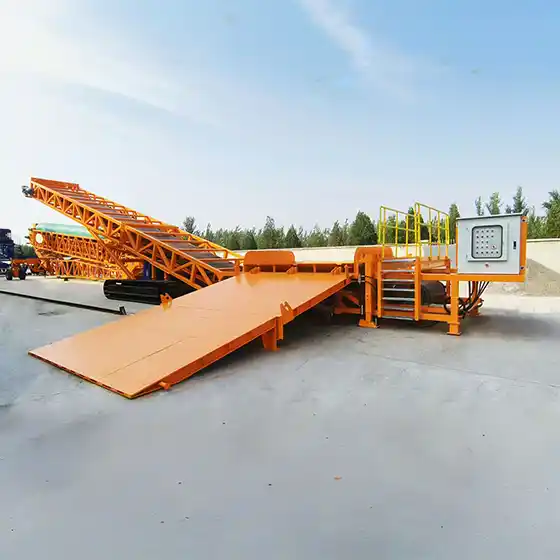
Bulk truck unloader with drive-over hopper for rapid unloading of sand...
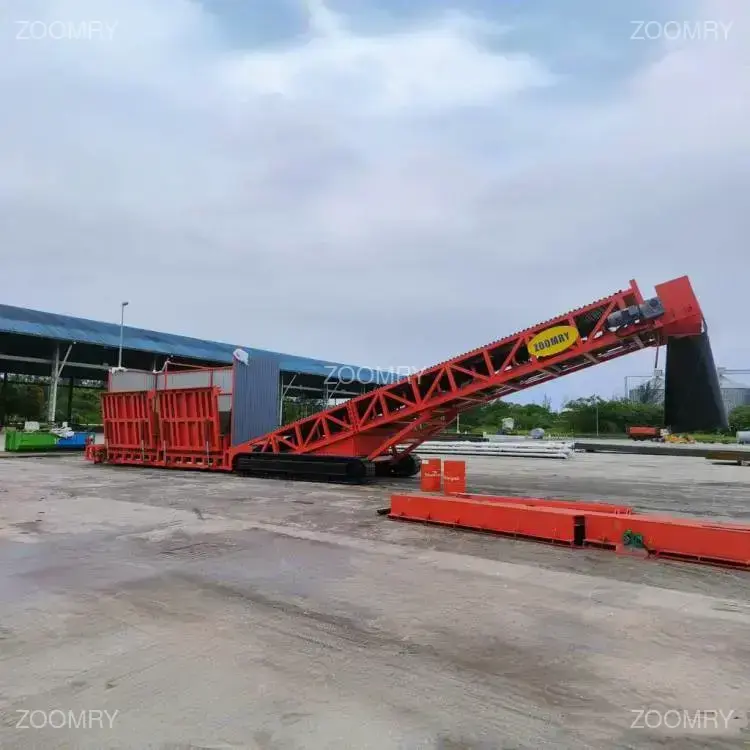
ZRLD-TU1400 tracked 4-lane truck unloader for simultaneous unloading o...
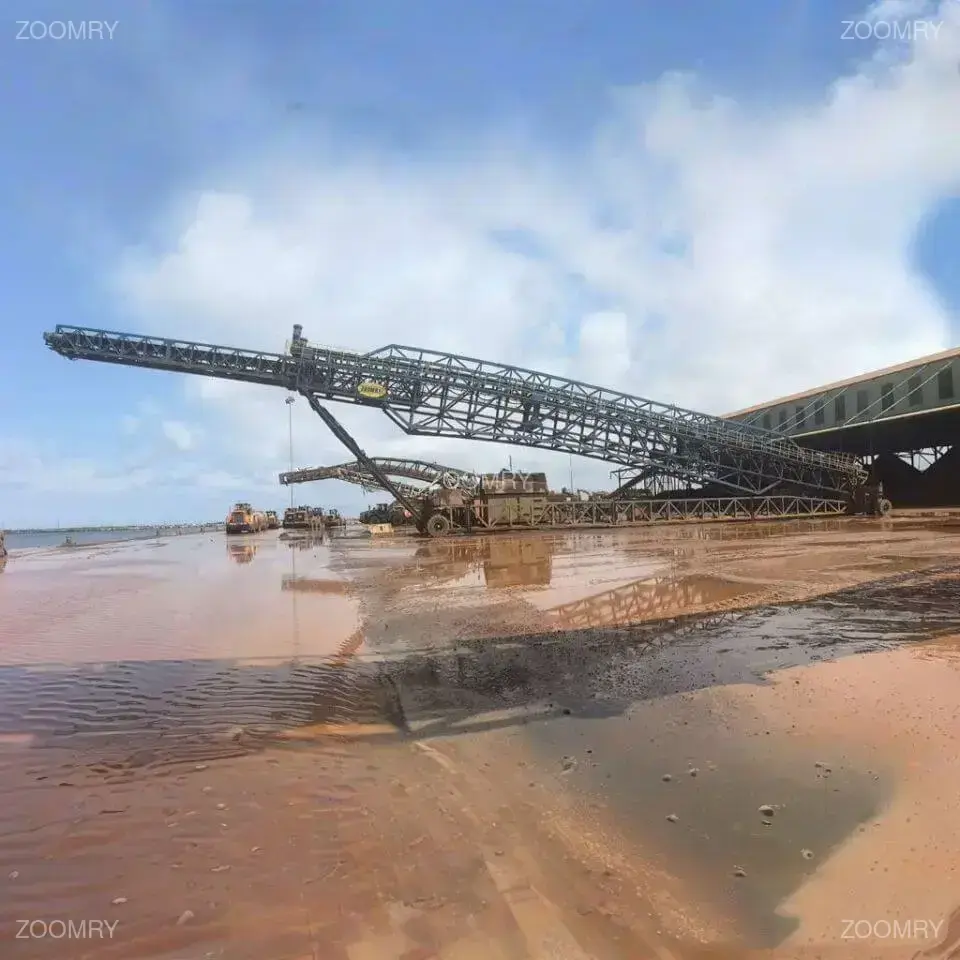
ZRSL-58 mobile shiploader for vessels of 80,000-120,000 DWT. Power-off...
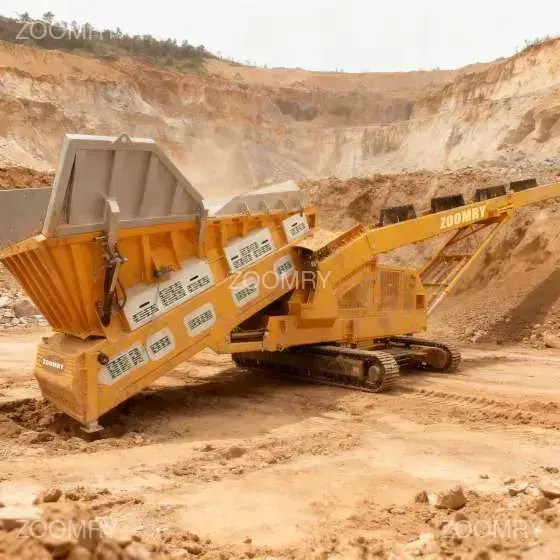
Low feed hopper feeder with 7-12 m³ capacity, up to 800 t/h. Low feed-...

Enter your email to contact us quickly!
Copyright © 2002-2026 Zoomry Group Company Limited 非商用版本 AI Index