Time:2026-11-10 10:16:55 Number of Clicks:
Ship loader selection is driven by three variables: the vessels the terminal serves, the effective throughput required, and the dust control regime the terminal must meet. A loader that is oversized for the vessel mix wastes capital; a loader that is undersized for the berth window creates demurrage; a loader without integrated dust control faces retrofit costs that are several times the upfront saving. This guide sets out the selection logic for each of these three variables, and the hidden costs that determine the real project budget.
For the difference between a ship loader and a ship unloader, see Ship Loader vs Ship Unloader: Key Differences and Selection Guide. This article assumes the project requires a ship loader and focuses on selecting the right one.
The vessel class distribution is the single most important input to loader selection. A terminal that handles Handysize and Supramax vessels does not need a Capesize-rated loader; a terminal that expects Capesize calls should not specify a loader that cannot reach the outer hatches or match the berth window.
| Vessel class | DWT range | Typical loader rate | Boom outreach |
|---|---|---|---|
| Handysize | 15,000–35,000 | 1,000–2,500 t/h | ~30 m |
| Supramax | 50,000–60,000 | 2,000–4,000 t/h | ~35–40 m |
| Panamax | 60,000–80,000 | 3,000–5,000 t/h | ~40–45 m |
| Capesize | 150,000–180,000 | 5,000–8,000 t/h | ~50–60 m |
| VLOC / Newcastlemax | 200,000+ | 6,000–10,000 t/h | ~60 m+ |
The boom length must cover the distance from the quay edge to the centre of the furthest hatch, at the maximum luffing angle. An excessively long boom adds structural weight and wind load without adding capability; a boom that is too short cannot serve the outer hatches of the largest vessels in the mix. The vessel matching table for the ZOOMRY mobile ship loader range is set out in Mobile ship loader.
Loading capacity is expressed in tonnes per hour, but the effective throughput over a full vessel cycle is always lower than the nameplate rate. The gap comes from trimming time, hatch change time and tidal windows. High-capacity terminals design for a utilisation factor of 70–80% of the nameplate rate across the full loading cycle.
The capacity must be matched to three things at once: the incoming conveyor feed rate, the vessel class distribution, and the berth window. A loader that is faster than the incoming conveyor does not reduce loading time; a loader that is slower than the berth window allows creates demurrage. For a coal terminal handling Capesize vessels, every additional hour of loading time has a demurrage cost that can be quantified against the vessel day rate.
The capacity is set by belt width and belt speed, within the material constraints. For large ore and coal terminals, belt widths of 1,200–2,400 mm and belt speeds of 3–5 m/s are typical. The ZOOMRY mobile ship loader covers 800–3,500 t/h depending on model, with the vessel matching table confirming the suitable vessel class for each model.
Dust control is a selection variable, not an afterthought. The primary containment measure is the telescopic chute with a dust skirt, which lowers the discharge point to within 500 mm of the growing pile surface and eliminates the freefall distance that generates the visible plume. Water spray suppression at the chute discharge and at the conveyor transfer points is the secondary measure, with typical application rates of 0.1–0.3 L per tonne.
The regulatory limits determine the design target. Fugitive dust limits below 10 mg/Nm³ at source are required under frameworks such as the EU Industrial Emissions Directive and the Australian NEPM standards, and are achievable with integrated containment and suppression. A retrofit after commissioning typically costs several times the upfront design and installation cost, so the dust control system should be specified as part of the loader selection, not as a later addition.
For coal and other combustible materials, dust control is also part of the fire prevention plan. Coal dust accumulation on the loader structure and in the transfer points must be managed as a fire risk, not only as an emission.
| Type | Typical capacity | Best for | Limitation |
|---|---|---|---|
| Fixed | 500–3,000 t/h | Inland barges, small terminals | Vessel must move to load each hatch |
| Travelling (rail-mounted) | 1,000–8,000 t/h | Medium bulk terminals, Panamax and Handymax | Requires rail infrastructure |
| Radial (slewing) | 2,000–12,000 t/h | Large vessels, Capesize | Tail end is fixed |
| Full-slewing luffing | Up to 16,000 t/h | Ultra-large ore and coal export terminals | Highest capital cost |
The ZOOMRY mobile ship loader is a self-propelled unit that combines a receiving hopper, a belt conveyor and a slewing boom, allowing it to serve multiple berths or move between hatches without a fixed rail system. For terminals that need a mobile rather than rail-mounted solution, this configuration avoids the civil works and rail infrastructure of a fixed installation.
The loader itself is typically 35–50% of the total system cost. The remainder is the conveyor from the storage silo to the quay, the dust collection system, the wharf strengthening, and the electrical and control integration. Procurements that budget only for the loader often discover a 25–40% overrun after commissioning.
Start with the vessel class distribution and the required berth window. Match the loader rate to the vessel class (Handysize 1,000–2,500 t/h, Panamax 3,000–5,000 t/h, Capesize 5,000–8,000 t/h) and the boom outreach to the furthest hatch of the largest vessel in the mix.
Effective throughput over a full vessel cycle is lower than the nameplate rate because of trimming time, hatch change time and tidal windows. High-capacity terminals design for a utilisation factor of 70–80% of the nameplate rate.
Integrated dust control is part of the loader design and is significantly cheaper than a retrofit. A retrofit after commissioning typically costs 3–5 times the upfront design and installation cost.
Radial (slewing) or full-slewing luffing loaders are used for Capesize terminals, with capacities of 2,000–16,000 t/h depending on the terminal throughput and vessel turnaround target. The boom outreach must cover the outer hatches of the Capesize vessels in the mix.
A mobile ship loader is suitable where the terminal wants to avoid rail infrastructure and civil works, and where the loader must serve multiple berths or move between hatches. The capacity range of the mobile unit must match the vessel class and the berth window.
Standard configurations typically require 45 to 90 days for manufacturing, plus shipping time. Custom configurations may require longer.
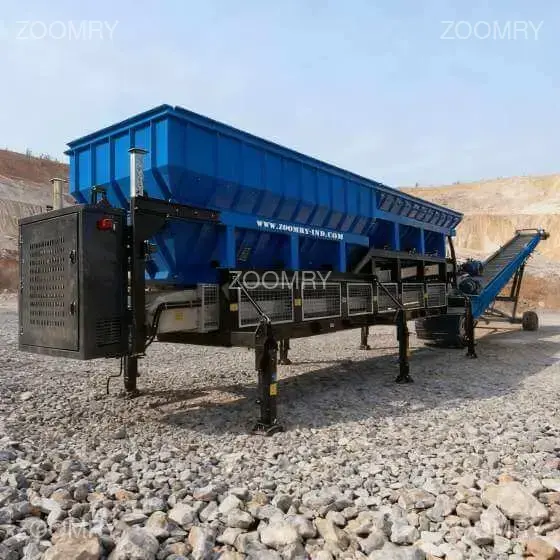
Static hopper feeder with 5-15 m³ capacity, up to 1,000 t/h. Fixed or ...
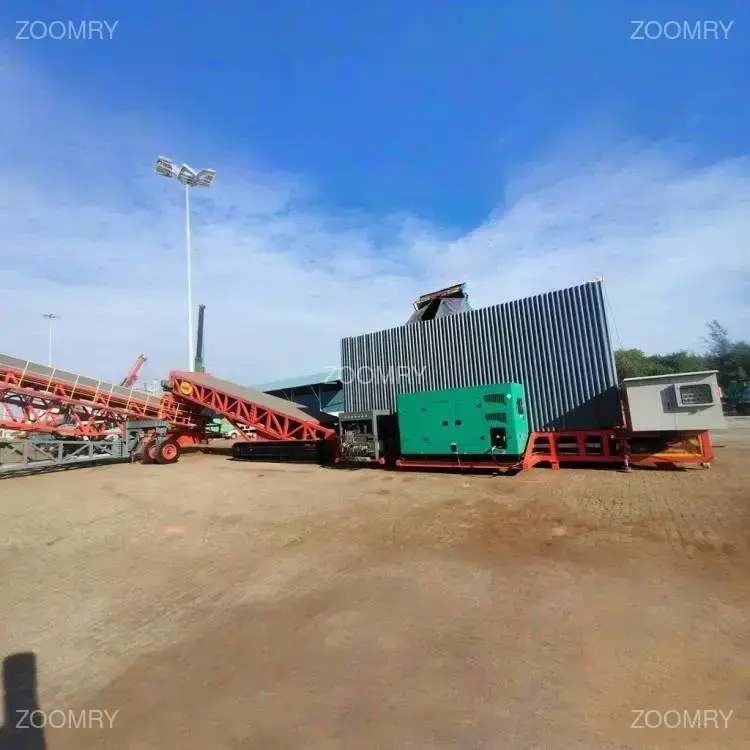
ZRLS-TU1400 wheeled 4-lane truck unloader for up to 4 trucks. 1400mm c...
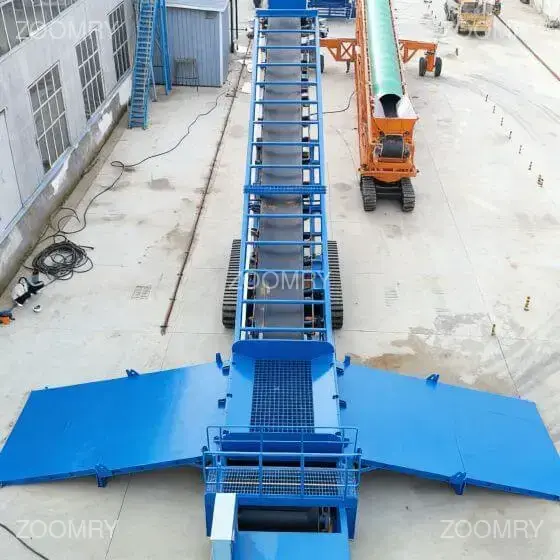
Wheeled truck unloader with 14.00R25 tires and CAN bus terrain sensing...
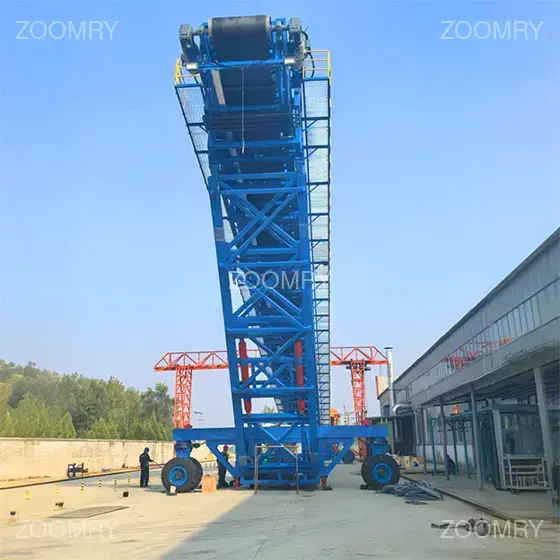
Fertilizer shiploader for rapid bulk fertilizer loading. Specialized a...

Enter your email to contact us quickly!
Copyright © 2002-2026 Zoomry Group Company Limited 非商用版本 AI Index