Time:2026-11-05 15:17:41 Number of Clicks:
A stacker reclaimer is the machine that both builds and recovers stockpiles in a bulk material stockyard. In coal, ore and port stockyards, the same machine stacks material into piles and reclaims it for ship loading, rail loading or processing. The selection of a stacker reclaimer is therefore driven by the stockyard layout, the material, the throughput and the downstream process — not by the machine alone.
This article sets out the selection criteria for stacker reclaimers in coal, ore and port stockyards, compares the main configurations, and provides the parameters that determine the final specification.
A stacker reclaimer combines two functions in one machine:
The machine travels along the stockyard on rails, on tracks, or is fixed at a single point. The choice of travel system, boom length and reclaiming device determines how the stockyard is operated.
For a definition of the machine, see What is a bucket wheel stacker reclaimer? For the stacker types used in stockyards, see Stackers for Bulk Material Stockyards: Types, Selection and Applications.
Coal stockyards at power plants and coal terminals require a stacker reclaimer that can handle high throughput, control dust and manage the risk of spontaneous combustion. The machine must be able to build and reclaim piles without leaving dead zones, and the stockyard layout must allow the pile to be turned over on a defined interval.
Typical requirements: capacity from 1,000 to 3,500 t/h, boom length 40–60 m, dust suppression at the transfer points, and fire detection and suppression on the machine and in the stockyard.
Iron ore, copper ore and bauxite stockyards require a stacker reclaimer that can handle abrasive material and high bulk density. Bucket wheel teeth and the bucket wheel structure wear faster in ore than in coal, and the machine must be designed for the maintenance interval the operation can support.
Typical requirements: capacity from 1,500 to 4,000 t/h, heavy-duty bucket wheel and wear liners, and a structural design that accounts for the higher bulk density of ore.
Port stockyards serve ship loaders and receive material from truck unloaders, rail wagons or incoming conveyors. The stacker reclaimer must be able to build piles in a layout that allows the ship loader to reclaim efficiently, and the machine must be able to handle multiple grades of material without cross-contamination.
Typical requirements: capacity from 1,000 to 3,500 t/h, multiple pile positions, and a control system that integrates with the ship loader and the terminal management system.
| Configuration | Best for | Limitations |
|---|---|---|
| Rail-mounted | Long, linear stockyards with fixed rail lines; high throughput; multiple pile positions | Requires rail infrastructure; limited to the rail line |
| Tracked | Stockyards where the machine must move between piles on unprepared ground; changing layout | Lower travel speed; higher ground pressure than rail |
| Fixed | Single-pile applications; radial stockyards; low throughput | Cannot serve multiple piles without a transfer system |
The boom length determines the reach of the machine and the height of the pile it can build. The wheel diameter determines the cutting depth and the reclaiming rate. Both must be matched to the stockyard geometry and the material.
Bucket wheel reclaimers are the standard for coal, ore and port stockyards. Bucket chain reclaimers are used in some applications where the material is difficult to handle with a wheel, but they are less common in high-throughput stockyards.
ZOOMRY's BW-SR series is the stacker-reclaimer configuration for coal, ore and port stockyards. The BW-R series is the dedicated reclaimer for stockyards where stacking is handled by a separate machine. For the dedicated reclaimer, see BW-R Bucket Wheel Reclaimer. For the combined machine, see BW-SR Bucket Wheel Stacker Reclaimer.
The capacity of a stacker reclaimer is determined by the boom conveyor width, the bucket wheel size, the material and the stockyard layout. ZOOMRY configurations cover the range required by coal, ore and port stockyards, with custom configurations for higher throughput.
The stacking and reclaiming capacities are not always the same. A machine may stack at a higher rate than it can reclaim, or vice versa. The selection must be based on the higher of the two requirements, and the downstream conveyor must be sized for the same rate.
Dust is generated at the stacking discharge point, at the reclaiming face and at the transfer points between the machine and the yard conveyor. Control measures include water spray, dry fog, enclosures and belt covers. The choice depends on the material, the local environmental regulations and the proximity of the stockyard to sensitive areas.
For coal stockyards, dust control is also linked to fire prevention. Coal dust accumulation on the machine and in the stockyard must be managed as part of the fire safety plan.
Stacker reclaimers require regular inspection of the bucket wheel, the boom conveyor, the travel system and the slew system. Bucket teeth and wear liners are the fastest-wearing components and must be checked on a defined interval. The structural components are subject to fatigue loading and require periodic non-destructive inspection.
Safety considerations include emergency stop systems along the travel path, anti-collision systems where multiple machines share a stockyard, guards on rotating parts, and procedures for working near the pile face. For coal stockyards, fire detection and suppression systems are required on the machine and in the stockyard.
A stacker reclaimer can both build and reclaim stockpiles. A dedicated reclaimer only reclaims, and stacking is handled by a separate machine. If the stockyard needs both functions at the same point, a stacker reclaimer is used; if reclaiming is the main requirement, a dedicated reclaimer is more efficient.
Rail-mounted stacker reclaimers are better for long, linear coal stockyards with fixed rail lines and high throughput. Tracked machines are better where the stockyard layout changes or where the machine must move between piles on unprepared ground.
Capacity depends on the boom conveyor width, the bucket wheel size and the material. ZOOMRY configurations cover the range required by coal, ore and port stockyards, with custom configurations for higher throughput.
Dust control measures include water spray at the stacking and reclaiming points, dry fog at the transfer points, belt covers and enclosures. For coal, dust control is also part of the fire prevention plan.
Yes, but the stockyard layout and the control system must be designed to prevent cross-contamination between grades. This is particularly important in port stockyards where different grades are loaded onto different ships.
Standard configurations typically require 45 to 90 days for manufacturing, plus shipping time. Custom configurations may require longer.
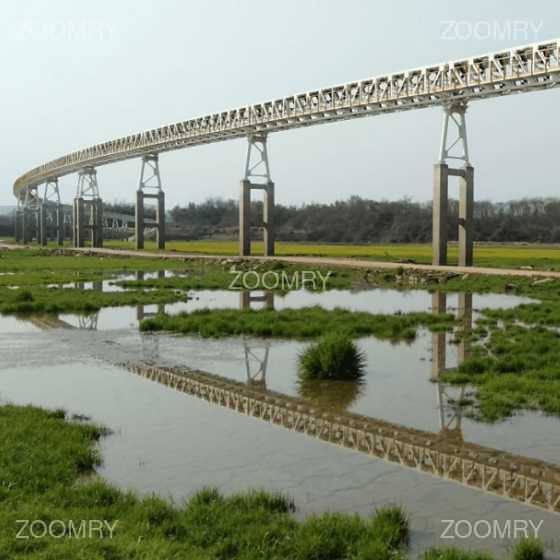
Tubular conveyor with fully enclosed modular design. Hexagonal roller ...
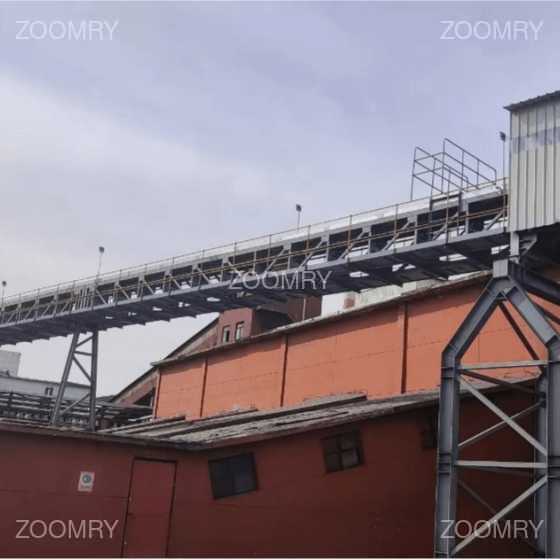
Pipe conveyor with circular closed-pipe structure for zero material le...
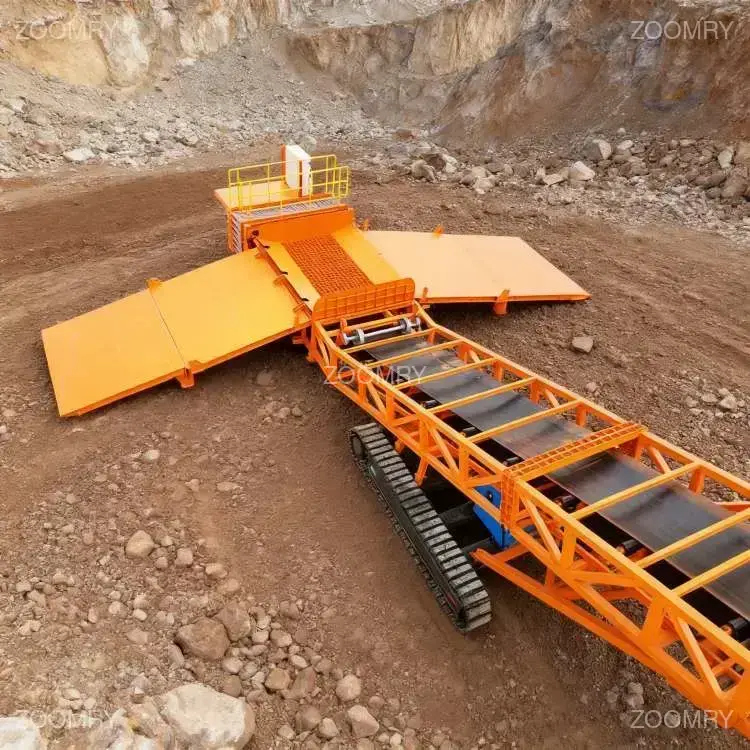
ZRLS-TU1400 wheeled 2-lane truck unloader. 1400mm conveyor, 200-1000 t...
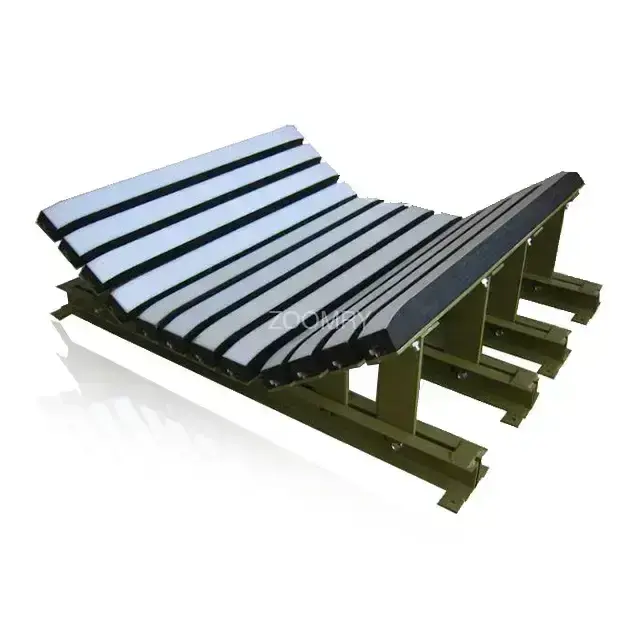
Impact beds for conveyor loading point protection. UHMW wear surface w...

Enter your email to contact us quickly!
Copyright © 2002-2026 Zoomry Group Company Limited 非商用版本 AI Index