Time:2026-11-09 10:04:57 Number of Clicks:
A quarry conveyor system is the equipment chain that moves crushed and screened aggregate from the pit to the stockpile, the truck or the processing plant. It typically combines a receiving hopper and feeder, a belt conveyor, and a stacker or loading conveyor. The selection of each element depends on the material, the throughput, the site layout and the mobility requirements of the quarry.
This article sets out the equipment selection and integration criteria for quarry conveyor systems in aggregate operations, from the primary feeder to the final stockpile or loading point.
An aggregate quarry conveyor system is made up of four functional stages:
In smaller quarries, some of these stages are combined into a single mobile unit. In larger quarries, each stage is a separate machine sized for the throughput.
The conveyor system must match the process flow of the quarry, not the other way round. A typical aggregate flow is:
The conveyor system connects these stages. Each transfer point is a potential source of dust, spillage and wear, so the number of transfer points should be minimised and each transfer point should be designed for the material.
The receiving hopper and feeder set the capacity of the whole system. The hopper volume must be large enough to absorb the discharge cycle of the trucks or the crusher, and the feeder must be able to start and stop under load.
ZOOMRY's HF series hopper feeders cover static, tracked, low-feed and heavy-duty configurations. The HF-ST static hopper feeder is used at fixed receiving points; the HF-TR tracked hopper feeder is used where the receiving point moves; the HF-LF low-feed hopper feeder is used where the discharge height is limited; and the HF-HD heavy-duty hopper feeder is used for abrasive rock.
For the hopper feeder range, see Hopper Feeder and HF-ST Static Hopper Feeder.
The belt conveyor is selected by belt width, belt speed and the material. Aggregate is abrasive and can be sharp, so the belt cover, the idlers and the pulleys must be specified for abrasive duty. The conveyor structure must also allow for the inclination required by the site topography.
For long-distance conveying in quarries, the belt conveyor can be configured with curves and intermediate drives. For abrasive aggregate, heavy-duty idlers and wear-resistant belt covers are specified.
For the conveyor range, see Long distance belt conveyor.
The stacker determines the stockpile shape and the storage capacity of the quarry. Radial stackers are used where multiple stockpile positions must be served from one pivot; telescopic stackers are used where the stockpile must be built in layers; tracked stackers are used where the ground is uneven or the stacker must move frequently.
ZOOMRY's ZR-SF telescopic stackers, FR fixed radial stackers and ZR tracked radial stackers cover the range of configurations used in quarries. For the stacker types and selection criteria, see Stackers for Bulk Material Stockyards: Types, Selection and Applications.
For the stacker range, see Telescopic stacker and Tracked Radial Stacker.
Where the quarry must load directly onto trucks or rail cars, a loading conveyor is used. The grasshopper conveyor is a mobile, self-propelled conveyor that can be repositioned between stockpiles or loading points without a crane.
ZOOMRY's ZR-D series grasshopper conveyors combine a feed hopper, a belt conveyor and a wheeled or tracked chassis in one unit. The ZR65D, ZR80D, ZR100D and ZR120D models handle 200–550 t/h and can be repositioned between stockpiles.
For the grasshopper conveyor range, see Grasshopper Conveyor.
Integrating the conveyor system in a quarry requires attention to four points:
| Configuration | Best for | Limitations |
|---|---|---|
| Fixed | Large quarries with a stable layout; high throughput; long-term operation | Cannot be relocated; requires civil works |
| Mobile (wheeled) | Quarries with prepared roads; frequent relocation between pits | Lower throughput than fixed; requires road maintenance |
| Mobile (tracked) | Quarries with uneven ground; frequent relocation on unprepared surfaces | Lower travel speed; higher ground pressure than rail |
Many quarries combine fixed and mobile equipment: a fixed primary crushing and conveying system, with mobile stackers and grasshopper conveyors for the stockpile and loading stages.
Dust is generated at the receiving hopper, at each conveyor transfer point and at the stacker discharge. Control measures include water spray, dry fog, enclosures and belt covers. The choice depends on the material, the local environmental regulations and the proximity of the quarry to sensitive areas.
Maintenance in a quarry is driven by abrasion. Belt covers, idlers, pulleys and chute liners wear faster in aggregate than in coal or grain. The maintenance schedule should be based on the material and the operating hours, not on a generic interval.
A quarry conveyor system typically includes a receiving hopper and feeder, a belt conveyor, a stacker and a loading conveyor or grasshopper conveyor. The exact configuration depends on the process flow and the site layout.
The capacity is determined by the narrowest stage in the chain. The receiving hopper, the belt conveyor, the stacker and the loading conveyor must all be sized for the same throughput.
A fixed system is used for large quarries with a stable layout and high throughput. A mobile system is used where the equipment must be relocated as the pit advances. Many quarries combine both.
Dust control measures include water spray at the transfer points, dry fog, enclosures and belt covers. The choice depends on the material and the environmental requirements.
Aggregate is abrasive, so the belt cover, idlers and pulleys are specified for abrasive duty. The belt width and speed are selected for the required throughput and the material size.
Standard configurations typically require 45 to 90 days for manufacturing, plus shipping time. Custom configurations may require longer.
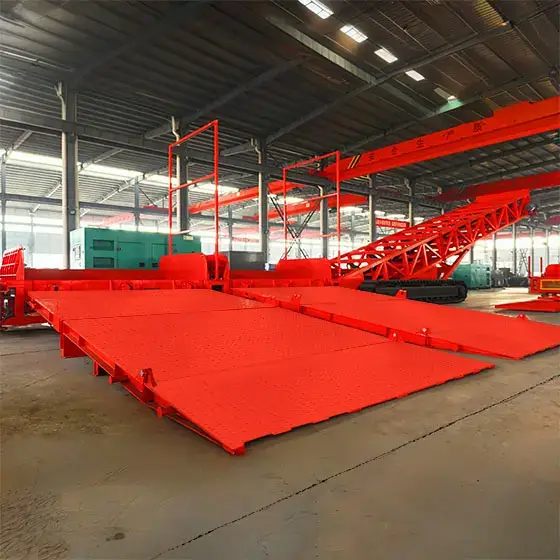
Hydraulic truck unloader with closed-loop proportional valve control. ...
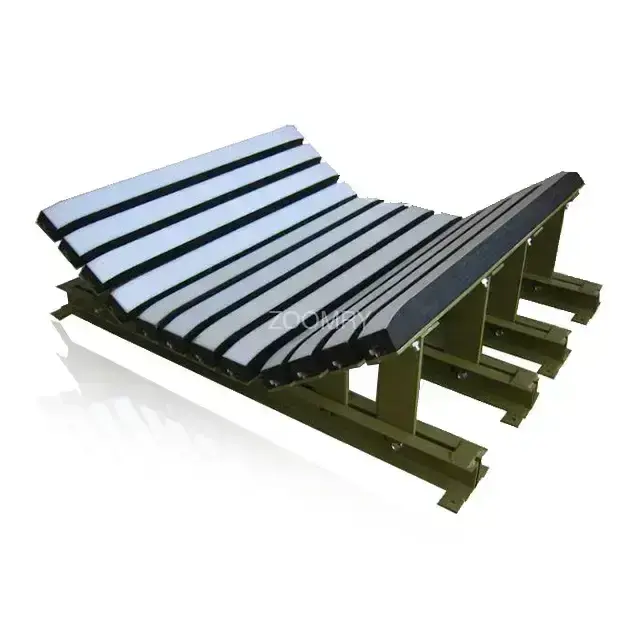
Impact beds for conveyor loading point protection. UHMW wear surface w...
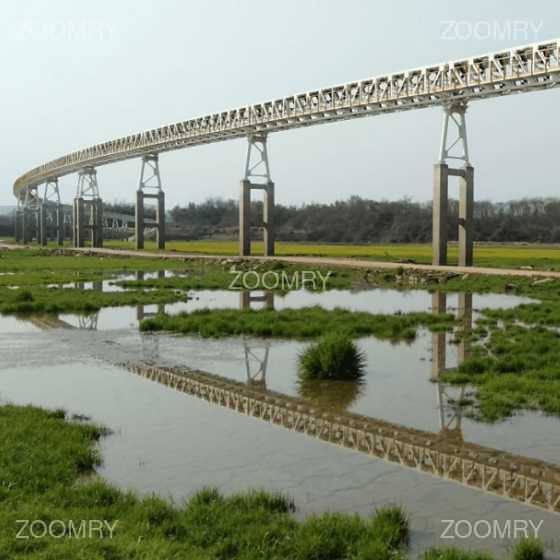
Tubular conveyor with fully enclosed modular design. Hexagonal roller ...
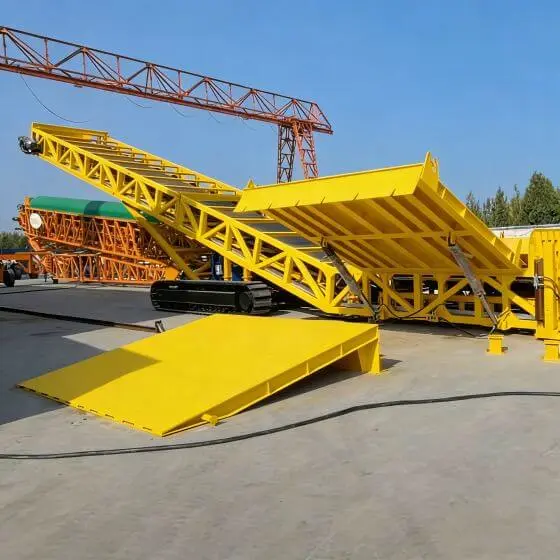
Truck unloading system with dry fog dust suppression and negative pres...

Enter your email to contact us quickly!
Copyright © 2002-2026 Zoomry Group Company Limited 非商用版本 AI Index