Time:2026-11-06 08:57:43 Number of Clicks:
A ship loader and a ship unloader are both port bulk material handling machines, but they move material in opposite directions. A ship loader loads bulk material from the terminal onto a vessel; a ship unloader discharges bulk material from a vessel to the terminal. The two machines share some structural similarities, but the selection criteria, the material flow and the downstream process are different.
This article explains the difference between a ship loader and a ship unloader, where each fits in a port terminal, and how to choose the right configuration for a project.
A ship loader is a machine that receives bulk material from the terminal conveyor and loads it into the hold of a bulk carrier. The machine travels along the quay, positions its boom over the hatch, and discharges material through a telescopic chute or a loading spout at a controlled rate.
Ship loaders are used for export terminals: coal, iron ore, grain, fertilizer, cement and other bulk materials that are loaded onto vessels for shipment. ZOOMRY's mobile ship loader is a self-propelled unit that combines a receiving hopper, a belt conveyor and a slewing boom in one machine, allowing it to serve multiple berths or move between hatches without a fixed rail system.
For the product range, see Mobile ship loader. For the definition of the machine, see What is a mobile ship loader?
A ship unloader is a machine that discharges bulk material from the hold of a vessel to the terminal. The main types are the grab unloader, the continuous ship unloader (pneumatic or mechanical) and the screw ship unloader. Each type uses a different mechanism to lift material from the hold, and each has a different capacity range and material suitability.
Ship unloaders are used for import terminals: coal, iron ore, grain, fertilizer and other bulk materials that are discharged from vessels for domestic use or further processing. The selection of a ship unloader depends on the material, the vessel size, the required unloading rate and the environmental requirements at the terminal.
ZOOMRY's product line is focused on ship loading and the conveying equipment around it. For ship unloading projects, the ship unloader is specified separately, and the terminal conveyor and receiving hopper are integrated with the unloader.
| Characteristic | Ship loader | Ship unloader |
|---|---|---|
| Material flow | Terminal to vessel | Vessel to terminal |
| Terminal type | Export terminal | Import terminal |
| Main types | Mobile, rail-mounted, fixed | Grab, continuous (pneumatic/mechanical), screw |
| Loading/discharge device | Telescopic chute, loading spout, boom conveyor | Grab, bucket chain, pneumatic nozzle, screw |
| Dust control | At the loading spout and the boom transfer points | At the grab discharge, the hopper and the conveyor transfer points |
| Typical capacity | 800–3,500 t/h | 300–2,500 t/h depending on type |
| Mobility | Mobile, rail-mounted or fixed | Rail-mounted, tracked or fixed |
For port terminals that combine ship loading with truck unloading and stockyard handling, the ship loader is integrated with a truck unloader, a hopper feeder and a stacker. For an example of this integration, see Mobile Shiploader and Truck Unloader with Hopper Feeder for Port Bulk Material Handling Integrated Solution.
The first question is the direction of material flow. If the terminal loads material onto vessels, a ship loader is required. If the terminal discharges material from vessels, a ship unloader is required. Some terminals handle both directions and require both machines, but they are separate equipment with separate selection criteria.
For a ship loader, the selection is driven by:
For the ZOOMRY mobile ship loader configuration and the vessel matching table, see Mobile ship loader. For the conveying equipment that feeds the ship loader, see Ship Loading Conveyors.
For a broader view of port bulk material handling equipment, see Bulk Material Handling Equipment for Ports: A Complete Guide.
A ship loader loads bulk material from the terminal onto a vessel. A ship unloader discharges bulk material from a vessel to the terminal. They move material in opposite directions and are used at export and import terminals respectively.
Some combined machines can load and unload, but they are less common and are usually specified for specific terminal layouts. In most terminals, ship loading and ship unloading are handled by separate machines.
ZOOMRY mobile ship loaders cover 800–3,500 t/h depending on the model. The capacity is matched to the vessel size, the terminal conveyor and the loading plan.
The main types are grab unloaders, continuous ship unloaders (pneumatic or mechanical) and screw ship unloaders. Each type has a different capacity range and material suitability.
Dust control measures include telescopic chutes with dust seals, loading spouts with integrated dust collection, dry fog at the transfer points and water spray where permitted. The choice depends on the material and the environmental requirements.
Standard configurations typically require 45 to 90 days for manufacturing, plus shipping time. Custom configurations may require longer.
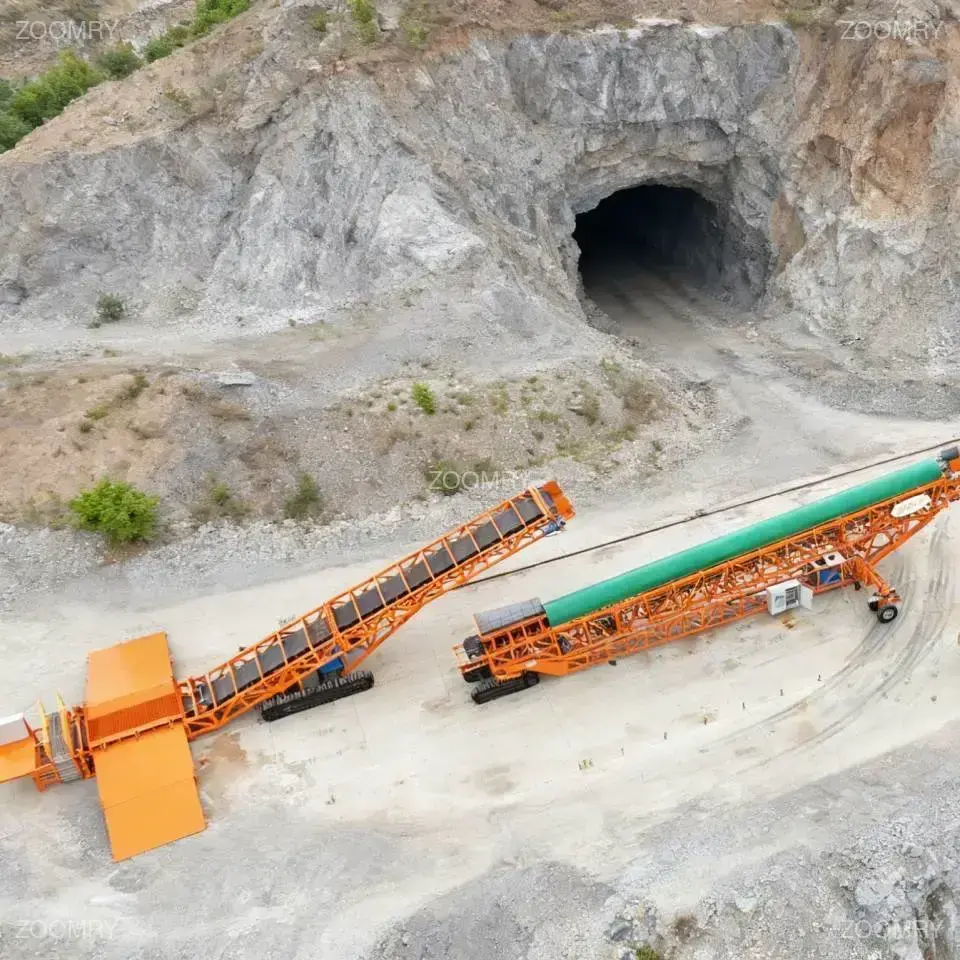
ZRLD-TU1800 tracked 2-lane truck unloader. 1800mm conveyor, 600-1800 t...
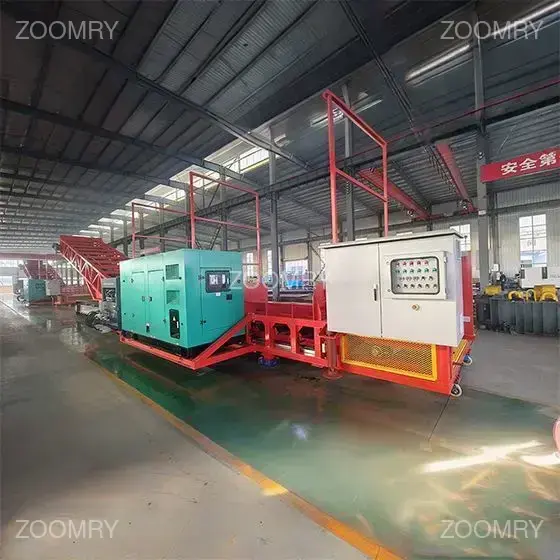
ZRLS-TU1800 wheeled 4-lane truck unloader for up to 4 large trucks. 18...
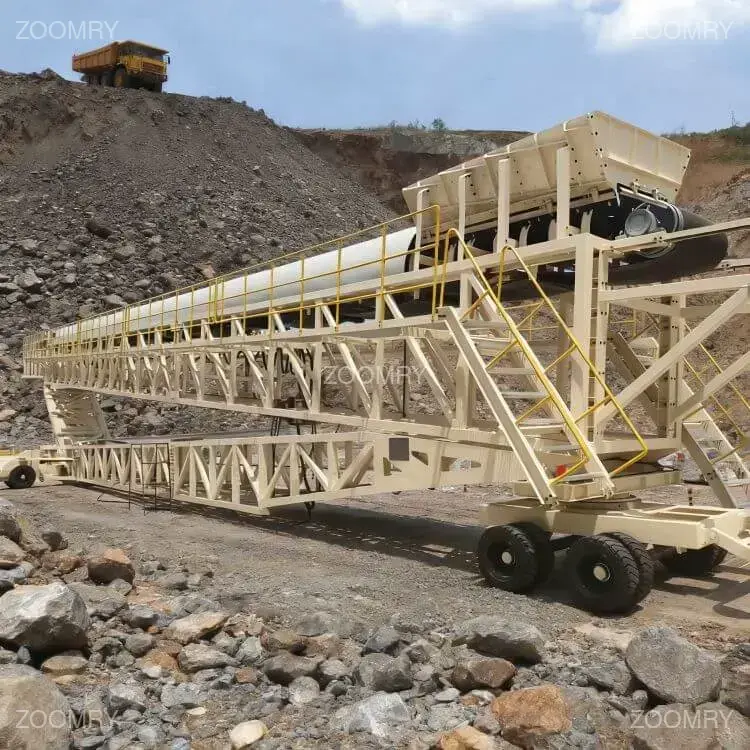
ZR90SF stacker conveyor with 900mm belt, 800 t/h, 2.5m/s. PLC/remote c...
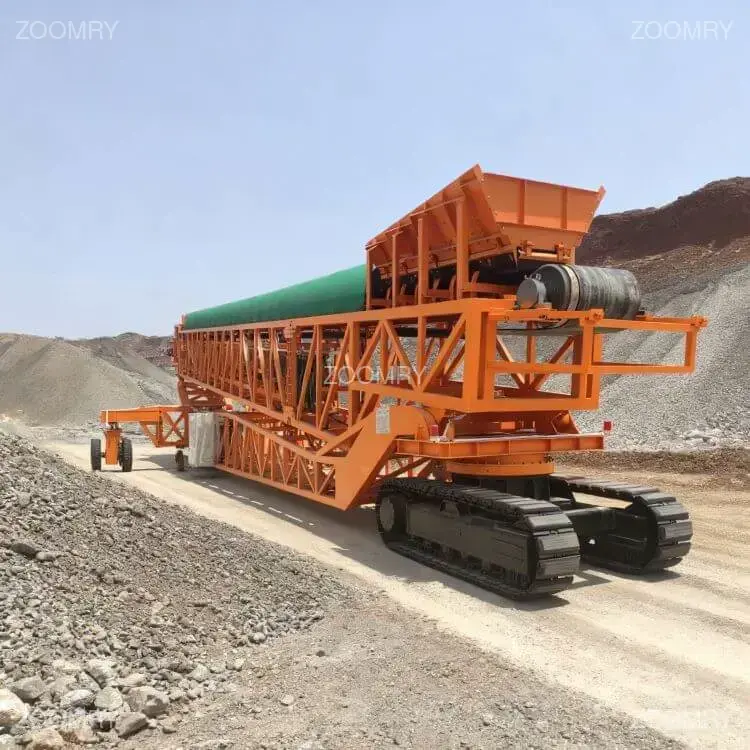
ZR140SF stacker conveyor with 1400mm belt, 2,100 m³/h, 3.15m/s. Radial...

Enter your email to contact us quickly!
Copyright © 2002-2026 Zoomry Group Company Limited 非商用版本 AI Index