Time:2026-11-18 08:48:12 Number of Clicks:
Once a port terminal has decided it needs a ship loader, the next decision is the configuration: mobile, rail-mounted or fixed. The three configurations differ in how the loader moves, how much civil work the terminal needs, and how the loader fits into the terminal's operating pattern. Choosing the wrong configuration is expensive to correct later, because the civil works, the rail infrastructure and the loader itself are all designed around it.
This article compares the three configurations on mobility, capacity, civil works and investment, and sets out the criteria that determine which one fits a given terminal. For the general selection of a ship loader, including vessel matching, capacity and dust control, see Ship Loader Selection Guide: Vessel Matching, Capacity and Dust Control. For the difference between loading and unloading, see Ship Loader vs Ship Unloader: Key Differences and Selection Guide.
A mobile ship loader is a self-propelled unit that combines a receiving hopper, a belt conveyor and a slewing boom on a wheeled or tracked chassis. It moves between berths or between hatches under its own power, without a fixed rail system. The receiving hopper is fed by trucks, a yard conveyor or a mobile hopper feeder.
The mobile configuration is the most flexible: the loader can serve multiple berths, follow a changing vessel mix, and be relocated as the terminal layout evolves. The trade-off is that the loader's capacity is generally lower than a rail-mounted or fixed loader, and the receiving arrangement must be mobile too.
A rail-mounted ship loader travels along a fixed rail line on the quay. It is fed by a fixed yard conveyor, and the rail line allows it to serve several berths or several hatch positions along the quay. The rail-mounted configuration is the standard for medium and large bulk terminals with a stable layout.
The rail-mounted configuration offers higher capacity than a mobile loader and a more direct connection to the yard conveyor. The trade-off is the civil works: the rail line, the quay strengthening and the conveyor route must be built before the loader can operate.
A fixed ship loader is installed at a single point on the quay and does not travel. It is the simplest and lowest-cost configuration, but the vessel must move to load each hatch, or the loader must be equipped with a long boom that can reach all hatches from one position.
The fixed configuration is suitable for single-berth terminals with a consistent vessel size and a moderate throughput requirement. It is rarely suitable for terminals that serve a wide vessel mix or need to load multiple hatches without moving the vessel.
| Characteristic | Mobile ship loader | Rail-mounted ship loader | Fixed ship loader |
|---|---|---|---|
| Mobility | Self-propelled, no rail | Along a fixed rail line | None |
| Berths served | Multiple, without rail | Multiple, along the rail line | One |
| Typical capacity | 800–3,500 t/h | 1,000–8,000 t/h | 500–3,000 t/h |
| Civil works | Minimal; quay surface only | Rail line and quay strengthening | Foundation only |
| Connection to yard conveyor | Mobile hopper or link conveyor | Fixed yard conveyor | Fixed yard conveyor |
| Investment | Moderate | Higher, including civil works | Lowest |
| Best for | Multi-berth terminals, changing vessel mix, terminals without rail infrastructure | Dedicated bulk terminals with stable layout and high throughput | Single-berth terminals with fixed vessel size |
The mobile configuration is the right choice when one or more of the following applies:
For terminals with a moderate throughput requirement (typically up to 3,500 t/h) and a multi-berth layout, the mobile configuration is often the most economical choice over the project life, because it avoids the rail and civil works. For the mobile ship loader range, see Mobile ship loader.
The rail-mounted configuration is the right choice when:
The rail-mounted configuration has a higher upfront cost, but the higher capacity and the direct conveyor connection reduce the operating cost per tonne at high throughput. For terminals that expect to operate for decades at high throughput, the rail-mounted configuration is often the better long-term choice.
The fixed configuration is the right choice when:
The fixed configuration is the simplest and the lowest-cost, but it is also the least flexible. It is rarely suitable for terminals that expect to grow or to serve a changing vessel mix.
A mobile ship loader moves under its own power without a rail line, while a rail-mounted loader travels along a fixed rail line on the quay. The mobile configuration is more flexible and needs less civil work; the rail-mounted configuration offers higher capacity and a direct conveyor connection.
Yes, a mobile ship loader can move between berths on its own wheels, which is one of its main advantages over a fixed loader. It does not need a rail line to each berth.
ZOOMRY mobile ship loaders cover 800–3,500 t/h depending on the model. Rail-mounted loaders can reach higher capacities, up to 8,000 t/h for large bulk terminals.
A fixed ship loader has the lowest upfront cost, but it is less flexible and may require the vessel to move to load each hatch. The total cost over the project life depends on the throughput and the operating pattern.
Dust control is required for all three configurations. The difference is in the enclosure design: a mobile loader needs a mobile dust collection arrangement, while a rail-mounted or fixed loader can use a fixed dust collection system connected to the terminal.
Standard configurations typically require 45 to 90 days for manufacturing, plus shipping time. Custom configurations may require longer.
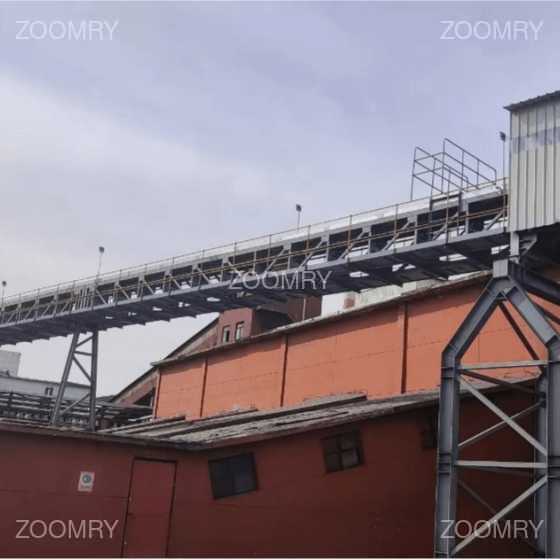
Pipe conveyor with circular closed-pipe structure for zero material le...
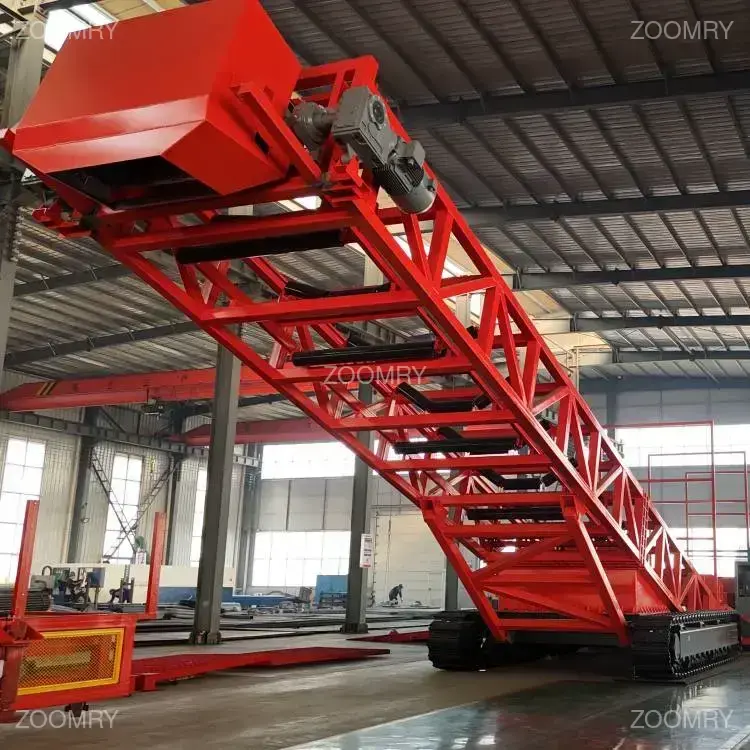
Radial truck unloader with patented slewing chassis. 360 material disc...
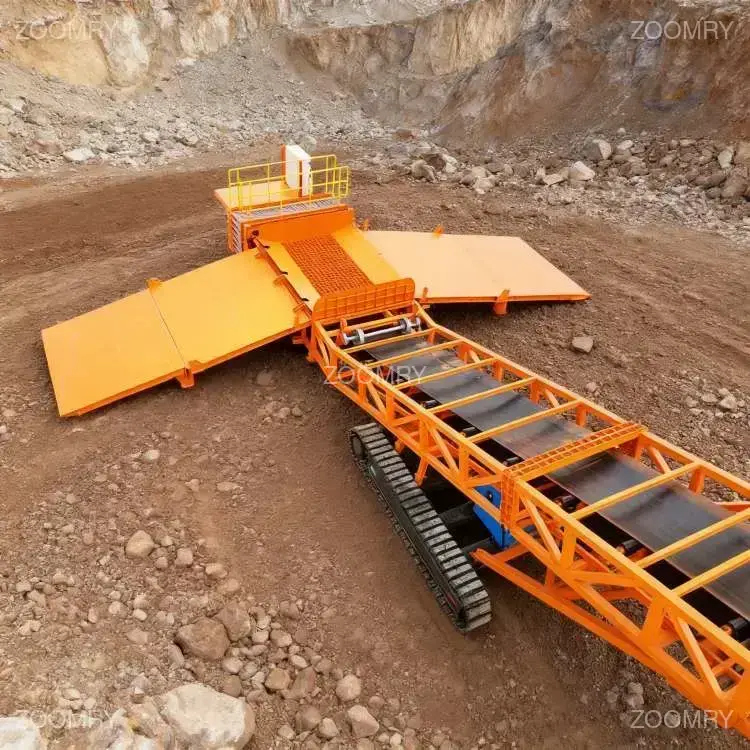
ZRLS-TU1400 wheeled 2-lane truck unloader. 1400mm conveyor, 200-1000 t...
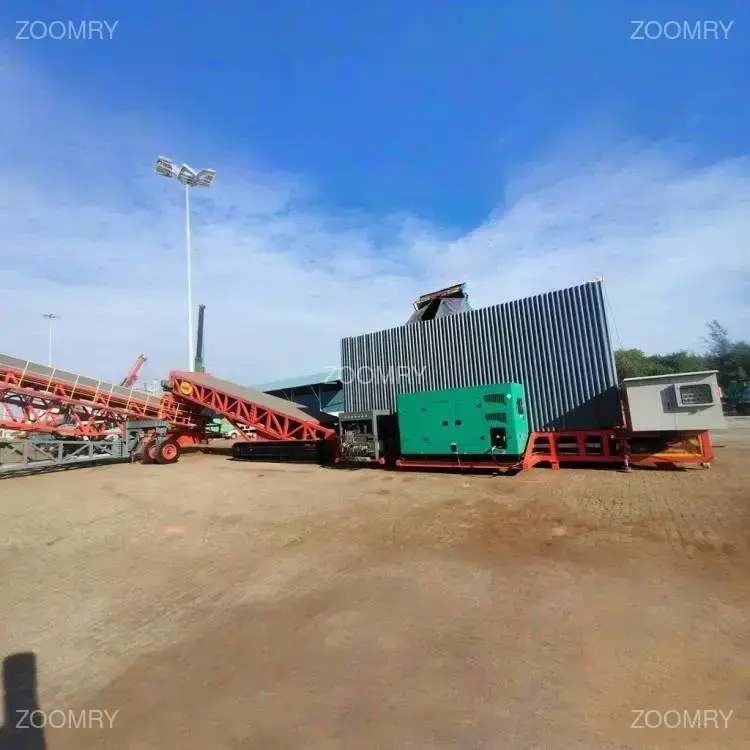
ZRLS-TU1400 wheeled 4-lane truck unloader for up to 4 trucks. 1400mm c...

Enter your email to contact us quickly!
Copyright © 2002-2026 Zoomry Group Company Limited 非商用版本 AI Index