Time:2026-11-16 09:07:47 Number of Clicks:
Grain and fertilizer terminals present specific challenges for ship loading: the material is free-flowing but dust-sensitive, the cargo must be protected from contamination, and the loading rate must match the vessel's trim and stability requirements. A ship loader that works at a coal terminal may not be suitable without modification for grain or fertilizer.
This article sets out how ship loaders are applied at grain and fertilizer terminals, the dust control and loading efficiency measures that matter, and the selection criteria for the loading equipment. For the general selection of a ship loader, see Ship Loader Selection Guide: Vessel Matching, Capacity and Dust Control. For the difference between loading and unloading, see Ship Loader vs Ship Unloader: Key Differences and Selection Guide.
Three material characteristics drive the ship loader design at grain and fertilizer terminals:
Dust control at grain and fertilizer terminals is stricter than at coal or ore terminals. The main measures are:
For grain, the dust collection system must be designed for explosive dust, with explosion venting and grounding. For fertilizer, the dust collection system must be corrosion-resistant.
Loading efficiency at grain and fertilizer terminals is not only about the loading rate; it is also about how quickly the vessel can be trimmed and completed. The ship loader must be able to:
For grain terminals, the loader is often equipped with a weighing system and a trim control system that works with the terminal management system. For fertilizer terminals, the loading rate is matched to the bagging or bulk loading plan.
| Configuration | Best for | Limitations |
|---|---|---|
| Mobile ship loader | Terminals with multiple berths or changing vessel mix; grain and fertilizer terminals with moderate throughput | Lower capacity than rail-mounted; requires a mobile receiving hopper |
| Rail-mounted ship loader | Fixed berths with high throughput; dedicated grain or fertilizer terminals | Requires rail infrastructure; limited to the rail line |
| Fixed ship loader | Single-berth terminals with a fixed vessel size | Vessel must move to load each hatch |
ZOOMRY's mobile ship loader is a self-propelled unit that combines a receiving hopper, a belt conveyor and a slewing boom, allowing it to serve multiple berths without rail infrastructure. For grain and fertilizer terminals that need flexibility and moderate throughput, the mobile configuration is often the better fit. For dedicated high-throughput terminals, a rail-mounted loader may be preferred.
For the mobile ship loader range, see Mobile ship loader. For the fertilizer ship loader configuration, see Fertilizer Shiploaders.
A grain ship loader requires explosion-proof dust collection and a loading chute that minimizes grain breakage. A coal ship loader is designed for higher abrasion and a different dust control regime. The two cannot be used interchangeably without modification.
The main measures are a telescopic loading chute with a dust skirt, enclosed transfer points, and a dust collection system designed for explosive dust with explosion venting and grounding.
Yes, a mobile ship loader can be configured for fertilizer with corrosion-resistant materials and a dust collection system suitable for fertilizer dust. ZOOMRY offers a fertilizer ship loader configuration.
Grain terminal ship loaders typically range from 800 to 2,500 t/h, depending on the vessel size and the terminal throughput. The loading rate is matched to the terminal conveyor and the vessel's trim plan.
The loader and the terminal conveyor are cleaned between cargoes, and the loading system is designed for easy cleaning. Some terminals use dedicated conveyors for different grades.
Standard configurations typically require 45 to 90 days for manufacturing, plus shipping time. Custom configurations may require longer.
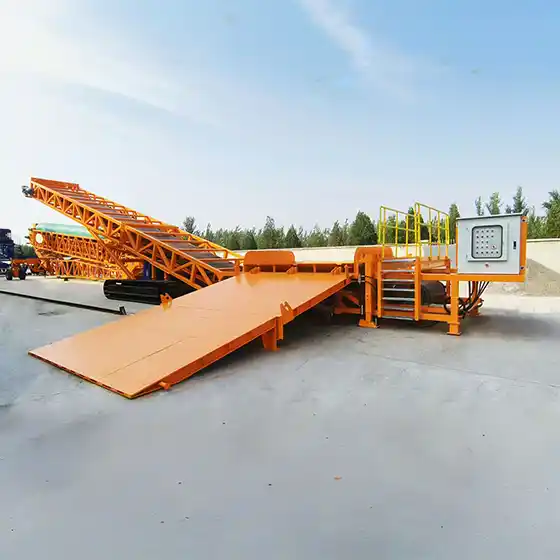
Bulk truck unloader with drive-over hopper for rapid unloading of sand...
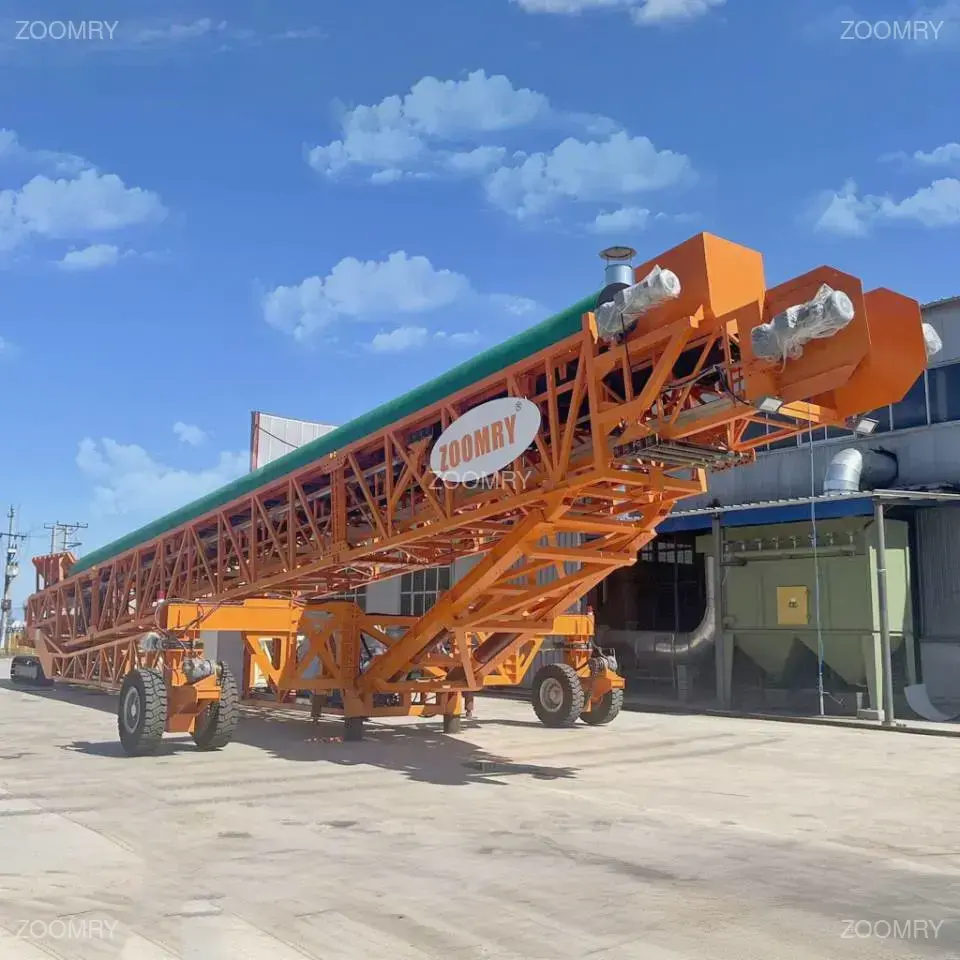
Mobile stacker for wheeled stockpiling and transfer in mining, constru...
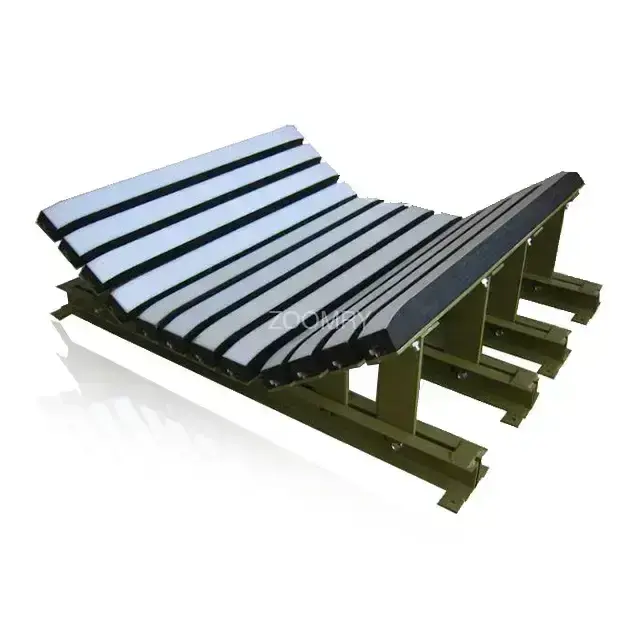
Impact beds for conveyor loading point protection. UHMW wear surface w...
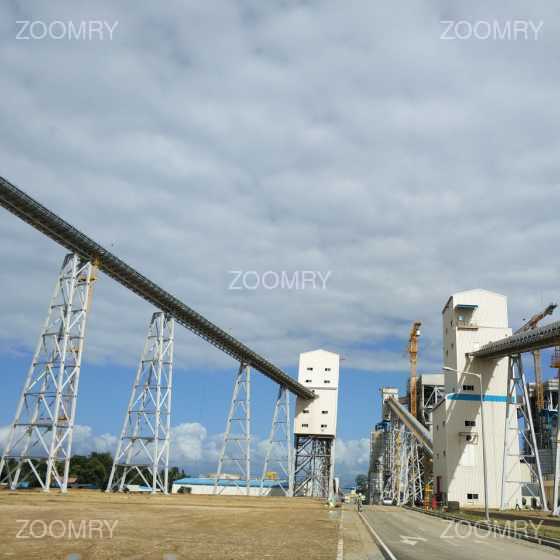
Long distance belt conveyor for overland bulk transport up to 20km in ...

Enter your email to contact us quickly!
Copyright © 2002-2026 Zoomry Group Company Limited 非商用版本 AI Index