Time:2026-11-12 10:22:56 Number of Clicks:
A ship unloader discharges bulk material from a vessel to the terminal. Two technologies dominate this application: the continuous ship unloader (CSU) and the grab ship unloader. Both have been in service for decades, and the choice between them is not a matter of one being universally better — it depends on the material, the vessel mix, the required unloading rate and the environmental constraints at the terminal.
This article compares the two technologies on working principle, capacity, material suitability, dust control and maintenance, and sets out the criteria that determine which one fits a given terminal. For the broader difference between ship loading and ship unloading, see Ship Loader vs Ship Unloader: Key Differences and Selection Guide. For the selection of the loading side, see Ship Loader Selection Guide: Vessel Matching, Capacity and Dust Control.
A grab unloader uses a clamshell or grab bucket suspended from a crane or a gantry. The grab is lowered into the hold, closes on the material, is lifted out and discharges into a hopper. From the hopper, a feeder and conveyor transfer the material to the terminal.
The grab unloader is a discontinuous machine: each cycle consists of lowering, closing, lifting, travelling and discharging. The effective capacity therefore depends on the cycle time, which in turn depends on the operator skill, the material and the depth of the hold.
A continuous ship unloader uses a mechanical or pneumatic conveying element that is lowered into the hold and removes material continuously. The main types are the bucket chain CSU, the screw CSU and the pneumatic CSU. The material is lifted continuously and transferred to the terminal conveyor without a grab cycle.
The CSU is a continuous machine: material flows from the hold to the terminal conveyor without the intermittent grab cycle. The effective capacity is closer to the rated capacity than in a grab unloader, because there is no idle time between cycles.
| Characteristic | Grab ship unloader | Continuous ship unloader |
|---|---|---|
| Operating mode | Discontinuous (grab cycle) | Continuous |
| Rated capacity | 300–1,500 t/h | 500–2,500 t/h |
| Effective capacity vs rated | Lower, due to cycle time | Higher, closer to rated |
| Operator dependence | High | Lower |
| Deep hold performance | Degrades with depth | Better at depth |
The effective capacity of a grab unloader is typically 50–70% of the rated capacity over a full vessel, because of the cycle time. A CSU can achieve 80–90% of the rated capacity, depending on the material and the CSU type. For a terminal that needs to unload a Panamax vessel within a fixed berth window, this difference in effective capacity can be decisive.
The grab unloader is more flexible on material type. It can handle coal, ore, grain, fertilizer, clinker and even large lumps, because the grab adapts to the material. The CSU is more material-specific: a bucket chain CSU is suitable for coal, ore and grain; a screw CSU is suitable for cement, fertilizer and fine powders; a pneumatic CSU is suitable for grain, cement and fine powders, but not for wet or coarse material.
If the terminal handles a wide range of materials, the grab unloader is the safer choice. If the terminal handles a single material or a narrow range, the CSU can be selected for that material and achieve higher efficiency.
Dust control is a major differentiator. A grab unloader generates dust at three points: the grab discharge into the hopper, the hopper itself, and the transfer from the hopper to the conveyor. The grab also carries dust out of the hold on the return cycle. Enclosing the hopper and using water spray or dry fog can control the dust, but the grab cycle inherently generates more dust than a continuous system.
A CSU generates dust at the transfer point between the CSU and the terminal conveyor, and at the pick-up point in the hold. Because the material is conveyed in an enclosed or semi-enclosed system, the dust generation is lower than a grab unloader. For terminals close to residential areas or with strict emission limits, the CSU has an advantage.
For a broader view of dust control in port bulk handling, see Bulk Material Handling Equipment for Ports: A Complete Guide.
The grab unloader has fewer wear parts in the unloading element itself — the grab and the hopper are the main wear components — but the crane and the hydraulic system require regular maintenance. The grab is subject to impact and abrasion, and the rope or chain system requires inspection on a defined interval.
The CSU has more wear parts in the conveying element: the bucket chain, the screw or the pneumatic nozzle, plus the associated drive and wear liners. The maintenance interval depends on the material abrasiveness and the CSU type. For abrasive ore, the bucket chain and wear liners require frequent inspection.
The maintenance cost comparison is therefore material-dependent. For a single abrasive material, the CSU maintenance cost can be higher; for a multi-material terminal, the grab unloader’s flexibility may offset its lower efficiency.
| Criterion | Favours grab unloader | Favours continuous unloader |
|---|---|---|
| Material range | Wide range of materials | Single material or narrow range |
| Required unloading rate | Moderate rate, flexible operation | High rate, fixed berth window |
| Dust limits | Relaxed limits, remote terminal | Strict limits, near residential area |
| Operator availability | Skilled operators available | Limited operator availability |
| Vessel mix | Mixed vessel sizes and types | Consistent vessel size and type |
| Capital cost | Lower upfront cost | Higher upfront cost, lower operating cost at high utilisation |
A grab unloader uses a discontinuous grab cycle, while a continuous unloader conveys material continuously. The CSU achieves a higher effective capacity and lower dust generation, but is more material-specific and has a higher upfront cost.
Both are used for coal. A grab unloader is more flexible if the terminal also handles other materials. A bucket chain CSU can achieve a higher effective capacity for coal at a dedicated coal terminal, and generates less dust.
At the same rated capacity, a grab unloader’s effective capacity is lower because of the cycle time. A CSU with the same rated capacity is more productive over a full vessel.
The CSU generally has lower dust emissions because the material is conveyed in an enclosed or semi-enclosed system. The grab unloader generates dust at the grab discharge and the hopper, and carries dust out of the hold on the return cycle.
It depends on the material. For a single abrasive material, the CSU maintenance cost can be higher because of the wear parts in the conveying element. For a multi-material terminal, the grab unloader’s flexibility may offset its lower efficiency.
Standard configurations typically require 45 to 90 days for manufacturing, plus shipping time. Custom configurations may require longer.
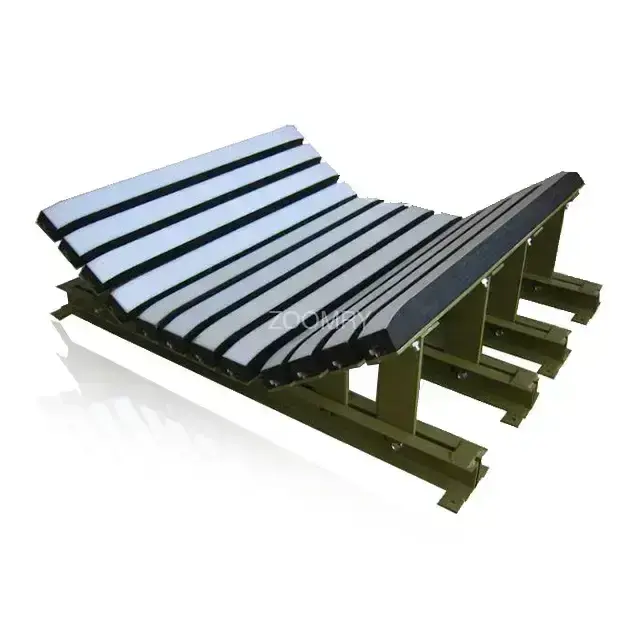
Impact beds for conveyor loading point protection. UHMW wear surface w...
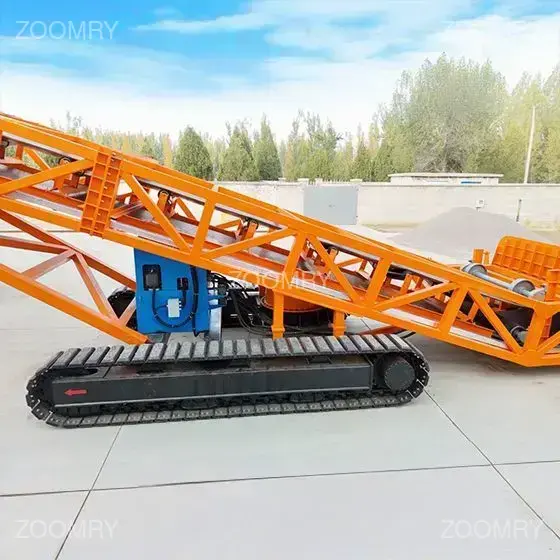
ZRLD-TU1400 tracked 2-lane truck unloader. 1400mm conveyor, 200-1000 t...
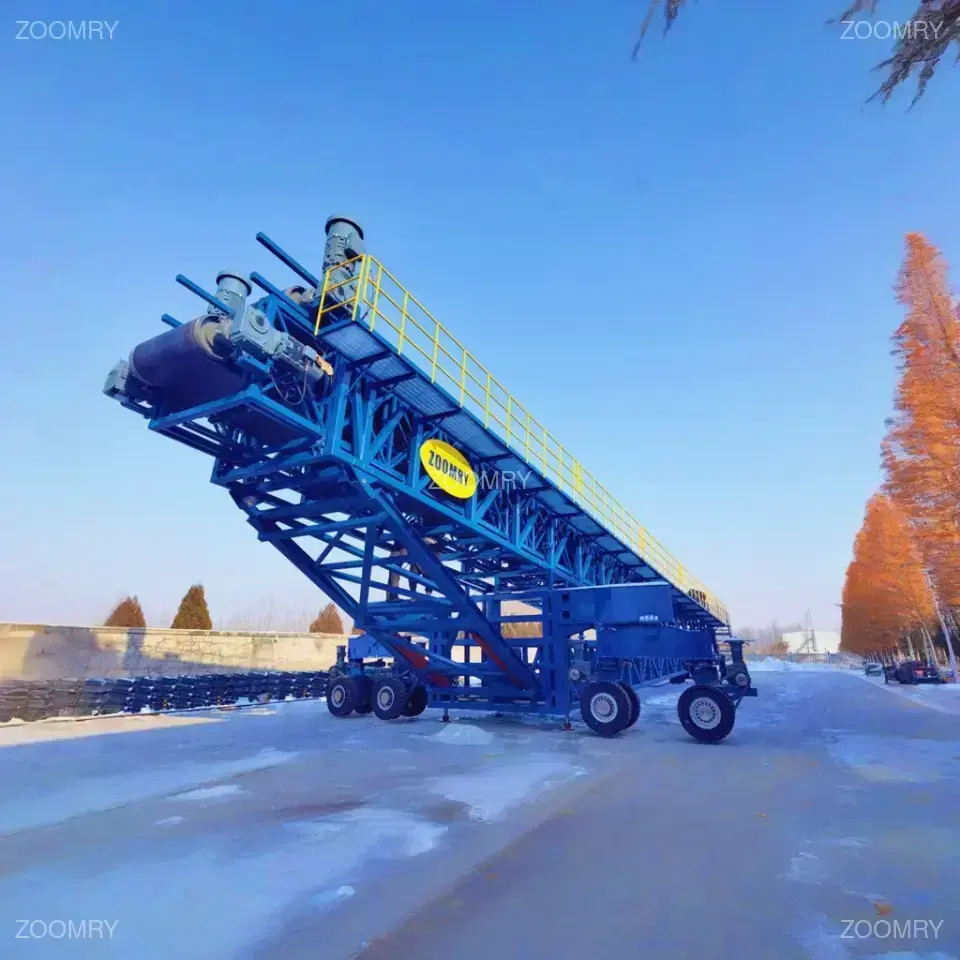
Telescopic conveyor with hydraulically extendable boom for flexible st...
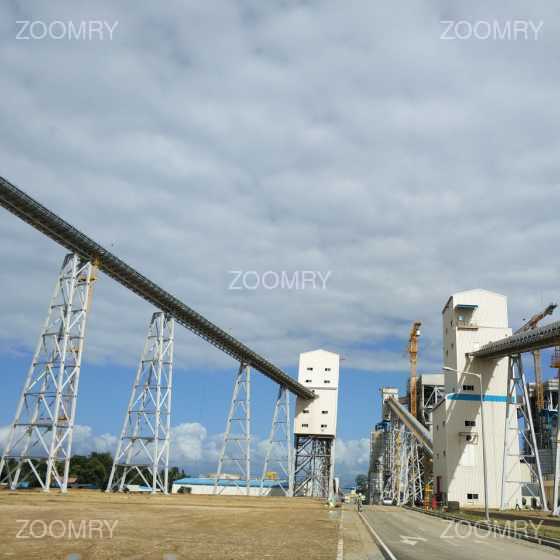
Long distance belt conveyor for overland bulk transport up to 20km in ...

Enter your email to contact us quickly!
Copyright © 2002-2026 Zoomry Group Company Limited 非商用版本 AI Index