Time:2026-11-13 09:29:57 Number of Clicks:
Copper mines present some of the most demanding conditions for overland conveying: high altitude, steep terrain, abrasive ore, strict environmental constraints and long distances between the pit, the concentrator and the stockpile. An overland conveyor that works at a sea-level aggregate quarry may need substantial redesign for a copper mine at 4,000 m altitude. This article sets out the design challenges specific to copper mines and the selection criteria for overland conveyors in this application.
For a broader view of conveyor systems in mining, see Mining Conveyor Systems: A Complete Guide for Coal, Iron Ore and Aggregate Operations. For the copper mining context in Chile, see Copper Mining in Chile: Choosing Conveying Equipment for High Altitude, Long Distance, Drought and Environmental Constraints.
Four conditions separate copper mine overland conveying from general bulk handling:
The first configuration decision is between a conventional belt conveyor and a pipe conveyor. Both are used in copper mines, and the choice depends on the route and the environmental constraints.
| Characteristic | Belt conveyor | Pipe conveyor |
|---|---|---|
| Route flexibility | Horizontal curves require idler banking; vertical curves limited | Horizontal and vertical curves in a single compact route |
| Dust control | Requires belt covers or enclosures in sensitive areas | Material is enclosed in the pipe, dust is contained by design |
| Capital cost | Lower for straight routes | Higher, justified by route or environmental constraints |
| Capacity | Higher for the same belt width | Lower for the same belt width, but adequate for most copper mine throughputs |
| Maintenance | Simpler, more accessible | More complex, pipe opening and closing stations require maintenance |
For a copper mine with a straight or gently curved route and no sensitive areas along the way, a belt conveyor is the more economical choice. For a route that crosses steep terrain, passes near a community or water body, or requires tight curves, a pipe conveyor may be the only feasible option. ZOOMRY's belt conveyor and pipe conveyor ranges cover both configurations; see Long distance belt conveyor and Pipe conveyor.
At altitude, the thinner air reduces the cooling capacity of the conveyor drives. A motor that is rated for 100% load at sea level may need to be derated to 85–90% at 4,000 m, depending on the motor insulation class and the cooling arrangement. The drive selection must account for this derating, or the conveyor will not achieve the design capacity.
The belt and idler specifications also change with altitude. The lower atmospheric pressure affects the belt's resistance to flexing and the idler's bearing lubrication. For high-altitude copper mines, the conveyor manufacturer should be informed of the site altitude at the selection stage, not after the order is placed.
Copper mine overland conveyors often follow the terrain rather than a straight line. Horizontal curves allow the conveyor to follow ridges and avoid sensitive areas, but they require careful design: the idlers must be banked to keep the belt centred, and the curve radius must be large enough for the belt tension at that point.
Vertical curves are used to transition between inclines and declines. The curve radius must be large enough to prevent the belt from lifting off the idlers, and the transition must be designed so that the material does not spill. For pipe conveyors, the curve radius is smaller but the pipe opening and closing stations must be positioned correctly.
Dust control at copper mines is constrained by water availability. Many copper mines are in arid regions, and water spray is either limited or prohibited. In these conditions, the dust control strategy relies on enclosure rather than suppression: belt covers, transfer point enclosures and, where the route requires it, a pipe conveyor.
For mines that do have water available, water spray at the transfer points and at the discharge is used, with the water consumption calculated as part of the mine's overall water balance. Dry fog systems are an alternative where water is scarce but dust must still be controlled.
Copper ore is abrasive, and the wear parts are the belt cover, the idlers, the pulleys and the chute liners. For overland conveyors, the idler replacement cost is driven by the number of idlers and the access difficulty along the route. A route that follows steep terrain may require access roads or maintenance platforms, and this cost should be included in the project budget.
The belt cover specification is critical: a wear-resistant cover extends the belt life, but increases the belt cost. The trade-off depends on the ore abrasiveness and the annual throughput. For high-abrasion copper ore, the higher-cost wear-resistant cover is usually justified by the longer belt life.
Overland conveyors operate at copper mines above 4,000 m. The limiting factor is not the conveyor itself but the drive cooling and the belt and idler specifications, which must be selected for the altitude.
It depends on the route and the environmental constraints. A straight route with no sensitive areas favours a belt conveyor; a route with steep terrain, tight curves or sensitive areas favours a pipe conveyor.
The strategy relies on enclosure rather than suppression: belt covers, transfer point enclosures and, where required, a pipe conveyor. Dry fog systems are an alternative where water is scarce.
A wear-resistant belt cover extends the belt life and is usually justified for high-abrasion copper ore, despite the higher initial cost. The specification depends on the ore abrasiveness and the annual throughput.
At altitude, the thinner air reduces motor cooling, so the drive must be derated. The belt and idler specifications also change. The site altitude should be provided to the conveyor manufacturer at the selection stage.
Standard configurations typically require 45 to 90 days for manufacturing, plus shipping time. Custom configurations may require longer.
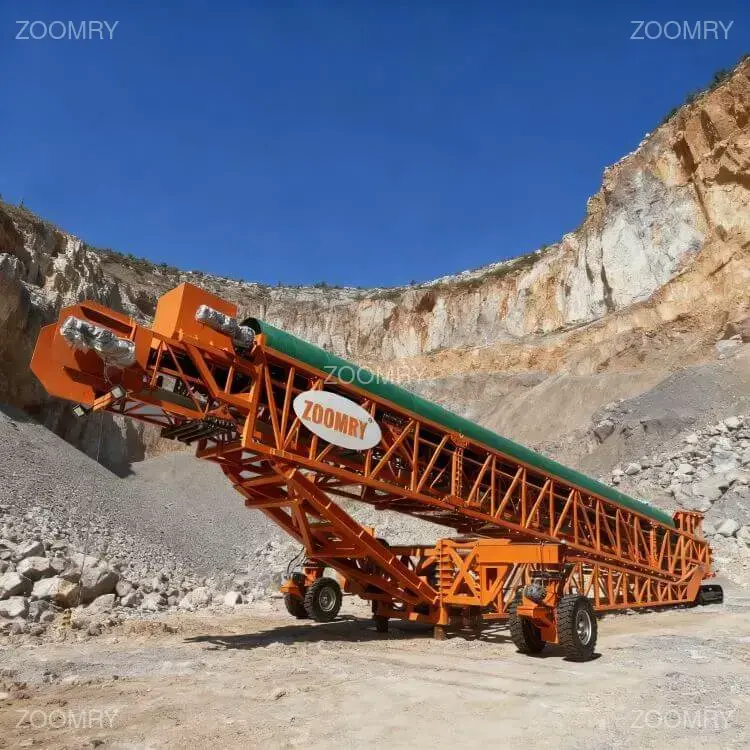
ZR80SF stacker conveyor with radial, telescopic and luffing functions....
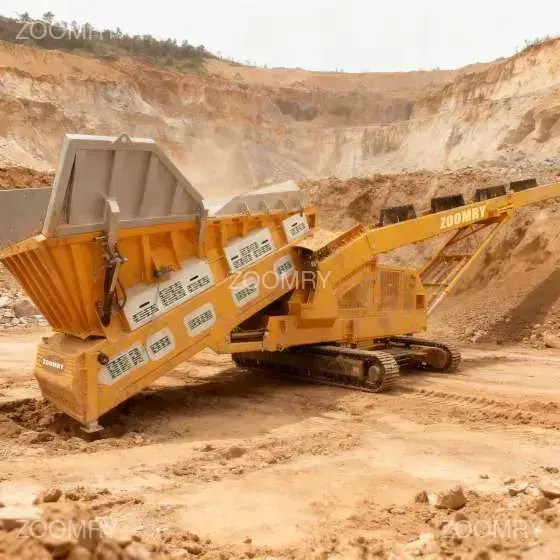
Low feed hopper feeder with 7-12 m³ capacity, up to 800 t/h. Low feed-...
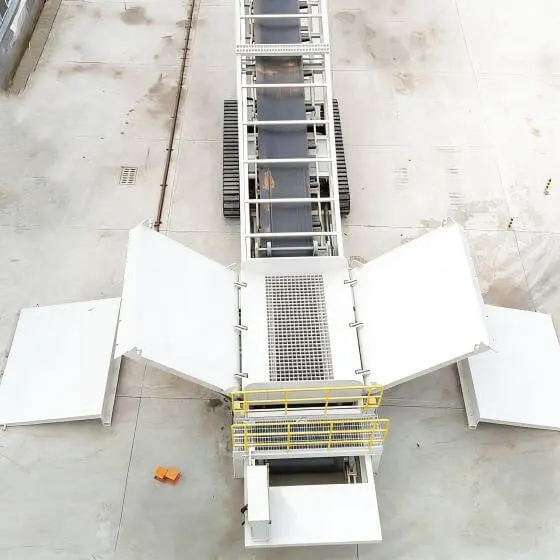
Truck unloader conveyor with 800-2200mm belt widths. 15-minute rapid r...
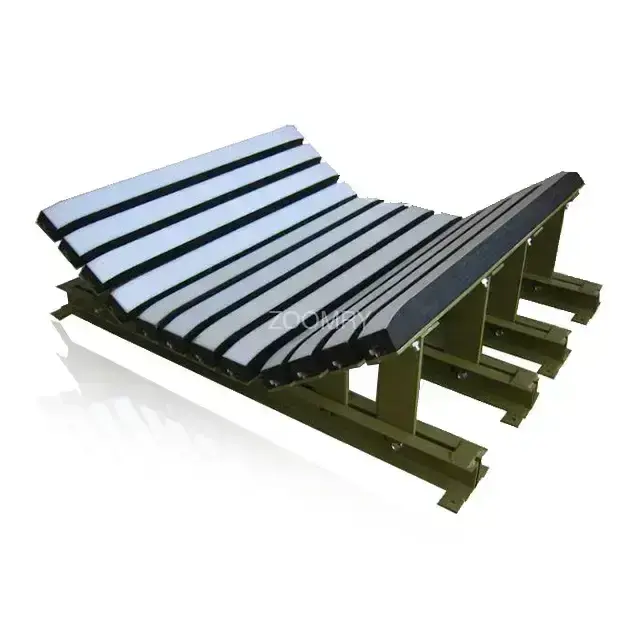
Impact beds for conveyor loading point protection. UHMW wear surface w...

Enter your email to contact us quickly!
Copyright © 2002-2026 Zoomry Group Company Limited 非商用版本 AI Index