Time:2026-11-24 11:50:37 Number of Clicks:
A belt conveyor is not a standard machine that can be ordered from a price list. Two quotes for "the same" conveyor can differ by a wide margin because one supplier has included the structure, drives, belt, controls and installation support, while another has priced only the conveyor frame. Comparing the numbers before comparing the scope is the most common mistake in conveyor procurement.
This article sets out how to evaluate a conveyor belt manufacturer on equal terms: what a complete technical proposal should contain, which cost items drive the price, which engineering capabilities are worth checking, and how to assess delivery risk. It draws on the ZOOMRY BC Series range, which covers belt widths of 400–2,400 mm, capacities up to 17,000 m³/h and single-flight lengths up to 20 km. For the product range itself, see the belt conveyor product center, the long-distance belt conveyor and the large-inclination conveyor.
Conveyor systems are engineered to a route, a material and a throughput. A quotation is only meaningful when the following inputs are fixed:
When these inputs are missing, suppliers make different assumptions. The lower quote is often the one that assumed the least.
Ask every bidder to structure the proposal in the same way. The table below is a practical checklist for comparing like with like.
| Section | What should be specified | Why it matters |
|---|---|---|
| Process design | Capacity, belt speed, belt width, loading conditions, lift and curve data | Determines whether the conveyor actually meets the required throughput |
| Mechanical scope | Belt type, rollers, idlers, pulleys, impact beds, cleaners, covers, take-up and frame | The largest source of scope differences between quotes |
| Drive system | Motor power, gearbox, coupling, brake, backstop and soft start | Affects both capital cost and starting behaviour on long or inclined routes |
| Structure | Truss, stringer, ground module or gallery; supports and walkways | Civil and steelwork costs are often excluded from a low headline price |
| Electrical and control | Voltage and frequency, PLC, sensors, interlocks, emergency stops, remote monitoring | 380 V / 50 Hz and 440 V / 60 Hz are standard; other supplies must be confirmed |
| Dust and safety | Enclosure, dust collection points, belt scales, pull cords, fire and gas detection where required | Common cause of late cost additions |
| Delivery scope | Ex-works, FOB, CIF or delivered site; packing, installation, commissioning and training | A factory price and an installed price are not comparable |
| Documentation | General arrangement drawings, calculation report, spare parts list, manuals and certificates | Required for maintenance planning and insurance |
For background on how the route itself affects design, see Overland Conveyor Selection for Copper Mines and Quarry Conveyor Systems for Aggregate Operations.
A lower price is only an advantage if the supplier can actually deliver and support the system. Four checks separate a manufacturer from a reseller:
Zoomry Heavy Industry Co., Ltd. (ZOOMRY, formerly Zoomry Group Company Limited) manufactures conveyors, shiploaders, stackers and hopper feeders, so the drive, structure and feeding interface can be engineered as one system rather than assembled from unrelated packages.
There is no meaningful standard price for a belt conveyor. Price is driven by the following factors, and each should be visible in a line-item quote:
When comparing prices, normalise every quote to the same scope and the same delivery term. A supplier that is 20% cheaper ex-works but excludes structure and commissioning is not the lower-cost option.
Ask for a production schedule with milestones rather than a single delivery date. A credible schedule covers drawing approval, procurement of long-lead items such as belts and gearboxes, fabrication, factory testing, packing and shipment. Confirm:
For an overview of how conveying fits into a complete bulk handling line, see Conveyor Unloading Systems: Hopper Feeding and Belt Conveying.
Because the scope differs. Belt, structure, drives, controls, installation and documentation may be included by one supplier and excluded by another. Normalise the scope and delivery term before comparing prices.
Material and bulk density, particle size, required capacity, route length and lift, curves, feeding method, site conditions and power supply. With these inputs, the quote can be checked against a defined design basis.
Only approximately. Without lift, curves and transfer points, the structure and drive cannot be sized, so the figure should be treated as a budget indication rather than a quotation.
The BC Series covers standard, curved, large-inclination and pipe conveyors for bulk densities of 0.5–3.0 t/m³ and particle sizes up to 400 mm, with single-flight lengths up to 20 km. Final selection depends on route and material.
It is the last chance to detect assembly, alignment and control problems before shipment. Request a test plan that states which functions are checked and ask for a test report.
It depends on belt width, route length and the specification of long-lead components such as belts and gearboxes. Ask for a milestone schedule rather than relying on a general lead time.
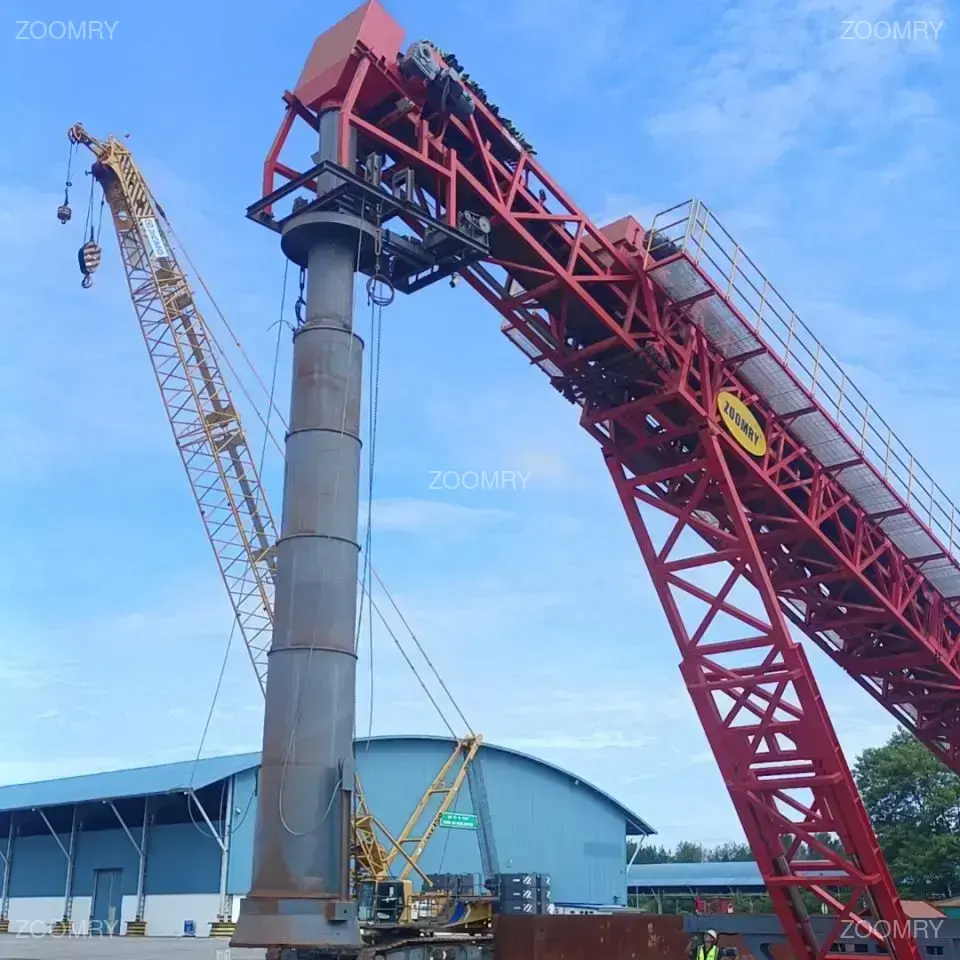
ZRSL-40 mobile shiploader for vessels of 100-35,000 DWT. Pre-assembled...
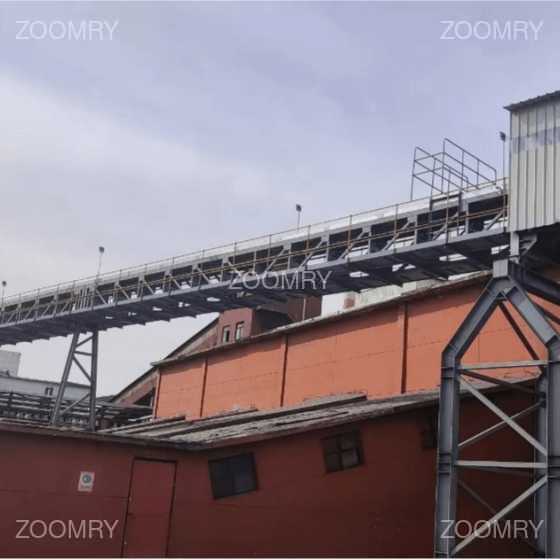
Pipe conveyor with circular closed-pipe structure for zero material le...
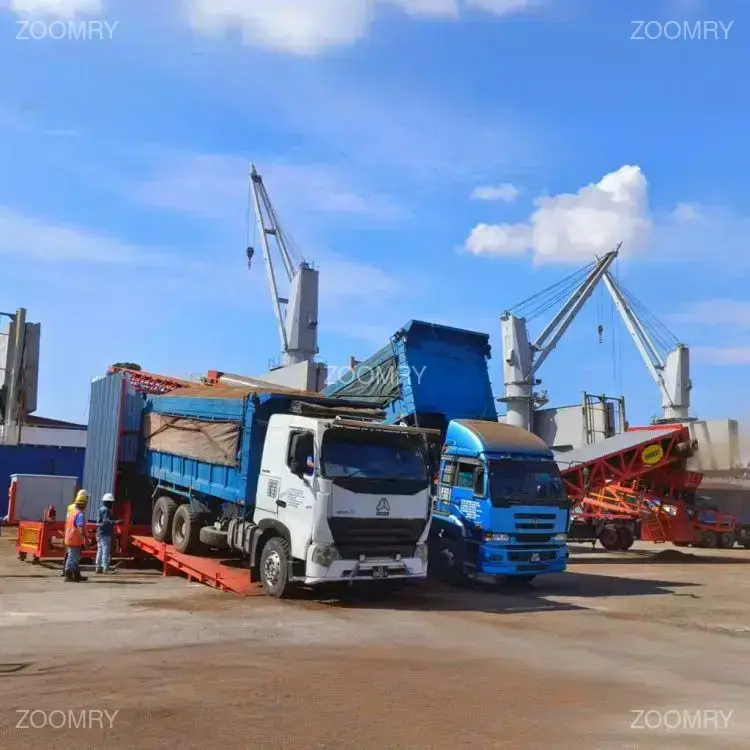
ZRLD-TU1800 tracked 4-lane truck unloader for up to 4 large trucks. 18...
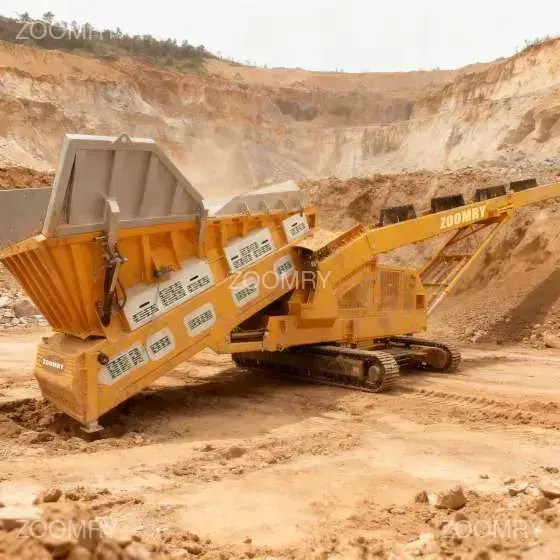
Low feed hopper feeder with 7-12 m³ capacity, up to 800 t/h. Low feed-...

Enter your email to contact us quickly!
Copyright © 2002-2026 Zoomry Group Company Limited 非商用版本 AI Index